

You need a thousand custom-branded diaries for your corporate event next quarter. Or maybe fifty thousand notebooks for the upcoming school year. You’ve Googled “offset printers near me” and gotten a list — but which one actually knows how to handle the grain of notebook paper, the durability a school kid demands, or the precise colour matching for a corporate logo? It’s not just about finding a printer. It’s about finding a manufacturer.
Most people think offset printing is just ink on paper. But when you’re ordering in bulk — for schools, offices, or distributors — the paper quality, the binding strength, the way the cover takes the print… that’s the difference between a notebook that lasts a semester and one that falls apart in a month. If you’re sourcing for your business, you’re not just buying printing. You’re buying a product that represents your organization every time someone opens it. That’s a lot of pressure to put on a Google search.
If that’s where you’re at — trying to turn a procurement spec into a physical, reliable product — this is worth a look. We’ve been doing this since 1985.
What Offset Printing Really Means for Notebooks
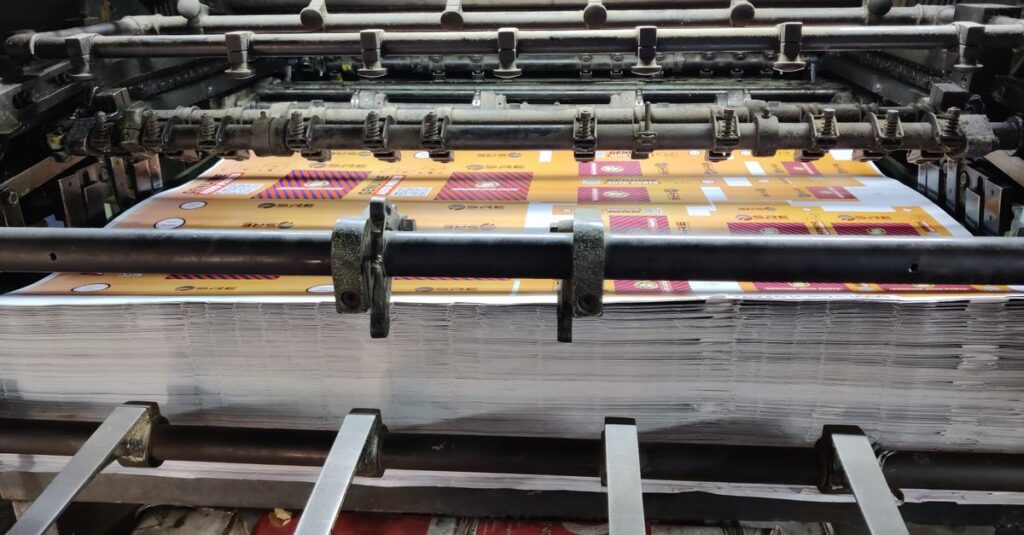
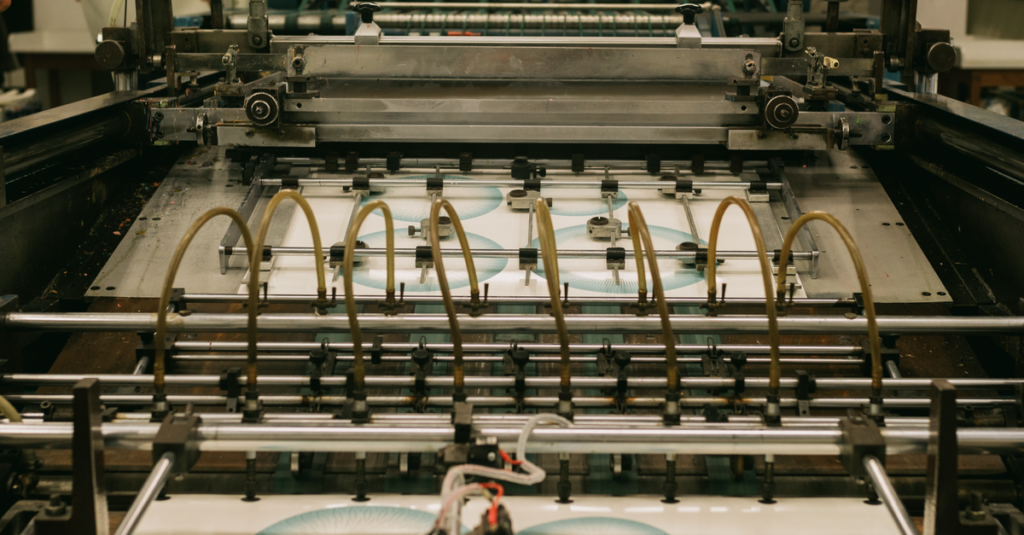
Okay, let’s get this out of the way first. Offset printing isn’t the only way to print notebooks. Digital printing exists. But for runs over 500 units? Offset is the only thing that makes financial and quality sense. Here’s why: the ink sits better on the paper. It’s sharper. The colours are more consistent from the first notebook to the forty-thousandth. For a corporate diary with a detailed logo, that consistency is everything.
Think about a school notebook. A kid is going to cram it in a bag, spill water on it, and generally treat it like… well, a school notebook. The print can’t smudge. The cover can’t peel. Offset printing, with its oil-based inks and metal plates, lays down a layer that bonds to the paper. It becomes part of the material. Digital printing? It’s more like a layer on top. It can scratch off.
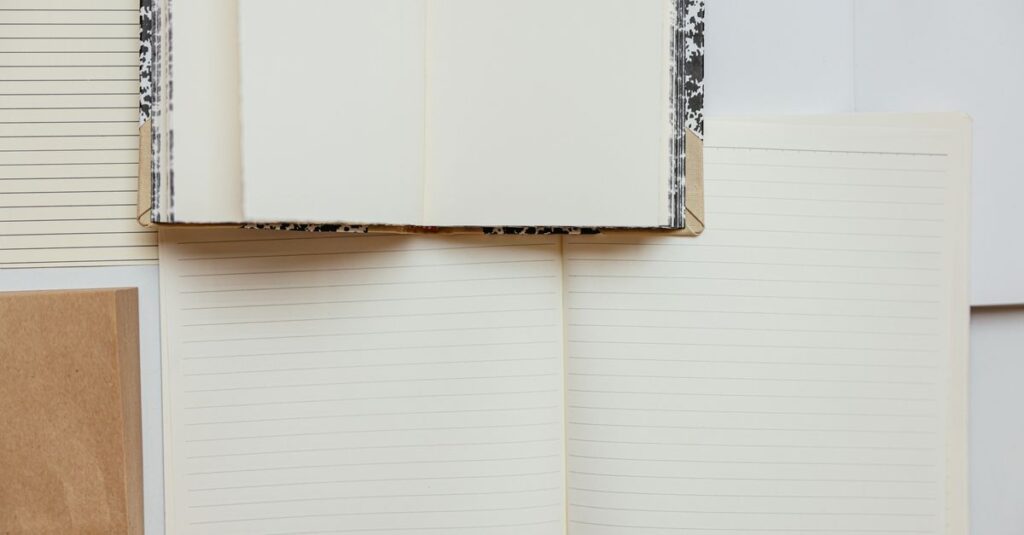
I was talking to a procurement manager for a chain of schools last week. He said his biggest headache wasn’t price — it was getting the ruling lines on the pages to be perfectly crisp and aligned, book after book. That’s an offset printing problem (and a binding problem). If the plates aren’t made right, the lines wobble. And wobbling lines look cheap.
The Local Search Myth
“Near me” is tricky. Because your perfect offset printer for bulk notebooks might be three states away. The real question isn’t proximity; it’s capability. Can they handle 70 GSM paper as well as 200 GSM cover stock? Do they understand perfect binding for a thick, 700-page account book versus spiral binding for a project pad? Do they have the warehouse space to store your 30,000-unit order before shipping?
Sometimes, the best “local” partner is one that specializes in your exact niche, even if they’re not down the street. They speak your language. You don’t have to explain what “singe ruled” versus “double ruled” means. You just send the spec.
What Bulk Buyers Should Actually Look For
So you’ve moved past just “offset printers near me.” Good. Now, what are you really buying? Here’s what matters, in order of importance.
- Paper Knowledge: This is the foundation. An offset printer who just prints on whatever sheet you send is a technician. A manufacturer who advises you — “For a student notebook that needs to handle ballpoint and occasional marker, use 58-60 GSM paper, not 70” — is a partner. The weight, the finish, the grain direction for folding… it matters.
- Binding Expertise: The print can be perfect, but if the binding fails, the whole product fails. You need someone who knows stitch binding for standard notebooks, perfect binding for thick diaries, and spiral binding for art pads. Each has different margins and tolerances.
- Consistency at Scale: This is the quiet killer. Can they guarantee the Pantone colour on page 1 of the first pallet is the same as page 1 of the last pallet? For corporate branding, this is non-negotiable.
- End-to-End Control: The best scenario? One factory that handles paper sourcing, printing, binding, cutting, and packing. Every hand-off between suppliers is a chance for a delay or a quality drop.
We run our own factory in Rajahmundry. We see the paper come in, and the finished notebooks go out. That control is the only way we sleep at night when an order for 50,000 units is on the line.
| Consideration | General Offset Printer | Notebook Manufacturing Specialist |
|---|---|---|
| Primary Focus | Printing on sheets (brochures, flyers) | Creating a finished, functional product |
| Paper Advice | Limited to stock options | Deep knowledge of writing & cover paper grades |
| Binding Knowledge | Often outsourced or limited | In-house expertise in stitch, perfect, spiral |
| Scale Understanding | May see 10,000 as a large order | 30,000-40,000 notebooks per day is standard capacity |
| Problem Solving | “The print is done.” | “The notebook needs to survive a schoolbag for 6 months.” |
A Real-Life Scenario: Priya’s Corporate Order
Priya, 38, is a procurement lead for a mid-sized IT firm in Hyderabad. Her task: source 2,000 premium diaries for client gifts. The brief said “elegant, durable, with our new logo in metallic gold.”
She called three local offset printers from her “near me” search. The first quoted a great price but said metallic ink on the specified cover stock “might be tricky.” The second didn’t do binding. The third asked, “How many pages? What kind of ruling? What’s the paper GSM?” That last one — the one who asked the product questions, not just the print questions — got the order. He was thinking about the diary as a thing you use, not just a thing you look at. That’s the shift.
She didn’t have to explain what she needed. He already knew.
Expert Insight
I remember reading an interview with a production manager from a huge stationery brand years ago. He said something that stuck with me: the most expensive mistake in notebook manufacturing isn’t a misprint. It’s choosing the wrong paper for the intended use. You can have the most beautiful offset print in the world, but if the paper ghosts with every pen stroke, the user experience is ruined. The capability of the printer is irrelevant if the material foundation is wrong. I don’t have a cleaner way to put it than that.
Making the Decision: A Quick Checklist
Before you contact a printer from your search results, ask yourself these questions. It’ll save you three rounds of emails.
- What’s the primary use? (Student notes? Corporate accounting? Retail sale?) This dictates everything — paper weight, ruling, binding, cover durability.
- What’s your true volume? Be honest. A 500-unit order is different from a 5,000-unit order, which is different from a 50,000-unit order. Don’t over-promise to get a better price.
- What’s non-negotiable? Is it colour matching? A specific delivery date? A particular binding style? Lead with that.
- Do you need full customisation? Just your logo on a standard book? Or a completely custom size, page count, and ruling? The latter needs a specialist manufacturer.
Look, I’ll be direct. If your answers point to high volume, specific durability needs, or complex customisation, you’ve probably outgrown the general “offset printer near me” search. You’re looking for a manufacturing partner.
Frequently Asked Questions
What is the main advantage of offset printing for notebooks?
For bulk orders, it’s superior cost-per-unit and much higher print quality consistency. The colour is richer, the ink bonds to the paper better (less smudging), and once the plates are made, every single notebook looks identical. It’s the standard for professional, large-scale stationery production.
I need custom notebooks for my business. What should I ask a printer?
First, ask if they manufacture notebooks or just print covers. Then ask about paper GSM options, binding types they offer in-house, and their minimum order quantity for custom work. A good manufacturer will ask you about the notebook’s end-use to recommend the right specs.
What’s the typical turnaround time for an offset printed notebook order?
It depends wildly on complexity and volume. For a standard bulk order of, say, 10,000 notebooks with a custom printed cover, expect 4-6 weeks from confirmed artwork. This includes plate creation, paper sourcing, printing, binding, and quality checks. Rush jobs are possible but cost more.
Can you get different rulings inside the same notebook via offset printing?
Yes, but it requires careful planning. Different sections (like plain, ruled, and grid pages) need separate plates and press setups, which increases cost. It’s completely doable — we do it all the time for multi-purpose corporate notebooks — but you need a printer experienced in notebook imposition.
Is offset printing cost-effective for small batches?
Honestly, no. The cost of creating the printing plates makes offset expensive for short runs. For orders under 300-500 units, digital printing is usually more economical, even though the per-page print quality is slightly lower. The break-even point is where the lower per-unit cost of offset outweighs the high setup cost.
Conclusion
Searching for “offset printers near me” is a start. But the finish line is a stack of notebooks that look right, feel right, and last. That comes down to specialized manufacturing knowledge — the kind built over decades, not just from operating a press. It’s about knowing that a spiral binding needs a different margin than a stitched binding. It’s knowing that 54 GSM paper is the sweet spot for everyday writing, but a premium diary needs 90 GSM.
The question isn’t whether you can find a local printer. It’s whether that printer understands the product you’re actually trying to create. If you’re sourcing notebooks in bulk for schools, corporations, or distribution, that distinction is the only one that matters.
If you’re evaluating options for a large or custom order, talking to a dedicated manufacturer might clarify things. We’re always here to help you figure it out.