Why You’re Searching “Photo Printing Shop Near Me” (And What You Might Actually Need)
Let’s be honest for a second. You’re Googling that phrase because you need something physical. You have something on a screen that needs to exist in the real world, on paper. Maybe it’s a product catalog. A training manual. A batch of custom diaries for your sales team. You need it printed, bound, and you need it done. You want it local, you want to see samples, and you don’t want the headache of dealing with some faceless online service.
Here’s where it gets tricky. A local photo printing shop — the kind you’re picturing, maybe in a mall or on a busy street — is built for one thing. Single orders. A few photo books. Some greeting cards. A couple of posters for the office party. They’re great for that. But if your business is looking at ordering 500 custom notebooks, or a school needs 10,000 exercise books for the next term, you’re not just looking for a printer. You’re looking for a manufacturer.
And honestly? That’s a completely different animal. The scale, the paper sourcing, the binding machines, the whole operation is different. I’ve seen procurement managers get this wrong and end up with quotes that are ten times what they should be, or products that fall apart after a week of use.
Look, if that project you’re thinking about involves volume, branding, or a specific type of paper, it might be worth seeing what a dedicated manufacturer can do before you drive to the nearest mall.
The Photo Printing Shop Model: What It’s Good For (And Where It Breaks)
Right. Let’s talk about the local shop. Their entire setup is for small-batch, high-margin, walk-in customers. Think about the equipment. They’ll have high-quality digital presses, maybe a small laminator, some basic cutting machines. The paper stock is usually off-the-shelf — a selection of photo papers, maybe some 100-120gsm card for invites. Their binding options? Probably just spiral wire or a simple staple stitch. That’s it.
Now, imagine you walk in and ask for 1,000 A4 single-ruled notebooks, 92 pages each, with your company logo foil-stamped on the cover. The person behind the counter will probably smile politely, then their eyes will go a little wide. They might say yes. But here’s what happens next: they’ll outsource the job to a bigger printer, mark it up significantly, and you’ll wait weeks for a product that wasn’t made on equipment designed for it. The cost per unit will be astronomical. The binding might be flimsy. It’s not their fault — it’s just not what their shop is built to do.
They excel at immediacy and one-offs. Need 50 custom thank you cards by Friday? Perfect. 200 flyers for a local event? They’re your people. But volume manufacturing? That’s a different world.
A Real-World Snapshot
I was talking to a college administrator from Vijayawada last month — over WhatsApp, actually — and she was stressed. They needed 5,000 lab record books for the new semester. They’d gone to a well-known local printing shop, got a quote, and it was so high it blew the stationery budget completely. They thought that was just the “going rate.” She didn’t know there were factories that only make notebooks, that run paper through machines at a speed that brings the cost down to a fraction of that. She just searched for “printing shop near me” and took the first result. It’s a common story.
The Notebook Manufacturing Model: Built for Bulk and Customization
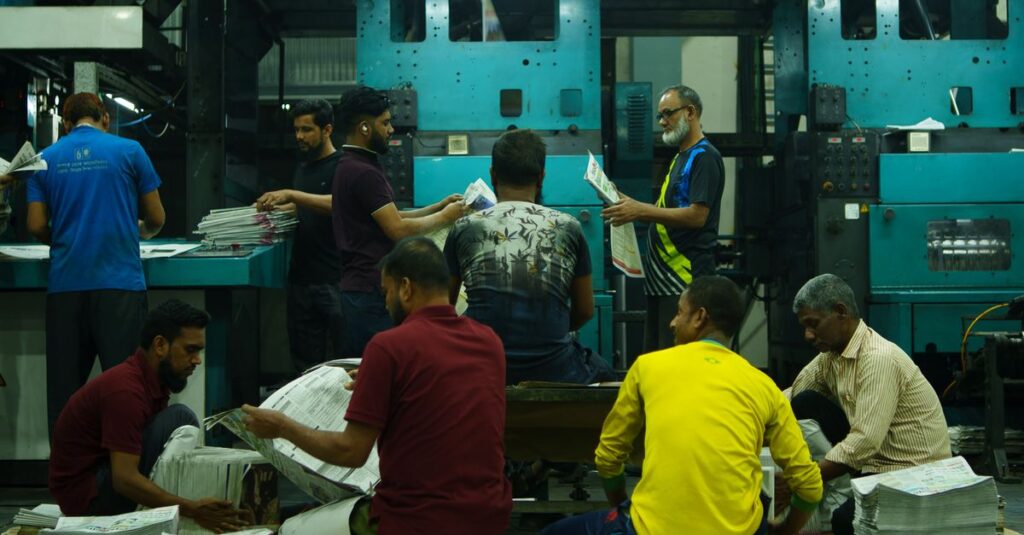
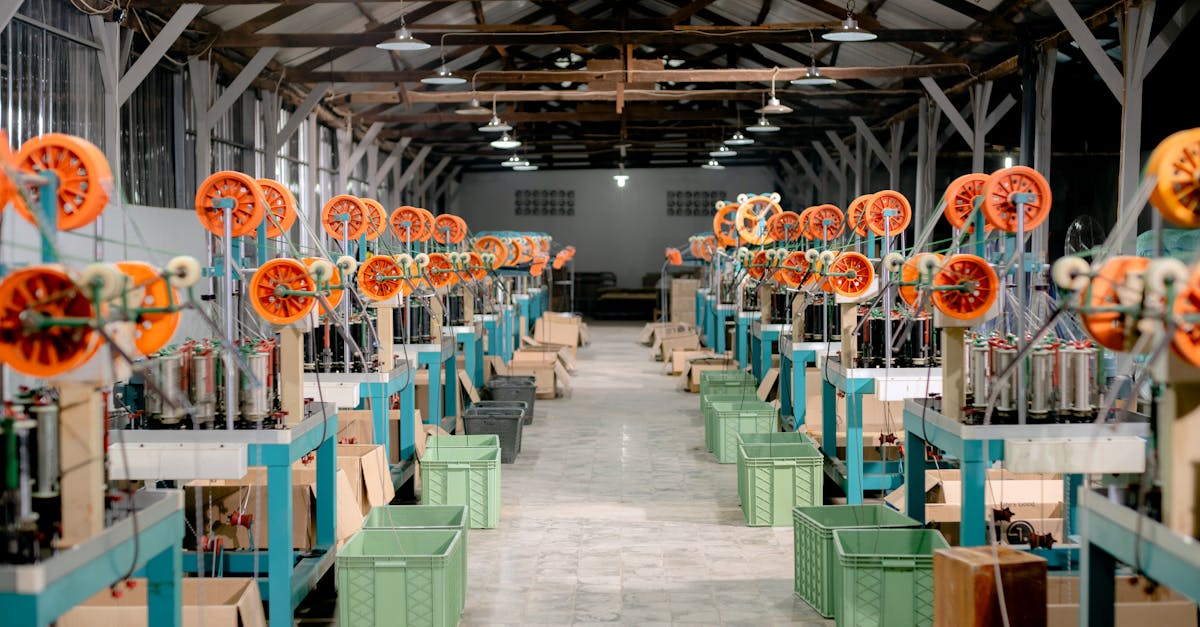
Okay, so flip the script. A notebook manufacturer isn’t a shop. It’s a factory. Instead of a storefront, you’ve got warehouses of paper reels. Instead of a digital photo printer, you’ve got massive offset presses that can print a million sheets in a run. The binding line isn’t a single machine; it’s a process where paper is folded, collated, stitched, glued, and trimmed in one continuous flow. The production capacity isn’t in hundreds per day, but in tens of thousands.
This changes everything when you’re a business, a school, or a distributor.
- Cost: The per-unit cost plummets. Buying paper by the truckload and running machines 24/7 creates economies of scale a retail shop can’t touch.
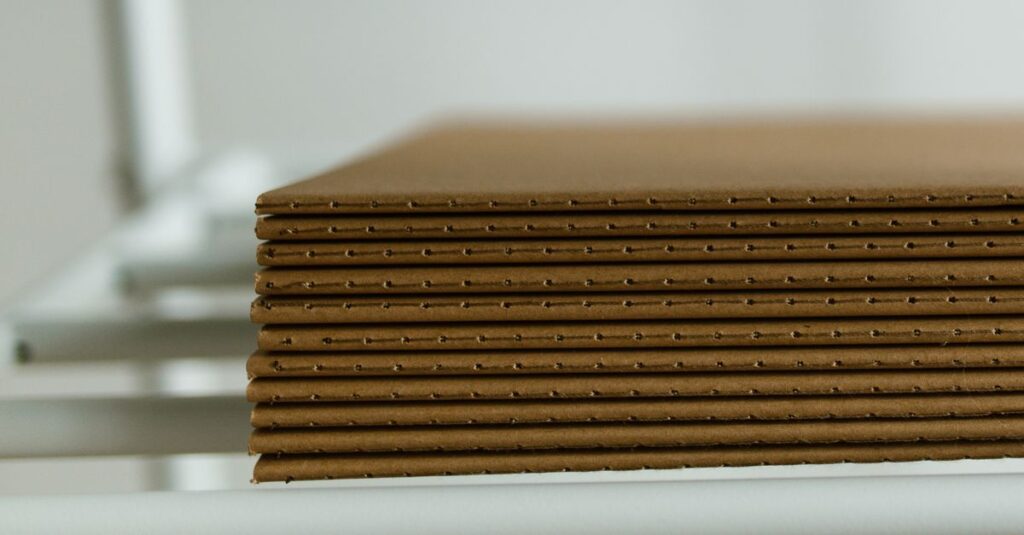
- Durability: The binding is industrial. Side-stitching with thread, perfect binding with hot glue — these are made to be used, tossed in bags, and survive a year of rough handling.
- Customization: This is the big one. You’re not picking from templates. You’re specifying everything. Paper GSM (we usually work with 54gsm for smooth writing), ruling type (single, double, four-ruled for accounting), cover material, lamination, foil stamping, even the exact shade of the cover. It’s your product, made to your specs.
- Expertise: You’re talking to people who’ve done this for decades. They know that paper from Mill A behaves differently in humid weather than paper from Mill B. They know how many stitches per inch a school notebook needs to not shed pages.
The goal isn’t to serve a walk-in customer in ten minutes. It’s to reliably produce 40,000 identical, high-quality notebooks for a client, ship them on pallets, and do it again next month. It’s a partnership, not a transaction.
Anyway. That’s the core difference. One is retail printing. The other is industrial production.
How to Choose: A Side-by-Side Comparison
Let’s make this super practical. When your business has a printing or stationery need, how do you decide which path to take? This table breaks it down. It’s not about which is better — it’s about which is right for the job you have right now.
| Consideration | Local Photo Printing Shop | Notebook Manufacturer |
|---|---|---|
| Best For | Small batches (1-100 units), photo products, quick turnarounds on simple prints. | Bulk orders (500+ units), custom notebooks, diaries, institutional stationery. |
| Typical Order Size | Single digits to low hundreds. | Thousands to hundreds of thousands. |
| Customization Depth | Limited to paper stock & basic binding; design changes to your file. | Full control: paper type, GSM, ruling, cover material, binding, finishing. |
| Cost Structure | High per-unit cost, includes retail overhead. | Low per-unit cost, economies of scale. |
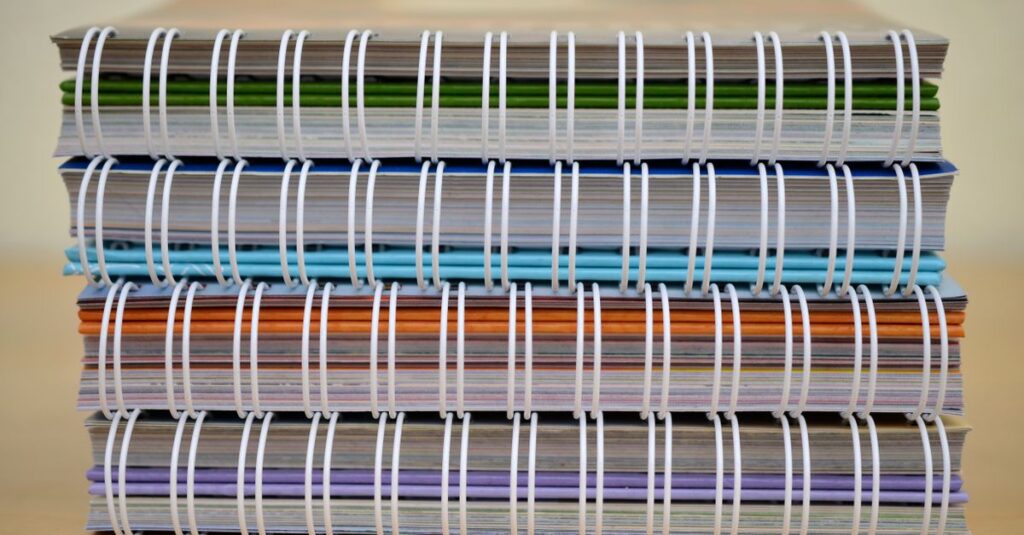
| Binding Options | Spiral, saddle stitch, simple softcover. | Side-stitched, perfect binding, hardcover, spiral, wire-o. |
| Paper Sourcing | Pre-cut, retail sheets. | Raw paper reels, sourced directly from mills for specific use. |
| Lead Time | Days (for simple jobs). | Weeks (for setup and production run). |
| Primary Customer | Consumers, small businesses with one-off needs. | Schools, corporations, government bodies, distributors, exporters. |
You see the divide? If your need falls squarely on the right side of that table, searching for a “shop” is going to lead you to a dead end. You need to search for terms like “bulk notebook supplier,” “custom diary manufacturer,” or “notebook factory.” It’s a different intent entirely.
The “Near Me” Question for Institutional Buyers
This part fascinates me. The instinct to find someone local is strong. You want to visit, to touch the paper, to hold a sample. For a 500-unit order of marketing brochures, that makes sense. For a yearly contract for 50,000 notebooks? Geography matters less than you think.
Here’s why. A capable manufacturer serving national or international markets has the logistics figured out. The pallets leave the factory in Rajahmundry, or Chennai, or wherever, and they arrive at your school’s storage room in Delhi or a distributor’s warehouse in Dubai. The cost of shipping, when spread over thousands of units, becomes negligible compared to the savings on manufacturing. The “local” advantage shifts from proximity to capability.
What you should be looking for locally isn’t the factory gate, but the evidence. Can they send you physical samples overnight? Do they have a clear, professional process for approving proofs? Is their communication fast and detailed? That’s the new “near me”— it’s about access and reliability, not just driving distance.
I think a lot of corporate buyers get hung up on the location thing because it feels like more control. But honestly, some of our most reliable clients are in the Gulf and Africa. We’ve never met in person. They trust the samples, the process, and the consistent quality shipment after shipment. The relationship is built on the product, not the postcode.
Expert Insight
I was reading an industry report a while back — can’t remember the exact source — and it pointed out something obvious that everyone misses. The single biggest cost in a notebook isn’t the paper or the printing. It’s the conversion: the cutting, the folding, the binding. A retail shop does this slowly, by hand or on small machines, with lots of stops and starts. A factory’s whole layout is designed to make that conversion flow in one continuous, automated motion. That’s where the magic — and the savings — happen. The report called it “the cost of interruption.” Every time you stop a machine to set up a new small job, you pay. One long, uninterrupted run for a bulk order? That’s where the value is.
Your Next Steps: From Searching to Sourcing
So you’ve Googled “photo printing shop near me” and you’re realizing your project is bigger. What do you do now?
First, get your specs crystal clear. How many units? What size? (King size? Long? A4?). How many pages? What ruling? What’s the deadline? Have a rough idea of your budget, but be prepared — a good manufacturer will often show you how to get better quality for the same price, or the same quality for less, by adjusting specs slightly.
Second, start looking for manufacturers, not shops. Search for “custom notebook manufacturing India” or “bulk school notebook supplier.” Look at their websites. Do they show a factory? Do they list their machinery? Do they talk about paper GSM and binding types? That’s the language of production.
Third, ask for samples. Any serious manufacturer will send you a physical sample book, often for just the cost of shipping. This is non-negotiable. You need to feel the paper, test if the ink bleeds, try to rip a page out of the binding. That sample tells you more than a hundred website photos.
And listen — this is where it gets real. If you’re evaluating a supplier and they can’t clearly explain the difference between perfect binding and side-stitching, or why you’d choose 54gsm over 70gsm for a student notebook, walk away. You’re not talking to a manufacturer; you’re talking to a middleman.
This process takes a little longer than walking into a shop. But the payoff is a product that actually fits your need, a price that fits your budget, and a supplier who can grow with you. For a school or business, that’s the only thing that matters.
Frequently Asked Questions
Can a local photo printing shop make custom notebooks?
Technically, maybe. Practically, it’s a bad idea for anything more than a few dozen units. They lack the specialized, high-speed binding equipment and bulk paper sourcing to do it cost-effectively or durably. You’ll pay a premium for a product that isn’t built to last.
What’s the minimum order quantity for a notebook manufacturer?
It varies, but for true custom manufacturing (your design, your specs), expect minimums to start around 500-1000 units. For standard notebook products bought in bulk, some manufacturers might offer lower MOQs. It’s always best to ask directly.
I need branded notebooks for a corporate event. Which option is better?
It depends entirely on quantity. For 50-100 notebooks as guest gifts, a good local shop might suffice. For 500+ notebooks for a large conference or as yearly diaries for your staff, a manufacturer is the only sensible choice for quality and price.
How long does it take to get notebooks from a manufacturer?
Much longer than a print shop. After finalizing design and approving proofs, allow 4-8 weeks for production and shipping. The first order takes the longest due to setup; repeat orders are faster. Plan ahead.
Is it more expensive to work with a manufacturer far away?
Usually, no. The significantly lower per-unit manufacturing cost almost always outweighs the shipping cost, especially for bulk orders. You’re paying for industrial efficiency, not retail overhead and markups.
Wrapping This Up
Search intent is everything. “Photo printing shop near me” comes from a place of wanting something tangible, close, and fast. But when that need scales up into the realm of business procurement, institutional supply, or branded merchandise, the solution isn’t a shop. It’s a factory.
The skills, the machinery, the supply chains, and the very purpose of the operation are different. One fulfills a retail desire; the other solves a bulk supply problem. Understanding that distinction — really getting it — saves businesses time, money, and a massive amount of frustration.
I don’t think there’s one perfect answer for every situation. But if you’re reading this and thinking about boxes of notebooks piling up in a storage room, or a branded diary on every employee’s desk, you’re not really looking for a shop. You’re looking for a partner who makes the thing. You’re just figuring out how to start that conversation.
If what we do fits that description, and you want to see what a manufacturing partnership looks like, you can always start by looking at what a 40-year-old factory can produce. It’s a different world from the mall kiosk, I promise.