Introduction
You need 5,000 notebooks for the upcoming school term. Or maybe 1,000 branded diaries for a corporate event. You open a browser, type ‘notebook supplier,’ and get a million results. Retail sites, wholesalers, some guy on Alibaba. And somewhere in there, the actual source: the notebook manufacturer.
The difference between those results is massive. And it’s the difference between a smooth order that arrives on time, perfectly printed, and a logistical headache that shows up two weeks late with the wrong cover. I’ve seen it happen enough times now. Schools scrambling, procurement managers getting chewed out — it’s almost always because they didn’t go straight to the source.
Here’s the thing. A notebook manufacturer isn’t just a seller. They’re the factory. The people who take raw paper, run it through presses, bind it, and box it up. It’s a specific kind of operation, and understanding it is the first step to not getting burned on a big order. If you’re in charge of buying notebooks in bulk, this is worth a real look.
What Exactly Is a Notebook Manufacturer?
Let’s be clear. A manufacturer makes things. So a notebook manufacturer makes notebooks. From scratch. That’s the simple version. But the real definition — the one that matters when you’re writing a purchase order — is about control.
It’s the difference between a chef and a food delivery app. One creates the meal from ingredients; the other just brings it to you. A manufacturer owns or directly operates the machinery: the printing presses, the cutting machines, the binding lines. They source the paper reels, the glue, the wire for spirals. They manage the production floor where blank sheets become finished books.
This control is everything. It means when you need a last-minute change to the cover color, they can walk over to the press operator and make it happen. It means quality checks happen at every stage, not just when the shipment lands at a distributor’s warehouse. Most people think a manufacturer is just the cheapest option. That’s not quite right. It’s the most reliable option for bulk. Because you’re cutting out the middleman who can’t answer why the paper GSM feels off.
Think about it this way: who do you call if the stitching is coming loose on 200 books? If the answer is a customer service rep who has to ’email the supplier,’ you’re not talking to the manufacturer.
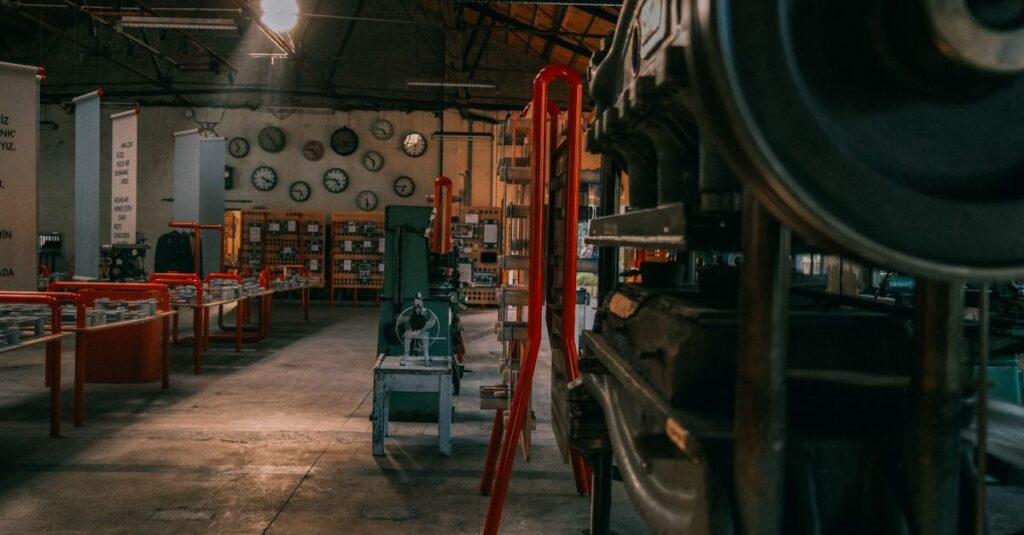
The Anatomy of a Notebook Factory
I remember touring our own facility years ago with a client, a procurement manager for a chain of schools. He kept saying, “I had no idea it was this many steps.” He thought it was print, staple, done. The reality is a ballet of machines and decisions.
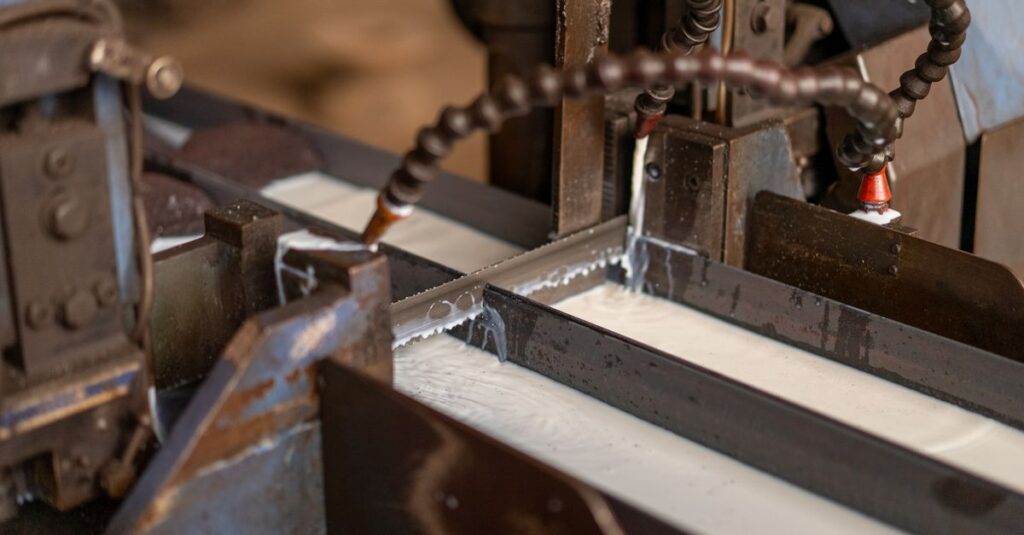
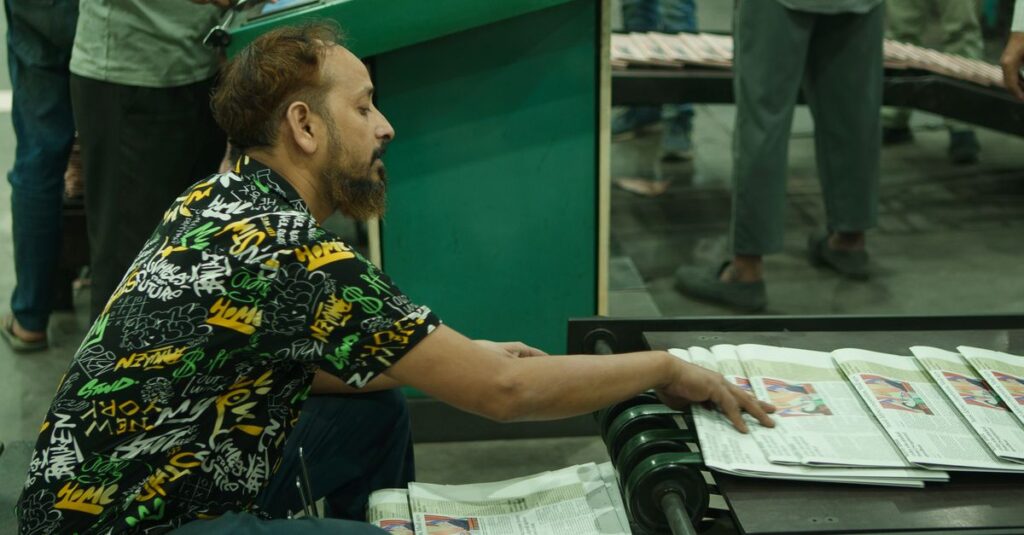
The process usually starts with paper — huge, industrial-sized reels. These get loaded onto a machine that cuts them down to the notebook size. King size, long, short, account book. That’s step one. Then those stacks of cut paper move to the printing section. This is where your logo, the rulings, the page numbers get added. Offset printing for big, consistent runs; digital for smaller, customizable batches.
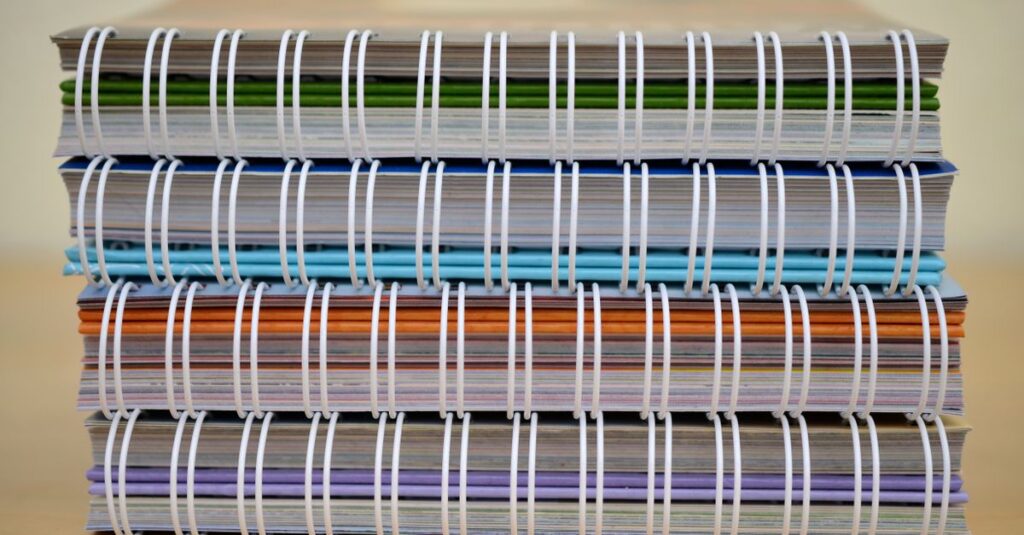
After printing, it’s off to binding. This is where personalities diverge. Spiral binding (coil) for notebooks that need to lay flat. Perfect binding (that glued spine you see on paperback books) for a cleaner look. Stitched binding (saddle stitching) for standard school notebooks — it’s durable and cost-effective for high volume. Each choice changes the feel, the cost, and the production time.
Finally, trimming, packing, and boxing. It sounds straightforward until you’re trying to pack 40,000 notebooks for 20 different schools, each with their own custom header on the cover. The factory floor on a deadline is a special kind of organized chaos. The question isn’t whether they can make notebooks. It’s whether their chaos is more organized than the other guy’s.
A Real-Life Glimpse
Rahul, 42, is a procurement head for a mid-sized university in Hyderabad. His story is typical. Last July, he needed 8,000 lab notebooks — graph-ruled, specific green cover, spiral bound — for the new academic year. He went through a stationery distributor he’d used for years. The price was okay. The delivery was a disaster. Wrong shade of green, half the shipment was single-ruled, and they arrived three weeks into the semester.
He showed me one of the notebooks. The spiral coil was already catching on bags. “The professors were furious,” he said. He spent the next month fielding complaints and arranging replacements. He didn’t make that mistake again. Now he asks one question first: “Are you the manufacturer, or do you source from one?” The answer dictates the rest of the conversation.
Manufacturer vs. Supplier vs. Wholesaler: The Crucial Difference
This is where most bulk buyers get tripped up. They use the terms interchangeably. But in the trade, they mean very different things, and picking the wrong one will cost you time, money, or both.
A manufacturer (like us at Sri Rama Notebooks) creates the product. A wholesaler or distributor buys huge quantities from manufacturers and sells them in smaller lots to retailers or institutions. A supplier is a broader term that could be either. The wholesaler is a reseller. Their value is in having a wide variety of stock from multiple factories. Their weakness is that their hands are tied by their own suppliers.
Need a custom ruling pattern not in their catalog? They have to ask the factory, hope the factory agrees, and then add their own markup on top. Have a quality issue? The wholesaler becomes a messenger between you and the actual producer, which slows everything down.
Working directly with the manufacturer cuts out that layer. You get clearer pricing (no middleman margin), direct communication with the production team, and much more flexibility for customization. The trade-off? Minimum order quantities are usually higher. They have to be — setting up a print run for 500 notebooks doesn’t make sense when the machine is built for 5,000. So if you need a pallet of books, not a carton, the manufacturer is your only real option.
| Aspect | Notebook Manufacturer | Wholesaler/Distributor |
|---|---|---|
| Core Function | Produces notebooks from raw materials | Buys in bulk from manufacturers and resells |
| Pricing Control | Direct control, often lower per-unit for large orders | Adds markup, less flexible on big custom quotes |
| Customization | High flexibility (logo, paper, ruling, binding, cover) | Limited to existing catalog/stock items |
| Minimum Order | Higher (e.g., 1,000+ units) | Lower (can sell by the carton) |
| Problem Resolution | Direct access to production floor, faster fixes | Must contact their supplier, creating delays |
| Best For | Bulk orders, schools, corporates, custom branding | Small retailers, restocking varied items quickly |
Why Go Direct? The Real Benefits for Bulk Buyers
Look, I’ll be direct. If you’re a school, a college, a corporate office ordering hundreds or thousands of units, going through a middleman is just adding risk and cost for no real benefit. Nine times out of ten.
The first benefit is cost. It’s simple math. Factory price + wholesaler margin + your price. Cut out the middle, and the savings are significant on large volumes. That budget could go into better paper quality or more books.
The second is customization. This is the big one. A manufacturer can do things a wholesaler can’t dream of. Want your school crest embossed on a premium cover? Specific color palette for your brand? A unique page layout for accounting ledgers? We can set up the print file and run it. A wholesaler can only offer you what’s in their warehouse or what their one contracted factory is willing to do. Their flexibility is borrowed.
The third benefit is reliability and transparency. When you place an order with us, you’re not hoping a third-party supplier prioritizes it. You’re in the production queue. You can get updates, sometimes even photos from the factory floor. If a delay happens (and in manufacturing, raw material delays do happen), you hear about it from the source, not through a game of telephone. That trust matters when a whole academic year depends on those books arriving.
I was talking to a stationery distributor last month — over WhatsApp, actually — and he admitted his biggest headache was managing client expectations when his factory was backed up. He had zero control. That’s a stress you don’t need.
Expert Insight
I was reading an industry report a while back, and one line stuck with me. It said that in bulk stationery procurement, the single largest point of failure isn’t price or even quality — it’s communication breakdowns in the supply chain. The more links in the chain, the more something gets lost in translation. A specs sheet changes hands three times, and suddenly ‘royal blue’ becomes ‘navy blue.’ The researcher argued that shortening the chain to its absolute minimum was the closest thing to a guarantee. I don’t have a cleaner way to put it than that. The factory floor speaks one language: the order sheet in front of it.
What to Look for When Choosing a Manufacturer
Okay, so you’re convinced. You want to go straight to the source. How do you pick one? It’s not just about who’s cheapest on page one of Google. That’s a sure way to get burned.
First, look for proof of manufacturing. Can they show you the facility? Video, photos, an invite to visit? Do they talk about specific machines, production capacity, binding methods? A reseller will talk about catalog numbers and delivery times. A manufacturer will talk about paper GSM, print runs, and binding stitch counts. The vocabulary is different. Ask them: “What’s your daily output capacity?” A real factory has a number. A trader will hesitate.
Second, ask about customization. Not just ‘yes we do it,’ but the specifics. Send them a dummy design and ask for a process overview. How do you handle cover artwork? What file formats do you need? Can you match a Pantone color? Their answers will tell you everything. If it’s vague, they’re probably farming it out.
Third, check their clientele. Do they work with schools, government tenders, corporate brands? These are bulk, repeat clients who can’t afford mistakes. A manufacturer serving them has systems in place. Ask for case studies or, even better, ask to speak to a long-term client. (We’ve connected potential clients with school trustees before — it builds trust fast).
Fourth, and this is subtle, assess their communication. When you ask a technical question, who answers? The salesperson who has to ‘check with the unit,’ or someone from the unit itself? Speed and authority in answers mean shorter lines internally. That translates to fewer errors for you.
It’s about due diligence. You’re not just buying a product; you’re buying a capability. And honestly? Most people skip this step and just compare price lists. That’s how Rahul ended up with the wrong green notebooks.
Anyway. If you’re evaluating options, looking at their product range is a good start, but digging into their ‘about’ and ‘process’ pages tells you more.
The Unspoken Truth About Bulk Orders
Here’s the part nobody in sales wants to say out loud. Not every manufacturer is good at every type of order. Some are brilliant at churning out millions of standard school notebooks but get clumsy with small, intricate corporate diary runs. Others specialize in premium custom work but can’t hit the volume price point a government tender needs.
The unspoken truth is you have to match your need to their specialty. A factory set up for high-speed, standard notebook production has different machinery than one built for short-run, full-color custom covers. Asking one to do the other’s job ends in frustration.
Three things happen when there’s a mismatch. One, your costs balloon because they’re operating outside their efficient zone. Two, quality suffers. Three, timelines stretch. I’ve seen factories take on work they shouldn’t, just to get the order, and everyone loses.
So how do you know? Ask them: “What’s your bread and butter? What’s the order size you’re most efficient at?” Their honest answer is gold. If 80% of their work is 50,000-unit school orders, maybe your 2,000-unit branded notebook project needs a different home. And that’s okay. Recognizing that saves everyone a headache.
It’s not about finding the biggest manufacturer. It’s about finding the right one.
Conclusion
At the end of the day, a notebook manufacturer is just a factory. But for anyone buying in bulk — schools, businesses, institutions — that factory is the most important partner in the room. They’re the difference between a smooth, successful order and a logistical mess that haunts you for months.
The key takeaways are simple. Know the difference between a maker and a seller. Value control and direct communication as much as you value price. And match your specific need to the factory’s specific strength. It sounds basic, but in the rush to meet deadlines and budgets, these are the things that get overlooked.
I don’t think there’s one perfect manufacturer for everyone. Probably there isn’t. But if you’ve read this far, you already know what you need from a supplier — you’re just figuring out how to find the one that won’t let you down. For a closer look at how one factory operates, our story might be useful.
Frequently Asked Questions
What is the minimum order quantity for a notebook manufacturer?
It varies, but for a true manufacturer, MOQs start around 1,000 to 2,000 notebooks. This is because setting up the printing plates and machines for a custom run has a fixed cost. Smaller orders often aren’t feasible for their production lines, which are built for efficiency at scale.
Can a notebook manufacturer print my company logo?
Absolutely. Custom logo printing is a core service for most manufacturers. They’ll need a high-resolution digital file of your logo and specifications for placement. This is where going direct is a huge advantage — you work with the design and print team directly to get the colors and sizing exactly right.
How long does it take to produce a bulk custom notebook order?
Production time depends on order size and complexity. For a standard custom order of, say, 5,000 notebooks, allow 3-4 weeks from final approval of artwork to dispatch. This includes time for sample approval, paper sourcing, printing, binding, and packing. Rush jobs are possible but cost more.
What paper quality do manufacturers typically use?
Most standard notebooks use writing paper around 54-70 GSM (grams per square meter). It’s a sweet spot between smooth writing, opacity (so ink doesn’t show through), and cost-effectiveness for bulk. Manufacturers can offer higher GSM (thicker) paper for premium diaries or lower GSM for budget exercise books.
Do notebook manufacturers export internationally?
Many do, especially in manufacturing hubs like India. They handle the production, packing, and documentation (like commercial invoices) for export. The buyer typically arranges and pays for shipping and freight forwarding. It’s common for manufacturers to supply notebooks to the Gulf, Africa, Europe, and the USA.