Why “Copier Near Me” Is Probably The Wrong Search
You’re at your desk, coffee cold. The procurement list is staring back at you: 5,000 notebooks for the new school term, 2,000 custom diaries for the corporate event, a re-order of account books. The pressure’s on. Your mind, on autopilot, types into Google: copier near me.
Here’s the thing — that search is a reflex. A good one, for small jobs. But for what you’re actually trying to do? It’s like going to a bakery when you need to feed a stadium. The scale is off. Completely.
I’ve been in notebook manufacturing for decades, and I hear this all the time from procurement managers and school administrators. The frustration of calling local print shops only to get quotes that make your budget weep, or worse, being told they can’t handle the volume or the specific binding. The emotion behind that search isn’t really about finding a copier. It’s about finding a solution that doesn’t waste your time, doesn’t blow your budget, and actually delivers what you need, when you need it. If that sounds familiar, understanding the difference between a copy shop and a manufacturer might be worth a look.
The Local Copy Shop vs. The Bulk Manufacturer: A Night and Day Difference
Let’s get this out of the way. Your neighborhood copy center is brilliant. Need 50 bound reports by 3 PM? They’re your heroes. Need 50,000 notebooks by the start of Q3? You’re talking to the wrong people.
The core difference is in the DNA of the operation. A copy shop is built for short-run, on-demand reproduction. They buy paper in reams. They use digital printers. Their binding options are limited to what their in-store machines can handle—maybe some spiral binding, some basic perfect binding. Their paper choices? Whatever is in stock.
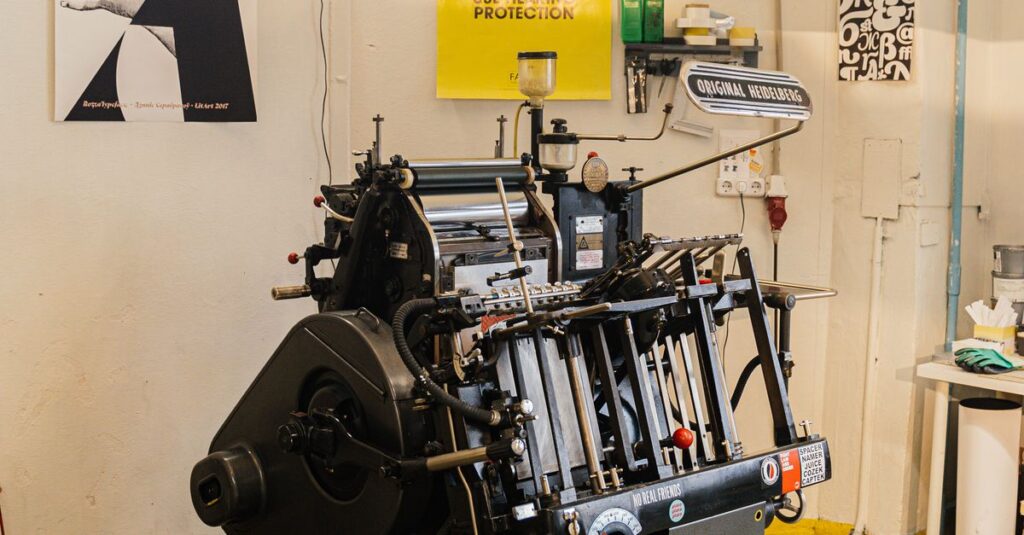
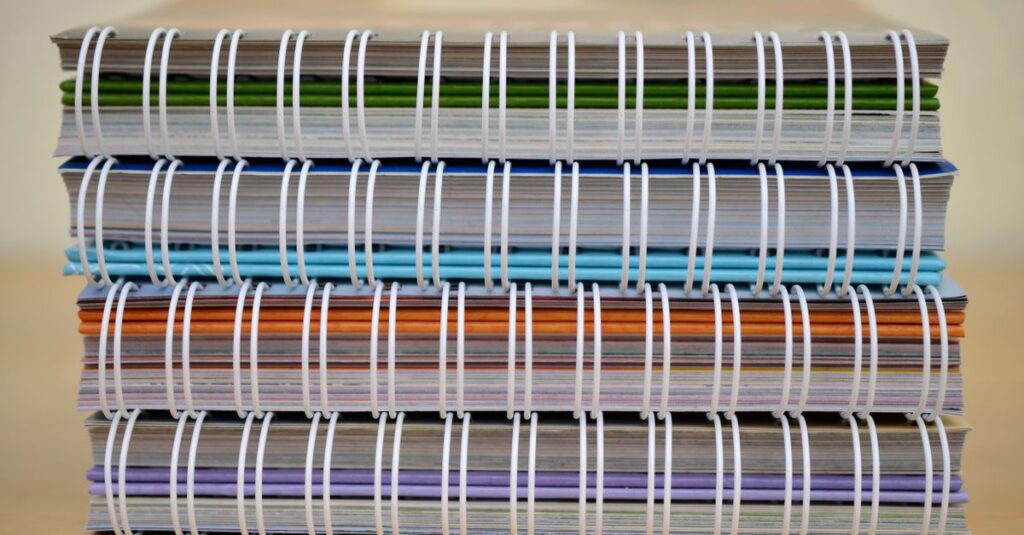
A manufacturer, on the other hand, is built from the ground up for scale and customization. We think in tonnes of paper, not sheets. Our machines are industrial—high-speed web offset presses that can print a million pages in the time it takes a digital copier to warm up. We don’t just bind; we stitch, we perfect bind with hot melt adhesive for textbooks, we do spiral binding with metal or plastic coils by the kilometer.
It’s not just about size. It’s about control. When you work with a manufacturer, you’re not just picking from a menu. You’re specifying the GSM of the writing paper (is it 54 GSM for smooth writing, or thicker for artists?), the ruling (single, double, four-ruled for accounting, cross-ruled for graphs), the cover stock, the binding method. You’re creating a product, not ordering a copy.
Expert Insight
I was on a call with a distributor from Hyderabad last month. He’d been sourcing from local printers for years, dealing with inconsistent quality and constant price hikes. He said something that stuck with me: “I realized I wasn’t buying notebooks; I was managing a dozen different supplier relationships, and it was exhausting.” He’d been searching for solutions locally, but the real solution was shifting his entire sourcing model. It’s a common story. The capability you need often isn’t within a 10-mile radius. It’s in a specialized industrial cluster, like our setup here in Rajahmundry, where the entire supply chain—from paper mills to binding wire—exists in one ecosystem.
What You Lose (And Gain) When You Go Local vs. Direct
This is where it gets real. Let’s break it down with a scenario.
| Consideration | Local “Copier Near Me” | Direct Notebook Manufacturer |
|---|---|---|
| Volume Threshold | Best for under 500 units. Prices skyrocket after. | Built for 5,000 to 500,000+ units. Economy of scale kicks in. |
| Customization | Limited. Usually just slapping a logo on a pre-made book. | Full control. Cover design, page layout, paper type, ruling, binding—all bespoke. |
| Paper & Material Sourcing | Buys retail, higher cost per sheet, limited quality options. | Direct from paper mills. Lower cost, consistent quality, ability to specify exact GSM and finish. |
| Production Time | Fast for tiny jobs. For large jobs? They outsource it anyway, adding layers. | Longer lead time upfront (for setup), but predictable, high-speed production once running. |
| Real Cost | Higher per-unit cost, hidden setup fees, less durability. | Lower per-unit cost, includes durability engineering (stitching vs. glue), long-term value. |
| Core Business | Printing & Copying. | Notebook Manufacturing. This is the only thing we do. |
The gain when you go direct isn’t just price. It’s appropriateness. A school notebook for a 7-year-old needs to survive a backpack. A corporate diary needs to look premium on a boardroom table. A distribution wholesaler needs consistent, packable, shippable units. A local copier is trying to fit your square peg into their round hole. A manufacturer builds the exact peg you need.
Think about it this way: your search intent is transactional—you need to buy notebooks. But the smarter intent is strategic—you need to source them. That’s a different game.
The Real-Life Search: A Micro-Story
Anita, 42, Procurement Manager for a chain of private schools in Bangalore. Her deadline was three weeks away. Last year’s supplier had folded. Panic. She googled “notebook printing near me,” “bulk notebooks Bangalore,” and yes, “copier near me.” She spent two days visiting places. One could do the count but not the four-ruled pages. Another could do the ruling but only in A4, not the crown size she needed. The third gave her a quote that was 40% over budget. “I felt like I was hunting for unicorns,” she told me later. She was looking for a local solution to a problem that wasn’t local. Her breakthrough came when she stopped searching for a printer and started searching for a notebook manufacturer. The geography of the search changed from “near me” to “in India.” The solution was here, 1000 km away in Rajahmundry, but it was the right solution.
Her story isn’t unique. It’s the standard.
So, What Should You Search For Instead?
If “copier near me” is the symptom, what’s the cure? You need to refine your vocabulary to match your actual need. The search algorithms will follow.
Here’s a quick list:
- Instead of “copier near me” → Try “bulk notebook manufacturer” or “custom diary supplier.”
- Instead of “printing services” → Try “notebook printing and binding” or “stationery production company.”
- Instead of “local printer” → Try “OEM notebook manufacturer” or “private label notebooks.”
The magic words are manufacturer, supplier, bulk, and custom. These terms filter out the B2C and small-B2B players and point you toward the industrial-scale operations that are equipped for your project. It shifts the results from services to products, from vendors to partners.
And look, I’ll be direct. This often means the factory isn’t in your city. It might be in Rajahmundry, or Chennai, or Delhi-NCR. But in today’s world, with WhatsApp, email, and reliable logistics, that distance is irrelevant compared to the relevance of getting exactly what you need. The question isn’t “where are they?” It’s “can they do it?”
Making the Shift: How to Evaluate a Real Manufacturer
Okay, so you’re convinced. You’re ready to look beyond the map radius on your phone. How do you actually vet a notebook manufacturer? It’s not like checking Google reviews for a cafe.
First, ask about capacity. Not in vague terms. Get specific. “What is your daily output for stitched, 92-page, crown-size notebooks?” A real manufacturer has this number at their fingertips. (For reference, our facility can run 30,000 to 40,000 finished, bound notebooks a day. That’s the scale we’re talking about).
Second, ask for a physical sample kit. Don’t just look at a PDF. You need to feel the paper, test if the ink smudges, try tearing a page out of a stitched binding versus a glued one. The physical product tells the truth.
Third, drill into customization. Can they change the header on each page for a branded notebook? Can they mix ruled and unruled pages in the same book? What are their standard ruling and size options? Their flexibility here shows their technical depth.
Finally, talk logistics. How do they pack? (Shrink-wrapped in dozens, then cartons, then pallets). What’s their standard lead time from approved artwork to dispatch? Who handles the freight? A professional operation has this process down to a science. This is where the efficiency you’re paying for becomes visible—not just in the product, but in the lack of headache getting it to your warehouse or school.
I think the biggest mistake smart buyers make is assuming manufacturing is opaque, too complex. It’s not. It’s just a different set of questions.
FAQ: Your “Copier Near Me” Questions, Answered
Frequently Asked Questions
Can’t a local printer just outsource my big notebook order?
They often do. But then they become a middleman, marking up the manufacturer’s price. You pay extra for no reason, lose direct communication with the factory, and add another point where things can go wrong. Going direct is always cleaner and cheaper.
Isn’t shipping from a distant manufacturer expensive and slow?
It’s factored into the total cost, which still ends up lower per notebook. On speed: yes, there’s a longer initial production time (for setup). But once running, we produce and ship faster than a local shop can outsource and manage the job. For bulk, the overall timeline is often better.
What if I need a small, urgent batch? Is a manufacturer still right?
Honestly? Probably not. For a true emergency order of 100 books, use the local copier. Manufacturers have minimum order quantities (MOQs) because of machine setup costs. Our sweet spot starts at a few thousand units. It’s about using the right tool for the job.
How do I know the paper quality from a manufacturer is good?
Ask for the GSM (grams per square meter). Standard notebook paper is around 54-70 GSM. Ask for a sample—write on it with a fountain pen, a ballpoint, a marker. See if it bleeds. Any reputable manufacturer will send you samples before you commit to a giant order.
I need notebooks with my company logo. Is that “custom printing”?
Yes, but there are levels. A local shop might print a sticker on a cover. A manufacturer can print the logo directly onto the cover material, emboss it, foil-stamp it, and even customize the header on every single page inside. It’s a different level of brand integration. You can see some of what’s possible with our custom printing services.
Conclusion: Rethink the Radius
The impulse to search locally is a good one. We all want convenience, speed, someone we can drive to and have a conversation with. I get it.
But for bulk notebooks, corporate diaries, institutional stationery—the stuff that matters for your business or school—that local radius might be an illusion. The capability, the cost-effectiveness, and the quality you need often exist outside of it. Your search for a “copier near me” is really a search for reliability, scale, and value. And those things aren’t always found on the same street.
Maybe the most productive thing you can do is stop searching for a service and start searching for a specialist. The relief isn’t in finding someone close. It’s in finding someone right.
I don’t have a cleaner way to put it than that. If you’re sourcing for a school, a corporation, or as a distributor, and the local quotes just aren’t adding up, the conversation you need might be a phone call or an email away. It’s worth exploring what a direct manufacturer can actually do for your specific list.