Let’s Talk About Book Covers, Honestly
You want to order a thousand notebooks for your graduating class. Or a batch of corporate diaries for your employees. And the question pops up about the one thing everyone sees first: the cover. It’s supposed to be simple, right? Pick a color, slap on a logo. Done.
Except it’s never that simple. Not if you care about quality, or cost, or whether the thing survives a year in a student’s backpack. The difference between a cheap cover and a good one isn’t just price. It’s about paper weight, lamination, design choices your manufacturer might not even mention, and what those choices mean when you’re ordering in bulk. This is the stuff procurement managers and school administrators wrestle with at 10 PM, juggling budgets and supplier quotes.
For nearly 40 years, we’ve seen it all at Sri Rama Notebooks. The good, the bad, and the flimsy covers that fall apart before the year is out. So let’s break it down.
What Is a Book Cover, Anyway? (It’s Not Just Cardboard)
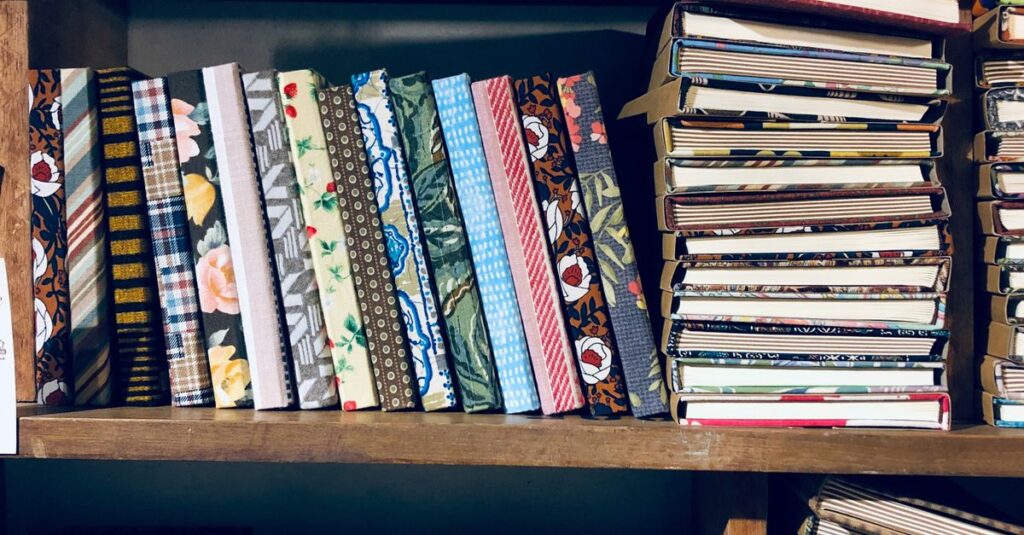
Right. So when we say “cover for books” in this business, we’re not talking about dust jackets on novels. We’re talking about the physical, front-and-back piece that holds a notebook, diary, or account book together. Its job? Protect the pages. Look professional or appropriate. And, if we’re being honest, sell the product on a shelf or represent a brand.
But let’s get specific. A notebook cover is a structural component. It has to take the hinge stress of the binding, endure constant handling, and resist tears and moisture. So the materials matter. A lot. Most manufacturers will offer you a few standard options – I’ll list them here so you know what to ask for:
- Art Card: Standard stuff. Good for school notebooks where cost is the biggest factor. Usually around 250-300 GSM. It’s stiff but can warp if it gets damp.
- Pasted Laminated: This is where you take that art card and glue a plastic film on it. The cheapest way to get a shiny, water-resistant surface. You see it on most budget notebooks.
- Sun Mica or Poly-Clad: A step up. The laminate is fused to the card under heat and pressure, so it doesn’t peel. This is what you want for corporate diaries or anything that needs to look sharp and last.
- Leatherette/Bookcloth: The premium tier. Imitation leather or woven cloth over board. This is for executive diaries, high-end record books. It feels expensive. Because it is.
The question you need to ask isn’t just “what type?”. It’s “what does this type mean for my order?” Because the jump from pasted laminate to sun mica can add 15-20% to your unit cost. Is it worth it for 5000 student notebooks? Probably not. For 500 client gift diaries? Absolutely.
The Hidden Factors That Actually Determine Cost
Here’s the thing – most suppliers give you a per-unit price. And that’s it. But that price is built on a dozen small, hidden choices. You should know them.
One Cover, Four Sides
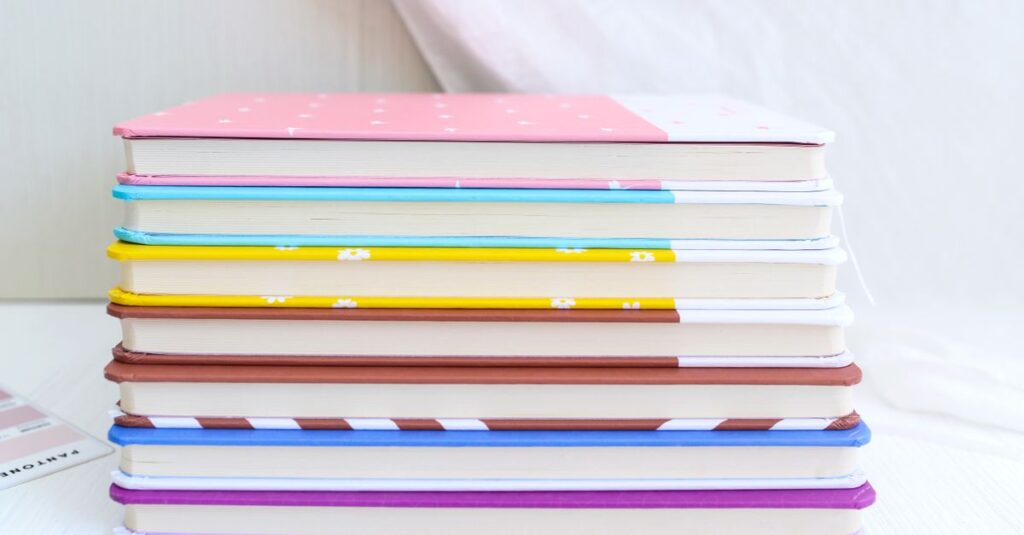
Every standard notebook or diary has a cover with FOUR printable, visible sides: the front, the back, the spine, and the inside front cover. I bring this up because I can’t tell you how many times a client has designed a beautiful front panel and forgotten about the spine. Then we get to printing and there’s a blank white strip on the shelf. Or they forget the inside cover is prime real estate for a calendar, instructions, or a motivational quote from the CEO.
Printing on all four sides costs more. Especially the spine – the tolerances are tighter. But if you’re private labeling, it’s what makes your product look finished. Not optional, in my view.
The GSM Trap
Everyone asks about GSM for the paper inside. But cover GSM is just as critical. A 250 GSM art card cover feels very different from a 350 GSM board. It’s stiffer, more substantial. It also adds weight, which increases shipping costs if you’re an international buyer. You need to find the sweet spot between durability and practicality. For a standard A4 account book that gets heavy use? Go thicker. For a pocket diary? Thinner is fine.
Anyway. You get the idea. The cover spec sheet is where the real game is played. And most people just glance at it.
A Real-Life Example: Priya’s School Order
Let me tell you about Priya, a procurement manager for a chain of private schools in Hyderabad. Last July, she was ordering 15,000 notebooks for the new academic year. Her previous supplier used a cheap pasted lamination that started peeling by October – parents complained. This time, she came to us. We talked her through the jump to sun mica. The unit cost went up by ₹1.20. For the whole order, that was a significant bump in her budget.
She pushed back. I asked her: “What’s the cost of your time next October, handling complaints, re-ordering a batch, and looking bad in front of parents?” She went quiet. We did the math. It wasn’t about the notebook price anymore. It was about total cost of ownership. She went with the sun mica. We shipped them in August. She emailed me in March. Not a single complaint.
Expert Insight
I was reading an industry report last month about packaging perception. One line stuck with me. The researcher said something like – for a B2B buyer, the quality of the cover is a direct proxy for the quality of the contents inside. Even if the paper inside is identical. If the cover feels cheap, they assume the whole product is cheap. If it feels sturdy and well-printed, they trust the information in the pages will be reliable. I don’t have a cleaner way to put it than that. It’s not rational, but it’s human. And in bulk orders, that perception becomes your brand’s reputation.
A Quick Comparison: Standard vs. Premium Notebook Covers
| Feature | Standard Cover (Pasted Laminated) | Premium Cover (Sun Mica / Poly-Clad) |
|---|---|---|
| Material Core | 250-300 GSM Art Card | 300-350 GSM Board |
| Lamination Process | Plastic film glued on; can peel at edges | Film fused under heat/pressure; integral bond |
| Water & Scuff Resistance | Low to Medium | High |
| Feel & Stiffness | Can feel slightly flimsy, may warp | Rigid, substantial, lies flat |
| Print Vibrancy | Good, but can have a plastic sheen | Sharp, matte or gloss finish options |
| Ideal For | Short-term use, internal stationery, tight-budget school books | Corporate gifts, diaries, account books, premium student notebooks |
| Cost Impact (approx.) | Base cost | +15% to +25% per unit |
Customization: Where Cover Design Gets Real (And Tricky)
This is where we see most corporate clients get stuck. You want your logo on the cover. Obviously. But then the conversation needs to go further. What colors? Spot colors (Pantone) or CMYK process? Spot colors are more expensive but guarantee brand color matching. CMYK is cheaper but there can be slight shifts.
And then there’s embossing or foil stamping. Want your logo to be raised and shiny? That’s a whole other process. It looks incredible on a leatherette diary. It also requires a metal die to be made, which is a one-time setup cost. Worth it for a run of 5000 units? Maybe. For 500? Probably not. The math is brutal, but someone has to do it.
The best advice I can give? Work with a manufacturer that has in-house printing and design support. Don’t just send a PDF and hope. They can tell you if your design has bleeds, if the spine text is too small, if that intricate logo will blur on textured paper. It saves so much headache and wasted samples.
Binding: The Unsung Hero Holding Your Cover On
You can have the best cover in the world, but if it’s attached poorly, the whole thing fails. The binding method dictates what your cover can be, and how it behaves.
- Perfect Binding: Think paperback books. The cover is glued directly to the spine of the page block. It gives a clean, squared-off look. Works great for thick diaries or account books. But it doesn’t lay flat.
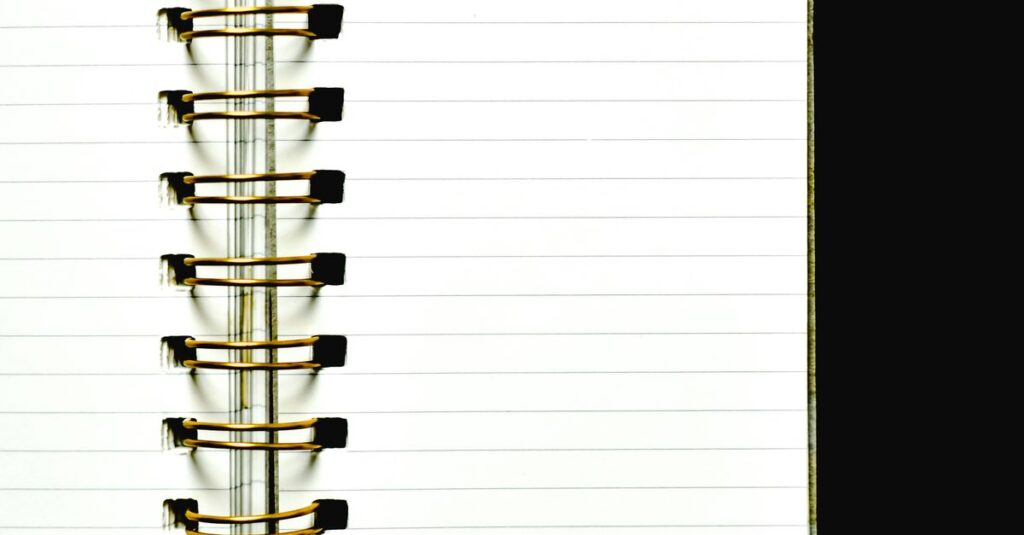
- Spiral Binding (Wire-O or Plastic): The cover and pages are hole-punched, and a coil is threaded through. The cover needs to be sturdy enough to not tear at the holes. The huge advantage? It lays completely flat. Mandatory for drawing books or manuals.
- Stitched Binding (Saddle Stitched): Staples through the spine. For thinner notebooks (under 100 pages). The cover folds around the staples. It’s cost-effective and durable for standard school notebooks.
You see? The cover isn’t an island. It’s part of a system. The ruling you choose inside, the page count, the binding – they all talk to each other. Picking a thick board cover for a spiral-bound book is smart. Picking the same thick board for a perfect-bound book might make the spine too rigid and crack the glue. We’ve seen it happen.
Look. If you’ve read this far, you get it. The cover is a decision, not a default.
Frequently Asked Questions
What is the most durable type of cover for school notebooks?
For the brutal reality of a school bag, you want a Sun Mica or Poly-Clad laminated cover on a 300+ GSM board. The fused lamination won’t peel, and the thicker board resists bending and corner damage. It costs more upfront than pasted lamination, but it replaces far fewer notebooks throughout the year.
How much does custom printing on a book cover add to the cost?
It depends on the number of colors and sides. Printing a single-color logo on the front of 10,000 notebooks might add just a few paisa per unit. A full-color, four-side design with specific Pantone matches could add several rupees. The setup costs (plates, proofs) are fixed, so the per-unit cost drops dramatically with larger orders. Always ask for a breakdown.
Can I get different cover materials for different notebook sizes?
Yes, absolutely. That’s the point of dealing with a real manufacturer and not just a reseller. You might want tougher covers for A4 account books that get heavy use, but lighter, cheaper covers for A5 pocket notebooks. A good manufacturer will mix and match specs within a single order to fit your budget and needs.
What’s the minimum order quantity (MOQ) for custom cover notebooks?
This varies wildly. For a standard design with your logo, many manufacturers (us included) will start at 500-1000 pieces. For a fully custom design with unique materials and printing, the MOQ is higher, often 2500-5000 units, to justify the setup costs. It’s always negotiable based on your long-term volume.
How long does it take to manufacture notebooks with custom covers?
Once the design is finalized and approved, typical production time is 3-4 weeks for an order of 10,000 units. This includes printing, binding, and packing. Always factor in extra time for sample approvals and shipping, especially for international orders. Rushing it is possible, but it costs more and risks quality.
Wrapping It Up
So there you have it. The book cover isn’t just packaging. It’s protection, perception, and a big chunk of your unit cost. The choices you make – on material, lamination, printing, and how it binds to the pages – they ripple through your entire order, from the quote to the last day of use.
I don’t think there’s one perfect answer here. There can’t be. Your school’s needs are different from a corporation’s, and both are different from a distributor stocking shelves. But if you’ve read this far, you’re probably past just wanting a cheap notebook. You’re looking for the right notebook. And that starts with asking the right questions about the cover.
Got a specific project in mind? It’s worth having a direct chat. We can look at your specs and give you a straight answer on what’s possible, and what it really costs. Reach out here.