Why You’re Actually Searching "Photocopy Store Near Me"
Right. Let’s just be honest about this.
You typed "photocopy store near me" into Google, and you’re probably sitting there, staring at your phone or laptop, feeling a specific kind of frustration. It’s not just about copying a single sheet. That’s the surface-level job. The real task is bigger — you need something reproduced, maybe lots of something. An internal training manual for your new hires. A batch of custom worksheets for the entire 5th grade. A hundred branded workbooks for a corporate event next month.
The photocopy shop guy down the street will look at your 200-page master document, wince, and tell you the per-page cost. Your stomach sinks a little. You do the mental math, and suddenly you’re paying more for a stack of flimsy, wire-bound copies than you think you should. The quality feels… temporary. Insignificant.
Here’s the thing: you’re not looking for a photocopy. You’re looking for a production partner. The difference between those two things is everything. A photocopy is a service. Production is a solution. If you’re ordering in volume — for a school, an office, a distributor — the entire equation changes. What you actually need might not be a local copier at all. It might be a manufacturer. A notebook manufacturer like us solves a different, deeper problem: how to get a professional, durable, cost-effective product made in bulk. That’s the shift most people miss.
The Real Cost of "Just Making Copies"
I’ve talked to enough procurement managers and school administrators to hear this story on repeat. They start with the local option because it feels immediate, controllable. You can walk in, hand over a USB, and wait. It seems simple.
But let’s break down what you’re really buying at a typical photocopy store for a bulk job:
- Paper Quality: Standard 70-80 GSM copier paper. It’s fine for a memo you’ll read once and recycle. It feels thin. It curls. It doesn’t take certain pens well. For a notebook that needs to last a semester or a reference manual that gets used daily? It’s a compromise from day one.
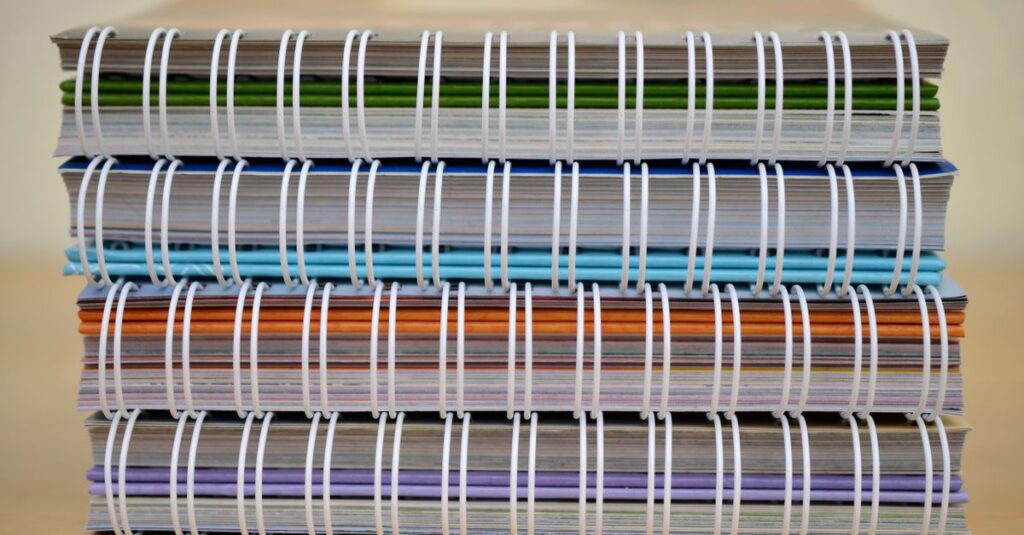
- Binding: Usually limited to spiral or comb binding. It works, but it’s not what I’d call robust. Those plastic coils snap. The pages spin too freely. It doesn’t lie flat nicely. For a corporate diary or a formal account book, it looks and feels cheap.
- Cover: A thicker cardstock, maybe laminated. It’s functional, but it’s rarely designed. It lacks the weight, the texture, the professional finish that communicates value — whether to your students, your employees, or your clients.
- Economies of Scale: This is the big one. Photocopy pricing is linear. Ten copies cost ten times one copy. There’s no real volume discount that changes the game. The per-unit cost stays stubbornly high.
The frustration sets in about a week after distribution. Pages are already coming loose. The cover is dog-eared. And you know you’ll have to do it all over again next year. Or next quarter. The cycle is exhausting.
When "Near Me" Stops Being the Most Important Thing
I want to tell you about Priya. She’s a procurement officer for a mid-sized tech company in Hyderabad. Last year, she was tasked with getting 500 custom onboarding workbooks made for new engineers. Her first thought? "Photocopy store near me." She got quotes from three places. The prices were shocking. For a slightly better version, it was going to blow her departmental budget.
She almost approved it anyway. The convenience factor is a powerful drug. But then she paused. She thought, "We’re a tech company. We’re handing this to brilliant people on their first day. This flimsy thing is their first physical impression of us." That realization — that the product itself was part of the message — changed her search entirely. She stopped looking for copiers and started looking for manufacturers. The logistics felt more complex initially, but the result was a product her team was proud to hand out. The cost per unit, in the end, was almost 40% lower. The books are still in use.
Her story isn’t rare. It’s the moment you realize proximity isn’t the same as value. When your need crosses a certain threshold — be it quantity, quality, or frequency — your geography of solutions has to expand. You’re not just buying a thing; you’re buying durability, perception, and long-term cost efficiency.
And that’s a different search altogether.
Photocopy Service vs. Notebook Manufacturing: A Side-by-Side Look
Okay, let’s put this on paper. It’s easier to see the gap when it’s laid out. This isn’t about one being "better" in all cases. It’s about which tool fits which job.
| Factor | Local Photocopy Store | Bulk Notebook Manufacturer |
|---|---|---|
| Best For | Single documents, small batches (1-50), urgent one-offs. | Bulk orders (100+ units), recurring needs, branded/standardized products. |
| Paper Quality | Standard copier paper (70-80 GSM). Functional. | Multiple options (e.g., 54-100 GSM writing paper). Chosen for durability & feel. |
| Binding & Durability | Basic spiral/comb binding. Short-term use. | Stitched, perfect, or reinforced spiral binding. Made to last months or years. |
| Customization | Minimal. Logo stamp maybe. | Full custom: cover design, page layout, ruling type, header/footer. |
| Cost Structure | Per-page. High per-unit cost, even in bulk. | Volume-based pricing. Per-unit cost drops significantly with quantity. |
| Scale | Limited by machine time and operator. | Industrial capacity. (e.g., 30,000-40,000 notebooks/day). |
| End Product Feel | Photocopy. Feels temporary. | Manufactured good. Feels intentional and substantial. |
The table makes it pretty clear, right? If your project sits in the right-hand column, using a left-hand column solution is going to be a headache. You’ll pay more for less.
Expert Insight
I was reading an industry report last month — one of those dry PDFs you download and skim — and one line stuck with me. It was about the "commodity trap." The analyst said something like: "Businesses often mistake a specialized manufactured product for a commodity service, and in doing so, they optimize for transaction speed while sacrificing total value." I had to read it twice.
But it clicked. A notebook isn’t a commodity like a ream of blank paper. It’s a configured product. The paper, the ruling, the binding, the cover — each is a choice that affects function and perception. Treating its production like a commodity service (copying) is where the value leaks out. The expert’s point was that the most capable procurement people know how to spot when they’ve crossed that line from service to product. I don’t have a cleaner way to put it than that.
What a Manufacturer Actually Does (That a Copier Can’t)
Let’s walk through what you’re really accessing when you work with a factory like ours. It’s not a big, scary, distant thing. It’s just a focused set of capabilities.
First, the paper isn’t an afterthought. It’s the starting point. We source specific writing paper — often around 54 GSM for standard notebooks — because it’s engineered for this. It has the right opacity, the right smoothness for pen or pencil, the right weight to feel substantial without being wasteful. A photocopier just takes whatever’s in the tray.
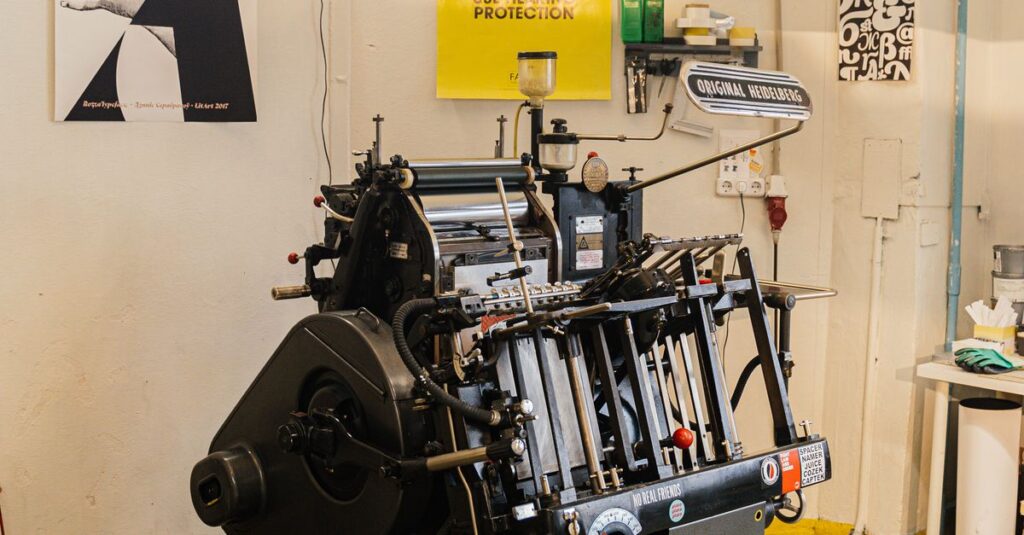
Then, the printing. We’re not talking toner here. It’s offset printing for covers and often for internal pages too. The color is vibrant, solid, and locked into the paper. It doesn’t smudge. You can get specific Pantone colours matched for your corporate logo. This is how you get that crisp, professional look.
Binding is where the soul of the notebook is. Perfect binding (like a paperback book) for a sleek, modern diary. Sturdy stitched binding for a school notebook that will survive a backpack. Heavy-duty spiral for a workbook that needs to fold right back on itself. Each method is a machine and a process chosen for the job. A photocopy store has one or two options. We have a toolkit.
And finally, the scale. This is the practical magic. When you order 5,000 custom notebooks, we’re not running them through a machine one at a time. The process is streamlined, staged, and industrial. That efficiency is what gets passed back to you as a lower cost per book. It’s why bulk ordering makes financial sense in a way that bulk copying never will.
Look — the local shop serves a vital purpose. Need 20 copies of a meeting agenda by 3 PM? They’re your heroes. But framing a 500-unit educational workbook as a "copying" job is like framing the construction of a library as a "carpentry" job. It’s technically true but misses the entire point of the undertaking.
The Questions to Ask Before You Hit "Search" Again
Before you type "photocopy store near me" into that search bar again, pause. Ask yourself these questions. They’ll tell you which path you’re really on.
- How many do I need, truly? Is it 20, or is it 200? Is this a one-time thing, or will I need more in 6 months?
- How long does this need to last? Is it for a single meeting, or for a year of daily use?
- What does this product say? Is it just conveying information, or is it also representing my school, my brand, my company?
- What’s my total budget, not just my per-page comfort zone? Sometimes paying more per unit upfront for a durable product saves money over three cycles of replacing cheap ones.
- Am I willing to trade a few days in logistics for a significantly better outcome? Manufacturing has a lead time. It’s not instant. But good things rarely are.
If your answers tilt toward volume, durability, branding, and total cost of ownership, your next search should be different. Try "custom notebook manufacturer" or "bulk diary supplier." You’re shopping for a different category of solution.
I think a lot of people know this, intuitively. They feel the mismatch when they get the quote from the copy shop. But the inertia of the familiar search term — "photocopy store near me" — is powerful. It feels like the path of least resistance. Until you get the product, and the resistance shows up in the form of disappointment.
Conclusion
It all comes down to fit. A photocopy store is a fantastic tool for a specific, short-term job. A notebook manufacturer is a partner for a longer-term, quality-driven, volume need. The confusion happens because, on the surface, both can put ink on paper and bind it together.
But the depth of the process, the quality of the materials, and the economics of scale create a chasm between the two outcomes. For schools ordering textbooks, corporations sourcing branded diaries, or wholesalers stocking shelves, that chasm is the difference between an adequate supply and a strategic asset.
I don’t think there’s one perfect answer for every situation. Probably there isn’t. But if you’ve read this far, you’re already questioning whether "near me" is the most important criterion you have. You’re figuring out if it’s okay to want something more substantial than a copy. It is.
If your needs are tilting toward the manufacturing side of the table, it might be worth exploring what that actually looks like. We’ve written more about the process here, if you’re curious.
Frequently Asked Questions
I only need 100 notebooks. Is that too small for a manufacturer?
Not necessarily. While manufacturers excel at massive scale (think 10,000+), many, including us, have efficient setups for smaller bulk runs. The key is the "bulk" mindset — 100 identical, custom items is very different from 100 random copies. The per-unit cost will still likely be better than a copy shop, and the quality jump is significant. It’s always worth asking for a quote.
What’s the main advantage of a notebook manufacturer over a big printing chain?
Specialization and control. A big printing chain does everything: banners, business cards, photocopies. A notebook manufacturer’s entire factory is tuned for one thing: producing notebooks efficiently and durably. We control the paper sourcing, the binding line, the specific printing for covers. That focus translates to better expertise, more durable product construction, and often, more competitive pricing for volume work.
How long does it take to get custom notebooks made?
It depends on the complexity and quantity, but you should plan for a few weeks, not a few days. There’s design approval, material sourcing, production scheduling, and binding. For a standard order of a few thousand, 3-4 weeks is typical. The trade-off for that time is a product that’s made to last for months or years, not just to be ready tomorrow.
Can I get custom page layouts, not just a custom cover?
Absolutely. This is a huge differentiator. While a copy shop reproduces what you give them, a manufacturer can create custom ruled pages (single, double, broad, graph), add printed headers/footers (like company names or subject headers), and even integrate specific instructional content on every page. The inside is as customizable as the outside.
Is this only for businesses in India?
Not at all. While we’re based in Rajahmundry, India, a large part of our business is export. We regularly ship bulk notebook orders to the Gulf, Africa, Europe, and the US. The logistics are handled. For an international buyer, working directly with a manufacturer often means bypassing several middlemen, getting a better price, and having direct control over specifications. The distance becomes irrelevant compared to the value.