

You’re Probably Looking For the Wrong Thing
Three things happen when you type ‘print shop close to me’ into Google.
First, you need something printed. Probably right now. Schools need notebooks for the new term, or your office needs 200 branded diaries before the quarter ends. The clock is ticking.
Second, you’re imagining a quick drive. You’ll drop off your design, wait a few days, and pick everything up. Simple. Convenient. It’s right there in the search: close to me.
And third — and this is the one nobody talks about — you’re about to settle. You’re about to trade quality, price, and long-term reliability for the temporary relief of a local address. I see it all the time. Procurement managers for schools, businesses ordering corporate stationery — they start with convenience and end up with a headache.
Look, I’ll just say it. For a one-off poster or a small batch of flyers, your neighborhood print shop is perfect. But for what you’re actually trying to do? Ordering 5,000 school notebooks or 1,000 custom diaries for your company? You’re not shopping for printing. You’re sourcing a manufactured product. And that’s a completely different world. If this sounds like your situation, it might be worth looking at how real manufacturers work.
What “Local” Really Means (And What It Costs)
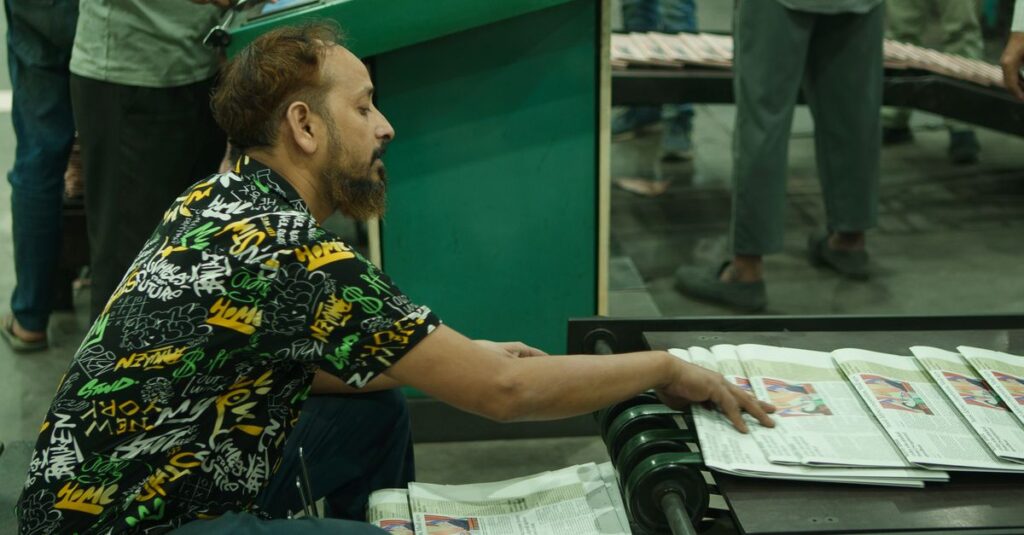
Here’s the thing. A local print shop is built for small jobs. Digital printing, quick turnarounds, maybe some basic binding. Their machines are great for hundreds, maybe a thousand units. Their paper stock is what they can get from a regional supplier. Their binding options are limited to what fits on their table.
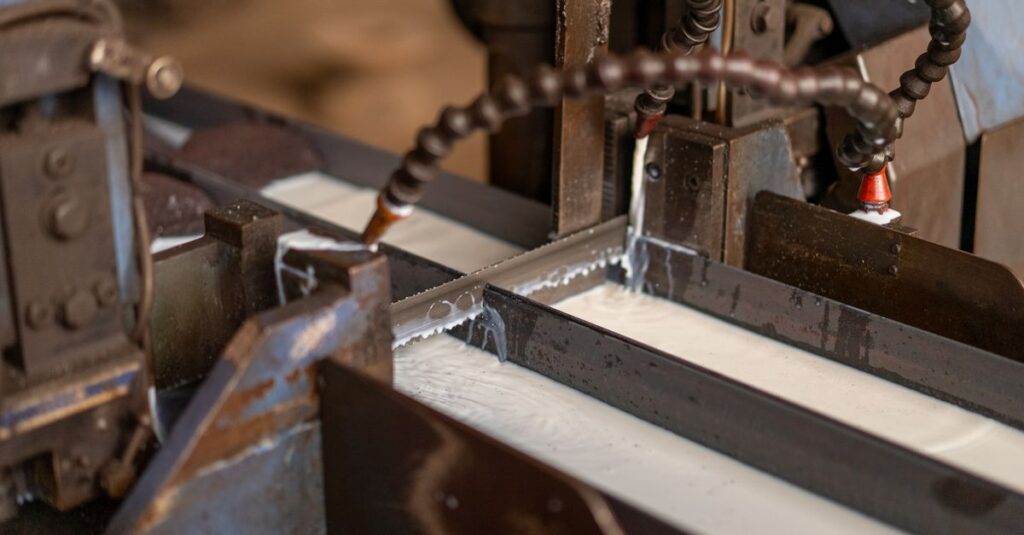
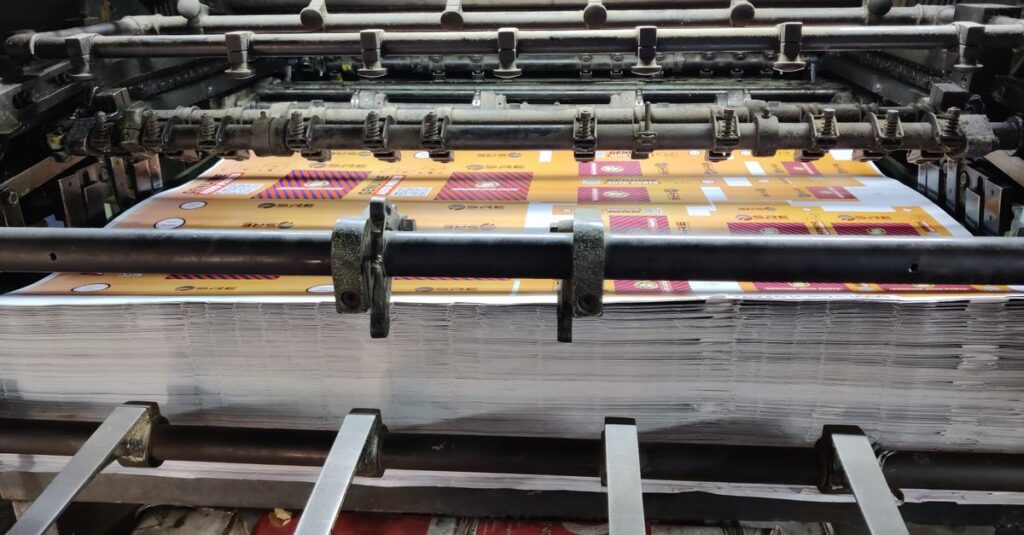
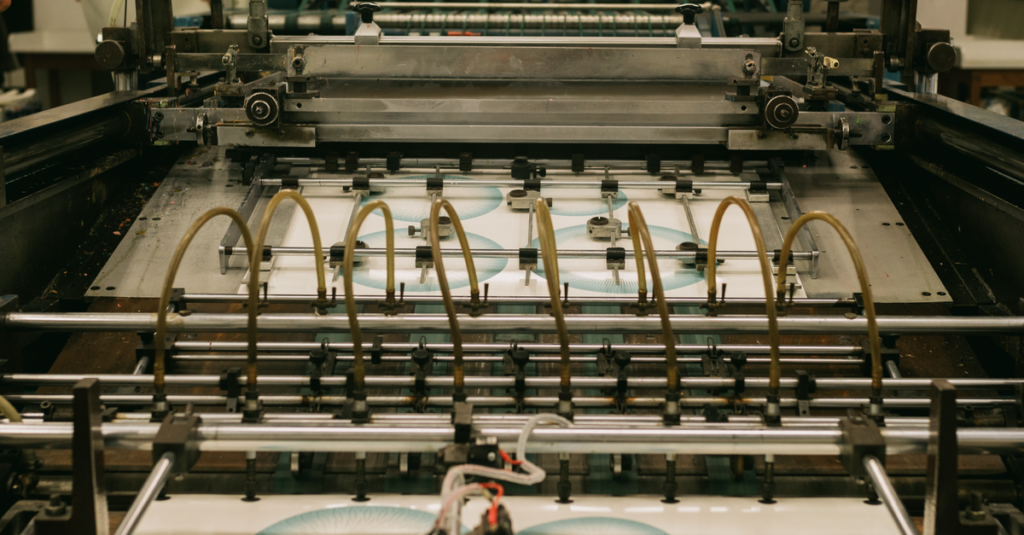
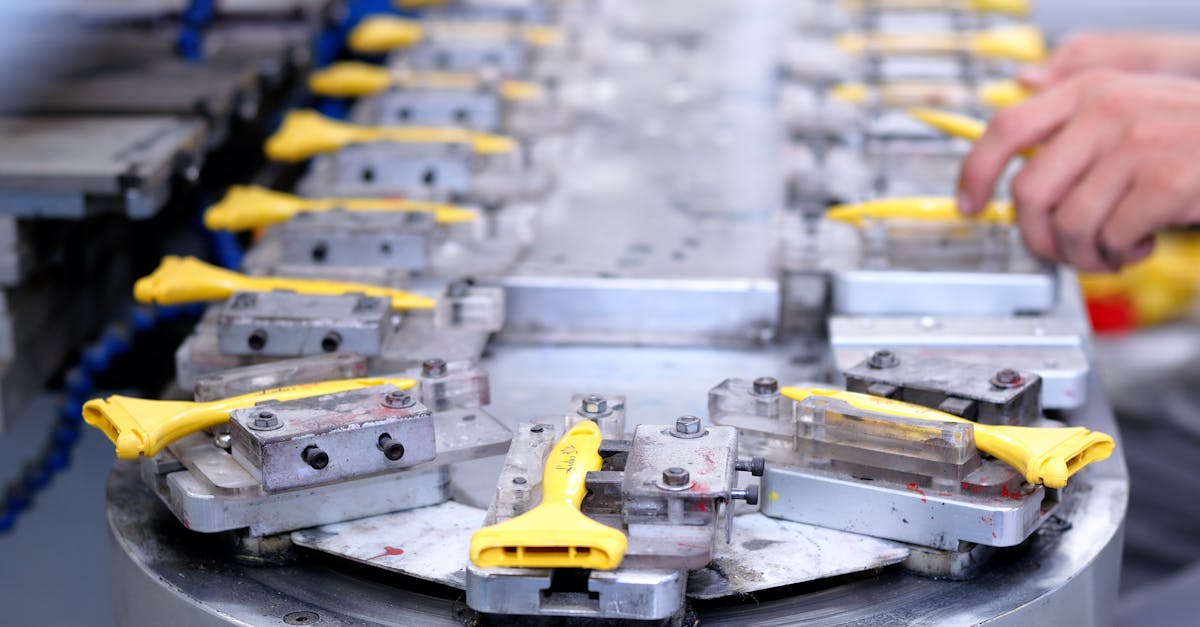
Now picture a manufacturing unit. Not a shop — a factory floor. I’m talking about our place in Rajahmundry. We don’t have one printing press; we have lines for them. We don’t buy paper in reams; we order it by the truckload, directly from mills, which is the only reason we can offer 54 GSM writing paper at our prices. The binding isn’t done by hand; it’s a stitched, spiral, or perfect binding process that runs 30,000 to 40,000 notebooks in a single day.
The difference isn’t just scale. It’s intent. A print shop’s intent is to print your file. A manufacturer’s intent is to build you a product that lasts a full school year, that holds up in a distributor’s warehouse, that represents your brand without peeling or falling apart.
And honestly? That’s what you’re paying for. Or rather, what you’re not getting when you choose the closest pin on the map.
A Real-Life Micro-Story
I was on a call last month with Arjun. He runs procurement for a chain of private schools in Hyderabad. He’d been using a local printer for years — a guy ten minutes from his office. Friendly, fast. The notebooks always seemed… fine. Until they didn’t. One shipment had inconsistent ruling. Another batch had covers that faded after two months. The paper quality felt different every order. He was spending his time managing a supplier instead of managing his budget. We talked for twenty minutes. He kept saying, ‘I just thought that’s how it was.’ He didn’t know there was another way to do it.
I don’t have a cleaner way to put it than that.
The Convenience Trap: Speed vs. Everything Else
Okay, let’s talk about the big sell: speed. ‘Close to me’ means fast, right?
Maybe. For a week.
But what happens when you need a consistent supply every quarter? Or when your order size grows from 1,000 to 10,000 units? Your local shop’s ‘fast’ turns into ‘we can’t handle that volume’ or ‘that will take six weeks.’ I’ve seen it. The initial convenience becomes a permanent bottleneck.
A manufacturer works on a different clock. It’s not about reacting to your rush order. It’s about planning capacity for your annual needs. It’s about having the paper in stock, the binding lines scheduled, the packaging ready to go. The lead time might be longer on paper — say, 4-6 weeks for a large custom order. But it’s predictable. It’s reliable. And once the pipeline is set up, your supply is locked in. You stop worrying.
Which is better? A frantic, ‘fast’ local solution you have to re-find every single time? Or a slow, steady, dependable partner that becomes part of your operational plan?
The question isn’t about speed. It’s about what kind of stress you want to deal with.
Beyond the Quote: What You’re Not Comparing
When you get a quote from a local print shop and a quote from a manufacturer, you’re not looking at the same document.
You’re looking at two different languages.
The local shop quote lists: Print. Bind. Deliver. Price per unit.
The manufacturer’s quote — or at least, a proper one — should speak a more detailed language. It should specify:
- Paper GSM & Source: Not just ‘white paper’, but 54 GSM writing paper from a specific mill for consistency.
- Binding Method: Stitched, spiral, or perfect binding — and what that means for durability.
- Ruling Precision: Are the lines double-ruled (DR) or single-ruled (SR) with exact alignment?
- Cover Stock: The weight and lamination quality so it doesn’t dog-ear.
- Packaging: How are 5,000 notebooks bundled, palletized, and protected for shipping?
Most people just look at the bottom line. I get it. Budgets are tight. But the real cost is in the product that wears out in a month, the shipment that arrives damaged, the branding that looks cheap. That ‘cheaper’ unit price gets very expensive, very fast.
Understanding what goes into a notebook is the first step to buying smarter.
Print Shop vs. Notebook Manufacturer: The Real Breakdown
Let’s make this stupidly clear. Here’s what you’re actually choosing between.
| Factor | Local Print Shop | Notebook Manufacturer (Like Us) |
|---|---|---|
| Core Business | Printing services (flyers, brochures) | Manufacturing physical products (notebooks, diaries) |
| Order Volume | Best for 10s – 100s of units | Built for 1,000 – 100,000+ units |
| Paper & Materials | Limited stock from local suppliers | Bulk sourcing directly from paper mills |
| Customization | Basic logo placement on standard items | Full product design: cover, ruling, size, binding |
| Quality Control | Visual check on final product | Process control at every stage: paper, print, bind, pack |
| Supply Chain | You manage pickup/delivery | Integrated logistics, bulk shipping, export experience |
| Real Cost | Higher per-unit cost, hidden in ‘convenience’ | Lower per-unit cost, visible in volume efficiency |
This isn’t about good vs. bad. It’s about right tool for the job. Need 50 custom thank-you cards? God bless your local printer. Need 5,000 standardized math notebooks for your district’s schools? You’re now in manufacturing territory.
So… What Should You Actually Search For?
If ‘print shop close to me’ is the wrong phrase, what’s the right one?
It depends on what you’re holding in your head when you search.
If you’re a school or college buyer, you should be searching for ‘bulk school notebook supplier’ or ‘institutional notebook manufacturer.’ You’re not buying a printed item; you’re buying an educational tool that needs to survive a backpack for a year.
If you’re a corporate procurement manager looking for diaries or branded notebooks, search for ‘custom diary manufacturer’ or ‘corporate notebook printing.’ The word ‘manufacturer’ is key. It filters out the service shops and finds the factories.
If you’re a distributor or wholesaler, your terms are ‘notebook OEM manufacturer’ or ‘private label notebook supplier.’ You need someone who can make the product, not just put a sticker on it.
The language shifts the results from ‘who can do this task’ to ‘who builds this product for a living.’ It’s a subtle but massive difference. You start finding companies with ‘Works’ or ‘Manufacturing’ in their name, not ‘Print & Copy.’
Right.
The Geography Myth (Or, Why “Close” Matters Less Than You Think)
I need to confess something. We’re in Rajahmundry, Andhra Pradesh. Most of you reading this aren’t. You might be in Delhi, Mumbai, Bangalore, or even overseas. We’re not ‘close’ to you in the Google Maps sense.
And that used to be a problem. Twenty years ago, maybe. You’d want to visit, to shake hands, to see the machines.
Now? It barely matters. The trust isn’t built in a factory tour. It’s built in samples sent by courier. It’s built in consistent quality across ten orders. It’s built in a WhatsApp message (+91-8522818651, by the way) that gets answered in an hour, not a phone call that goes to a shop that’s closed for lunch.
We supply notebooks to Africa, the Gulf, Europe. The distance is irrelevant. The proximity that matters is in communication, transparency, and reliability. Is your supplier ‘close’ to solving your problems? That’s the only distance that counts.
Anyway. Where was I.
Oh yeah — you were searching for something close. And I’m telling you to look farther. The best partner for your bulk notebook needs probably isn’t in your city. They’re wherever the paper, the machinery, and the decades of experience are. That’s where the real value gets made.
What to Do Next (A Non-Pushy, Realistic Plan)
Look, I don’t have a magic button. But if you’ve read this far, you’re probably realizing your local print shop quote isn’t the whole story.
Here’s what I’d do if I were you.
- Redefine the Ask: Write down what you need, not what you think you can get. Number of units. Exact size (Long notebook? A4?). Paper feel. Binding type. Cover durability. Be specific.
- Get a Real Manufacturing Quote: Send that spec to 2-3 actual manufacturers. Use the search terms I mentioned above. Compare their breakdowns, not just their bottom line.
- Request Physical Samples: This is non-negotiable. Anyone can make a PDF look good. Feel the paper. Try to tear a page. Write on it with different pens. Fold the cover. A sample tells you more than a hundred emails.
- Ask About Process, Not Just Price: ‘How do you ensure ruling alignment?’ ‘What’s your paper sourcing?’ ‘Can I see a photo of your binding line?’ Their answers will tell you if they’re a shop or a maker.
It’s more work upfront. Of course it is. But it’s work that pays off for the next three years of orders, not just the next three weeks.
Frequently Asked Questions
Can’t a local print shop just outsource my big notebook order?
Technically, yes. They’ll act as a middleman and send it to a manufacturer like us. But then you’re paying two markups — theirs and ours. You also lose direct control over specs and quality checks. You get all the downsides of distance with none of the cost benefits. It’s the worst of both worlds.
Isn’t shipping from a far-away manufacturer really expensive?
It can be, for a tiny order. But for bulk orders? The shipping cost per notebook becomes tiny. Manufacturers consolidate orders, use freight, and have logistics partners. We ship containers internationally. The efficiency of bulk transport almost always beats the cost of you making multiple trips to a local shop in your car.
What if I need a small, urgent batch of custom notebooks?
Then a local print shop might be your only option, and that’s okay! This isn’t about dogma. It’s about using the right tool. For a true rush job of a few hundred, go local. For your planned, annual bulk procurement, go to a manufacturer. Smart buyers use both, for different reasons.
How can I trust a manufacturer I can’t visit in person?
Start small. Place a trial order. Demand samples before you commit. Check for clear communication. Do they answer detailed questions? Do they provide photos or videos of production? Over forty years, we’ve learned trust is built on consistency, not geography. The first order is a test. The tenth order is a partnership.
Are manufacturers only for plain notebooks, or can they do full customization?
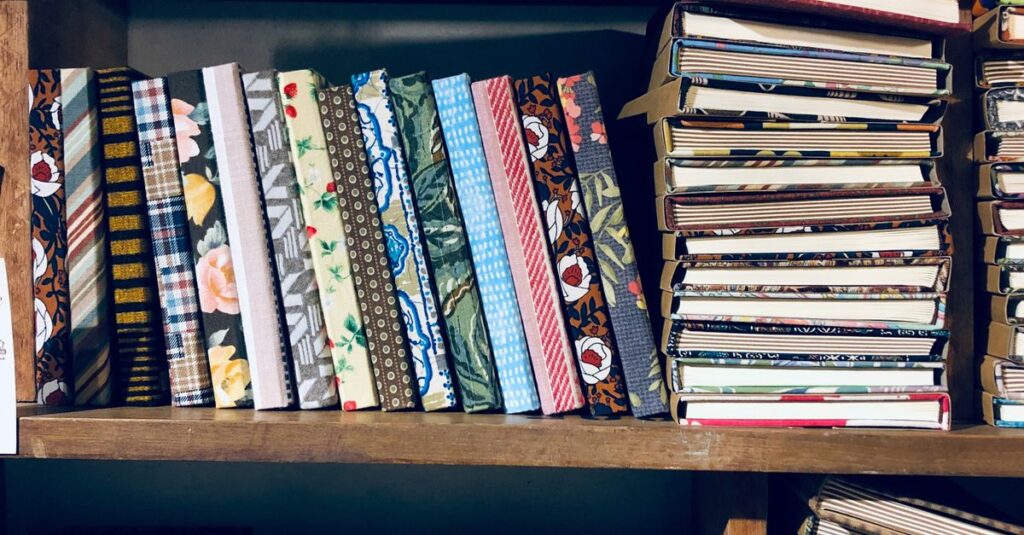
That’s a great question — and a common misconception. Real manufacturers specialize in customization. We do everything from school logos to full corporate branding, custom page rulings (like center broad ruled for accountants), unique sizes, and special bindings. A shop prints on a pre-made product. A manufacturer builds the product around your brand from the ground up.
Wrapping This Up
I think the biggest mistake is believing ‘close’ and ‘right’ are the same thing. They’re not. Not in this business.
Choosing a supplier for bulk notebooks or corporate diaries isn’t a convenience decision. It’s a strategic one. It affects your budget, your operational smoothness, and the quality of what you give to your students, employees, or customers.
The local print shop fulfills an immediate need. The manufacturer fulfills a long-term requirement.
I don’t think there’s one answer here. Probably there isn’t. But if you’ve read this far, you already know what you’re looking for — you’re just figuring out if it’s okay to look beyond your zip code. Sometimes the best solution isn't the closest one.