Let’s get this out of the way first
You typed “printers near me” into Google. Right now. I know the feeling. The clock is ticking, you’ve got a procurement target, a school term starting soon, or a corporate order to fulfill, and you need notebooks. Fast. You’re picturing a local shop, maybe a Kinko’s equivalent, someone who can run off a few hundred copies and be done with it.
But here’s the thing: if you’re ordering in bulk — and I mean real bulk for schools, offices, or distribution — you’re not actually looking for a printer. You’re looking for a manufacturer. It’s a completely different beast. One handles short-run jobs. The other builds the actual product from raw paper and binding wire. The difference isn’t just scale; it’s the entire way the problem gets solved. If this sounds like the headache you’re trying to fix, understanding what a manufacturer actually does might be the first step.
“Printers” vs. “Manufacturers”: It’s not semantics, it’s survival
Think about what a local printer does well. Business cards. Flyers. A couple of bound reports. Their world is measured in impressions and single-day turnarounds. They buy pre-cut paper. Their machines are built for variety, not volume.
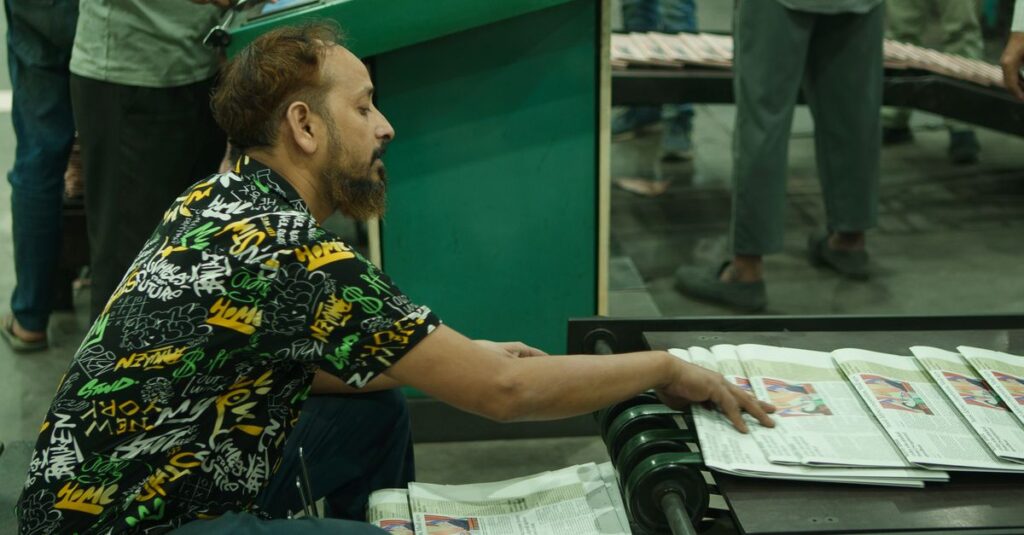
Now, a notebook manufacturer? We think in tons. Of paper. In kilometers of binding thread. Our machines run for 12-hour shifts, spitting out thousands of identical, perfect notebooks. The local printer is a chef making a beautiful plate for you. We’re the industrial food plant supplying the entire school district. Both are essential, but you don’t go to a chef to cater a 5,000-person wedding.
I was talking to a procurement manager for a chain of private schools last month — over a truly terrible cup of office coffee — and she said the moment she realized this was when a “local printer” quoted her for 10,000 notebooks. The price was astronomical, the timeline was a fantasy, and the paper sample felt like tissue. She wasn’t their client; she was their crisis. That disconnect is real, and it costs people their jobs.
What you’re *actually* searching for
When you type “printers near me,” your intent is location-based convenience. But your need is for reliability, cost-per-unit, and supply chain certainty. You need someone who has 54 GSM paper stockpiled in a warehouse, not someone who needs to order it. You need a binding line that’s already calibrated for crown-size notebooks, not a machine that needs to be reconfigured for your job. The “near me” part becomes almost irrelevant when the logistics shift from “pick-up” to “palletized freight.”
The hidden costs of the “local” solution for bulk orders
Okay, let’s walk through it. Say you need 5,000 A4 single-ruled notebooks for a university program. You call three local printers. They all have to:
- Source the paper: They don’t keep 10,000 sheets of specific 70+ GSM paper on hand. They order it. That’s a week.
- Find a binder: Many printers outsource binding. So your job gets shipped to another shop. That’s more time, more handling, more risk.
- Manage scale: Their perfect binding machine might do 200 books an hour. Ours does 2,000. Do the math on labor costs.
The final quote reflects all this friction. You pay a premium for their lack of infrastructure. It’s like buying a single screw from a hardware store versus buying a crate of them from the factory. The unit economics just implode.
And the quality consistency? Forget it. Run 5,000 books through a machine meant for 500, and you’ll get drift. The stitching weakens. The cuts go fuzzy. The covers misalign. I’ve seen it a hundred times.
The real question isn’t who’s closest. It’s who’s built for this.
How bulk notebook manufacturing actually works (and why it’s cheaper)
Let me pull back the curtain for a second. This is what you’re buying into with a manufacturer.
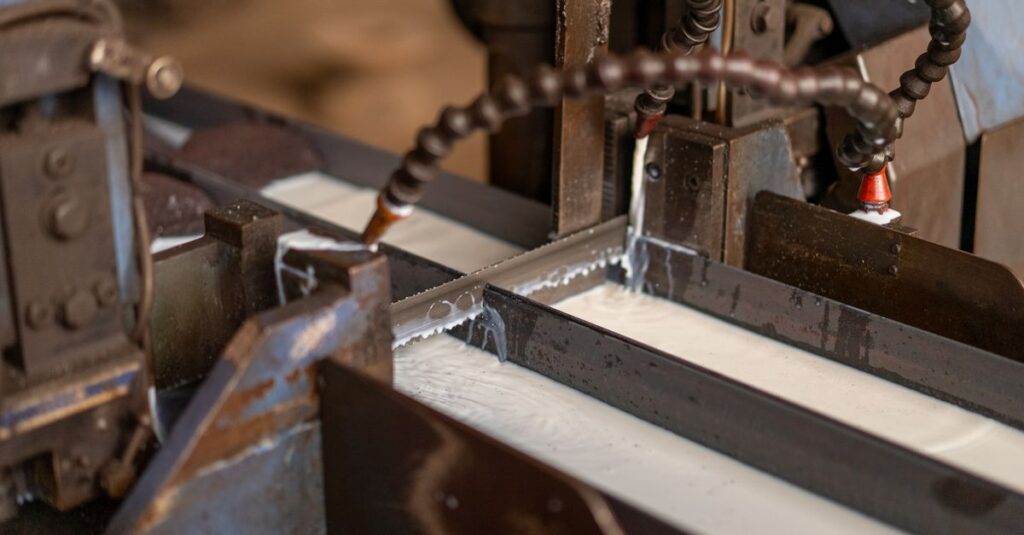
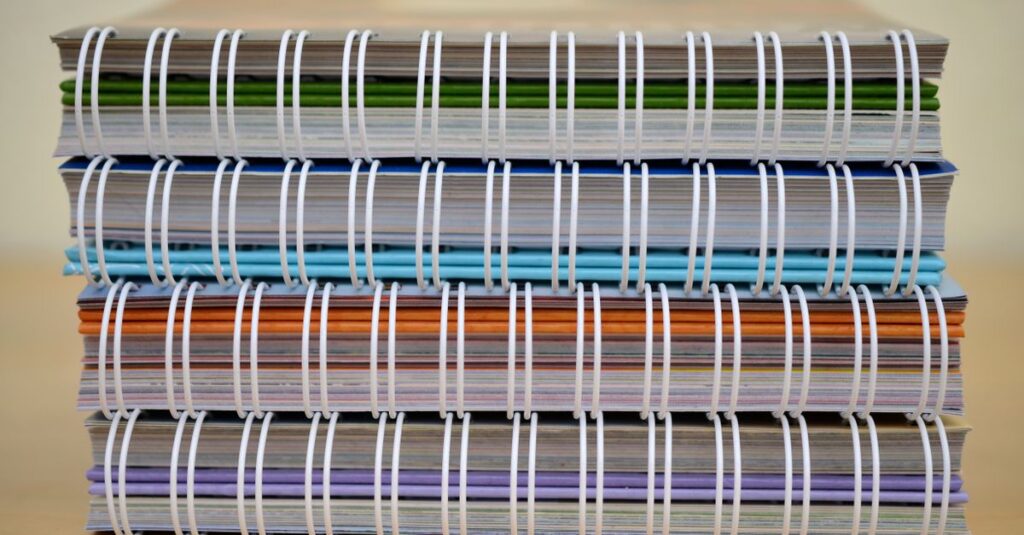
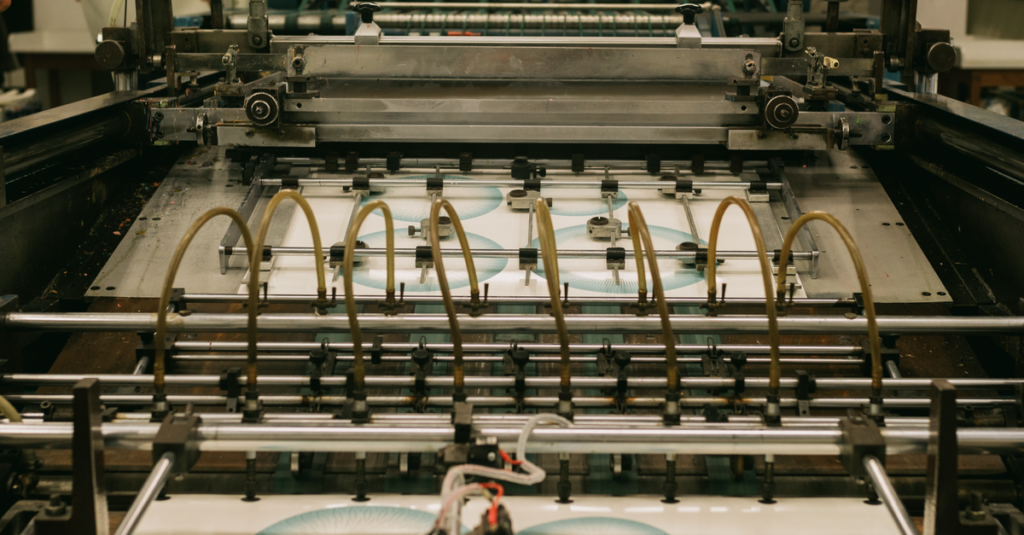
The process starts with paper reels the size of a small car. We’re talking one-ton rolls that get fed into a sheeter, which slices them into perfect notebook-sized piles — 52, 92, 200 pages at a time. Then it goes to the ruling line: miles of paper getting those crisp blue or red lines printed at insane speeds. Then cutting, then collating, then the cover (printed in-house, often in a separate offset unit), then stitching or spiral binding, then trimming, then packing.
Every step is mechanized, calibrated, and designed for one thing: making thousands of identical, durable notebooks as efficiently as possible. The “per-unit” cost drops because the fixed costs of the machine are spread over a huge output. The paper is cheaper because we buy it by the truckload from the mill. The labor is specialized — a person who runs a stitching machine all day is just better, faster, and produces fewer errors.
This is the expert insight I wish every buyer had: economies of scale aren’t just a buzzword. In manufacturing, they are a physical, mechanical reality. A machine running at 10% capacity is a money pit. Running at 90%? That’s where your savings come from. When you place a bulk order, you’re not just buying notebooks. You’re buying time on a machine that is optimized to do nothing but make them. That’s the partnership.
A quick comparison: Local print shop vs. dedicated manufacturer
| Factor | Local Print Shop / “Printer Near Me” | Dedicated Notebook Manufacturer |
|---|---|---|
| Core Business | Short-run printing, copies, marketing materials | Long-run production of bound stationery products |
| Typical Order Size | 1 – 500 units | 1,000 – 100,000+ units |
| Paper Sourcing | Buys pre-cut sheets as needed, higher cost | Buys paper in bulk reels directly from mills, lower cost |
| Binding Capability | Often limited or outsourced; extra cost & time | In-house stitching, spiral & perfect binding lines |
| Cost Driver | Labor per setup, premium on materials | Machine runtime, bulk material costs |
| Best For | Custom one-off projects, prototypes, urgent small jobs | Bulk supply, tenders, annual contracts, private label |
| Turnaround Time (for 5k units) | Weeks (due to sourcing & outsourced steps) | Days (integrated production line) |
See the mis-match? It’s not that local printers are bad. They’re just playing a different sport. Asking them to manufacture bulk notebooks is like asking a sprinter to run a marathon.
So, what should you search for instead?
If “printers near me” leads you down the wrong path, what’s the right query? It depends on what you’re really after.
- For School Notebook Tenders: “bulk school notebook supplier,” “notebook manufacturer for schools,” “educational stationery manufacturer.”
- For Corporate Diaries & Gifts: “corporate diary manufacturer,” “custom logo notebook bulk,” “OEM notebook production.”
- For Distribution/Wholesale: “notebook wholesaler India,” “stationery production factory,” “private label notebook manufacturer.”
The shift is from a service (printing) to a product supply chain (manufacturing). Your conversations change. Instead of “Can you print this?” you ask “What’s your daily production capacity on spiral-bound A5s?” or “Can you source 70 GSM paper for a 200-page book?”
It gets more real. And honestly, it gets more reliable. When you’re talking to a factory, you’re talking to the source. There are no middlemen on the production floor. If you’re evaluating a potential partner, their experience and operational transparency is everything.
The customization question: But I need my logo!
This is where people get stuck. They think customization means a local printer. Not true. In fact, manufacturers do it better and cheaper at scale.
Local printer: Prints your logo on a cover. Maybe uses a digital printer. The color might be off. The coverage might be patchy on a textured stock.
Manufacturer: We print your logo using offset plates. This means the color is exact (Pantone-matched, if you want), the ink lays down evenly, and because we’re making 10,000 covers in one go, the setup cost is amortized to almost nothing. We can emboss it. Foil stamp it. We can design the whole cover, inside and out, and build the interior page layout with your branding on every sheet.
Customization isn’t the enemy of scale. It’s just another step in the manufacturing process. The real magic happens when you move from thinking about “printing my logo on a notebook” to “manufacturing my branded notebook product.” It’s a whole different level of ownership.
Final thought: Location matters differently
The “near me” instinct is about control. You want to be able to drive over, check on things, pick up a sample. I get it. With a manufacturer, you trade physical proximity for production transparency. You get photos from the factory floor. Video of your job on the line. Regular shipping updates. Proximity to a port or a major freight hub often matters more than proximity to your office.
You’re not managing a print job. You’re managing a supply chain. And for that, you need a partner, not a vendor.
I don’t think there’s one perfect answer for every buyer. But if you’ve read this far, you already know the local printer quote felt wrong. You’re just figuring out if it’s okay to look beyond the city limits for the solution. It is. Your budget will thank you.
Frequently Asked Questions
What’s the minimum order quantity (MOQ) for a notebook manufacturer?
It varies, but for a dedicated manufacturer, realistic MOQs start at 1,000 pieces for standard items. For custom designs or specific paper, it might be 2,500 or 5,000. This is because the setup costs for printing plates and machine calibration need to be spread over a viable run. Local printers have lower MOQs because they use different, more flexible (and more expensive per-unit) technology.
Can a notebook manufacturer do small, urgent orders?
Honestly? Not usually, and not efficiently. That’s the local printer’s sweet spot. Manufacturers are geared for long runs. Asking them to stop a production line for a 100-piece urgent order disrupts their entire cost model. It’s like asking a cargo ship to make a pizza delivery. Use the right tool for the job.
How long does it take to manufacture bulk notebooks?
For a standard item already in production, shipping can happen in days. For a new custom order, typical lead time is 4-6 weeks. This includes sample approval, plate making, paper sourcing, production, and packing. It’s longer than a local printer but for 100x the quantity. Planning ahead is part of the game.
Is the quality from a large manufacturer better than a local printer?
For identical, durable notebooks, yes. Manufacturing equipment is built for consistency at scale. Every stitch, every cut is machine-controlled. A local printer doing binding manually or on a small machine will have more variation. For a one-off art book, a printer might excel. For 10,000 student notebooks, the factory’s consistency wins.
How do I communicate with a manufacturer if they’re not “near me”?
WhatsApp, video calls, and email. It’s 2025. We send PDF proofs, photos of physical samples via courier, and live videos from the production floor. The communication is often more direct and detailed than with a busy local shop, because you’re dealing with the production team itself. Distance isn’t a barrier to transparency anymore.