You’re sitting at your desk, finalizing the budget for next quarter’s corporate stationery. Or maybe you’re trying to get custom notebooks for the upcoming school term. The to-do list says ‘Find printing press.’ So you type it. ‘Printing press near me.’ It feels simple.
But here’s the thing — it’s not. It’s never just a printing press. What you’re really, truly looking for, at the end of all those taps and clicks, is a manufacturing partner you can stop worrying about.
You need someone who can take your idea — a logo, a design, a specific type of paper — and make 10,000 identical, perfect copies of it. On time. And without a dozen follow-up emails asking about page counts and binding types. That’s a different beast entirely. And honestly? Most local print shops won’t tell you that. What they offer sounds good until you ask about bulk notebooks.
What ‘Near Me’ Really Means in Bulk Manufacturing
When businesses search ‘printing press near me,’ they’re usually juggling two competing needs. On one hand, there’s the comfort of proximity — the idea you can walk in, see samples, maybe build a relationship. On the other hand, what you’re buying isn’t a quick print job. It’s a product. A manufactured good. Proximity is nice, but capability is everything.
I’ve seen it so many times. A school administrator we work with (let’s call her Priya, she runs procurement for a large institution in Mumbai) told me her last project. She sourced calendars from a local printer because he was, well, local. He promised perfect binding for 5000 diaries. The delivery was late. And the spines started peeling off after a month of use. Not a great look for a new year’s gift to the board.
Her search started with ‘near me.’ Her problem ended with a bad product. The ‘local’ factor meant she could go and complain in person, but it didn’t stop the problem from happening. The headache was the same.
Expert Insight
I was reading a trade journal last month and one line stuck with me. It was from a production manager at a big stationery distributor. He said the biggest shift he’s seen in the last decade isn’t in the printing tech itself — it’s in expectation. Buyers used to think in terms of print runs. Now they think in terms of supply chains. A notebook isn’t a printed thing; it’s a component in their business. If it fails, their process fails. That changed how I look at what we do. It’s not about ink on paper anymore. It’s about reliability as a system.
The Unspoken Checklist: Beyond the Quote
So if ‘near me’ isn’t the most important box to tick, what is? Let me give you the checklist I’d use if I were in your shoes. The questions you should be asking — that most websites won’t prompt you to think about.
- Paper Sourcing & Consistency: Where do they get their paper? Is it the same quality every single time? A GSM number is just a number if the supplier varies. For 40 years, we’ve used the same mills. The feel of the page matters. I mean, you can feel the difference in a 54 GSM sheet from a good mill versus a cheap one. It’s the first thing a user notices when they open the notebook.
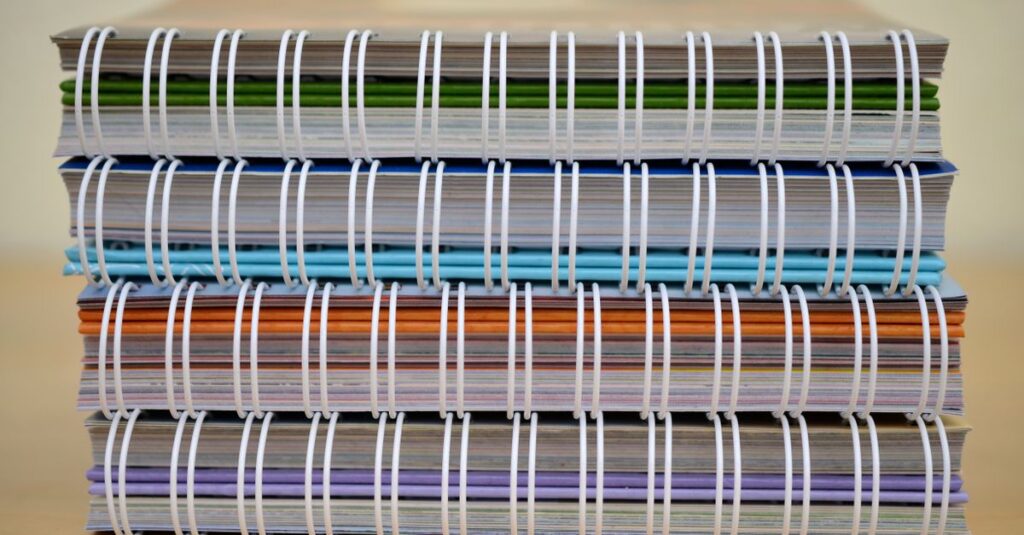
- Binding Durability, Not Just Type: Anyone can say they do ‘spiral binding.’ But will that coil hold 200 pages? Will it survive being thrown in a school bag for a year? The strength of the wire, the precision of the punching — it’s engineering. A sloppy bind ruins the whole notebook, no matter how nice the cover looks. It’s the part nobody sees until it fails.
- Production Capacity vs. Your Timeline: This is huge. A shop that can print 500 flyers a day is not set up to bind 30,000 textbooks in two weeks. You need to match their real, daily output with your order size. Our factory runs on producing 30,000 to 40,000 bound units daily. That’s our rhythm. Asking a smaller press to match that is like asking a scooter to tow a truck.
- The ‘Custom’ Trap: ‘Fully custom’ can mean they’ll slap your logo on a stock notebook. Or it can mean they’ll engineer a new cover material, a unique ruling, and a custom page count for you. Which one are you getting? You need to know the depth of their customization. Is it just printing, or is it manufacturing?
Anyway. The point is, your real search isn’t for a location. It’s for competency.
| Factor | Local Print Shop (Flyers, Business Cards) | Specialized Notebook Manufacturer |
|---|---|---|
| Primary Focus | Short-run, one-off print jobs | Long-run, identical product manufacturing |
| Paper Stock | Often limited to generic, available sheets | Sourced in bulk from mills for consistency across batches |
| Binding for Durability | May outsource or use lighter-duty machines | In-house, heavy-duty binding (stitched, perfect, spiral) built for daily use |
| Understanding of Use Case | Sees your order as a ‘print job’ | Understands your order as a ‘product’ used in schools, offices, etc. |
| Ideal For | Prototypes, small batches, marketing collateral | Bulk orders (1000+ units), yearly supply, corporate branding |
When Being ‘Near’ Actually Matters (And When It Doesn’t)
Okay, so I’ve made the case that capability trumps geography. And I believe that. But let’s be fair — location isn’t irrelevant. It just matters for different reasons than you might think. Communication, not collection.
Being in the same time zone means you can pick up the phone at 10 AM and get an answer. It means they understand the local academic calendar (when do schools need their books?) and the corporate financial year (when do diaries ship?). That context is everything. It’s the difference between a supplier and a partner who gets it. Working from Rajahmundry, we sync with Indian institutional schedules instinctively. We know when the rush is coming.
But if the choice is between a brilliant manufacturer a few states away and a mediocre one in your city block — go with brilliance. Every time. Logistics for bulk notebooks are solved problems. Trucks go everywhere. Reliable manufacturing is the harder thing to find.
The Real Cost of a Cheap ‘Local’ Quote
I have to be direct here. This is where most procurement managers feel the pain. The initial quote looks great. It’s the follow-up costs that bleed you.
Think about mismatched colors between batches. Or notebooks arriving with different paper quality in the middle of the order. Or worse — the shipment arriving two weeks into the new school term. The financial cost of a reprint is bad. The reputational cost is worse. You promised a school, a client, your own employees a product on a certain date. Missing that erodes trust.
Three things happen with an unreliable supplier: you pay more in the end, you waste a colossal amount of time managing the crisis, and you look bad to the people you serve. The cheap quote is never cheap. It’s just a delayed, more stressful invoice.
Finding Your Match: It’s a Partnership, Not a Transaction
Look, I know the search can feel transactional. You need X notebooks by Y date for Z price. But the best outcomes — the ones where you place the order and then forget about it because you know it’ll just arrive perfectly — those come from partnerships.
It starts with a conversation. Not just an email asking for a PDF quote, but a talk. About what these notebooks are for. Who’s using them. How they’ll be handled. A good manufacturer will ask you those questions. They’ll want to know if it’s for architects needing tough spiral binding for graph paper, or for a corporate gift where the cover finish is everything.
That’s the shift. You’re not just buying printed sheets. You’re buying peace of mind for the next 12 months of your stationery supply. That’s what you’re really searching for. It just doesn’t fit neatly into a search bar.
Frequently Asked Questions
What should I ask a printing press when ordering bulk notebooks?
Move past just price. Ask about their paper source mill (for consistency), their daily production capacity for bound notebooks (not just printed sheets), and for client references who ordered a similar size/type. Specifically ask about binding durability tests and if they keep a physical sample library of past work you can feel.
Is it better to use a local printer or a specialized manufacturer for 5000+ notebooks?
For 5000+ units, a specialized notebook manufacturer is almost always the better choice. Local printers excel at short-run jobs but often lack the heavy-duty binding machinery and bulk paper sourcing needed for durable, identical products at that scale. The risk of inconsistency or delays is much higher.
What’s the biggest mistake businesses make when searching ‘printing press near me’?
They confuse commercial printing with product manufacturing. They compare quotes for ‘printing’ but forget that a notebook is a bound, assembled product. The cost and skill in perfect binding or sturdy spiral coils are manufacturing costs, not printing costs. Comparing a manufacturer’s quote to a printer’s is apples and oranges.
How important is paper GSM for school or corporate notebooks?
It’s critical for user experience and perception. Too low (like 40 GSM) and the paper feels flimsy, ink bleeds, and the notebook feels cheap. For standard writing, 54-70 GSM is the sweet spot — durable enough for handling, smooth for writing, and professional. It’s the first tactile impression of your brand.
Can a printing press handle custom page layouts and rulings?
A true manufacturer can. A basic print shop likely cannot. Custom rulings (like center-broad ruled for accounting) require custom cylinders on the ruling machines. Custom page counts affect the entire binding and assembly line setup. This is a core manufacturing capability, not just a design file change.
I don’t think there’s a perfect, one-size-fits-all answer to the ‘near me’ dilemma. Probably there isn’t. The ‘right’ supplier is the one whose expertise matches your problem. Not their ZIP code.
If you’ve read this far, you’re not just looking for a printer. You’re looking for a solution to a recurring, high-stakes operational need. You already know the difference between a cheap job and a good product. The question is whether you’ll let geography limit your options. Sometimes the best partner isn’t the closest one — it’s the one who stops the problem from being a problem ever again.
Maybe the next step isn’t another search. It’s a conversation with a manufacturer.