If You’re Buying Notebooks in Bulk, This Is the Number You Need
Look, I’ve been on the other end of the phone for years now. A procurement manager calls, they want notebooks for their company, or a school needs a big order for the next term. The conversation always starts with size. And nine times out of ten, they say, “We want A4.“ It’s the standard, right? The universal paper size. But here’s the first thing that happens in my head: I need to ask what they really mean by that. Because in the notebook manufacturing world, “A4 dimensions“ can mean a few different things. The paper inside, the finished notebook size, the cover overhang… it’s not always the same number you see on Wikipedia. If you’re ordering thousands of units, that difference matters. It matters for packaging, for shipping costs, for how they fit on a shelf. I’ll just say it: the number on the spec sheet is the only thing that matters. That’s what we build our quotes on at Sri Rama Notebooks.
What “A4” Actually Means When You’re Talking to a Manufacturer
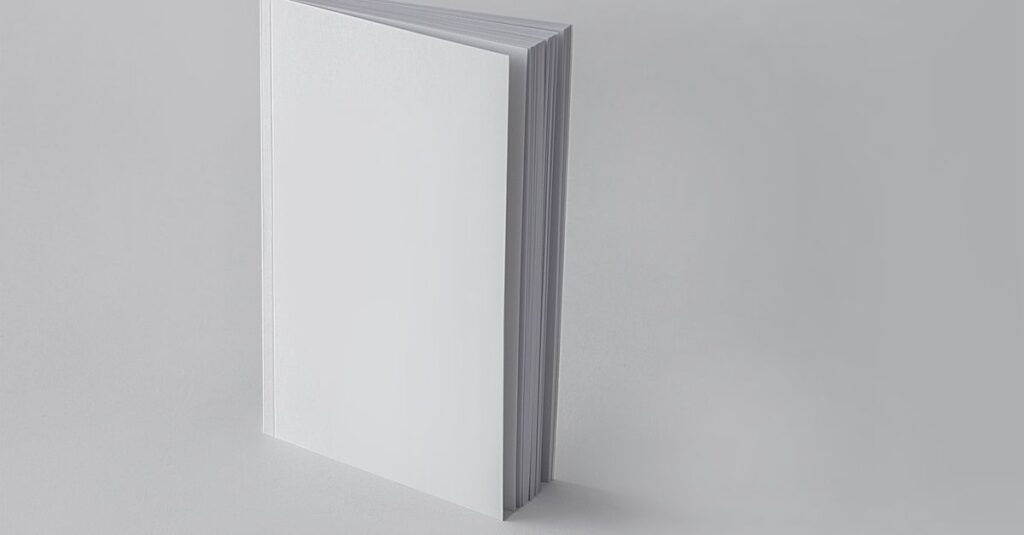
So let’s get this straight. The ISO standard for A4 paper is 210 mm by 297 mm. That’s 8.27 inches by 11.69 inches. Every printer knows it. But a notebook isn’t just a stack of loose paper. It’s bound. It has a cover. Those extra bits change the final dimensions. The real question you need to ask a supplier is: “What are the finished dimensions of your A4 notebook?“
In our factory, an A4 notebook starts with that 210×297 mm paper. Then we bind it. If it’s spiral bound, the spirals add a little width on the side—maybe 5-10 mm. A hardcover or a thick laminated soft cover adds even more. The finished product might be 215 x 300 mm, or even 220 x 305 mm. It’s subtle, but if you’re designing custom packaging or have specific storage boxes, those extra millimeters count.
I was talking to a distributor from Hyderabad last month—over a really bad phone connection, actually—and he was frustrated. His last shipment of “A4“ notebooks didn’t fit the display racks he’d bought. The racks were built for the pure paper size, not the bound book size. He hadn’t asked. The manufacturer hadn’t specified. A headache, honestly.
The Ruling, The GSM, The Feel
Dimensions are just the start. Once you know the physical size, you need to think about what’s inside. The paper weight—the GSM—determines how it feels to write on. Standard notebook paper is around 54-70 GSM. Higher GSM means thicker, more premium paper. For corporate diaries or executive notebooks, you might go up to 80 or even 100 GSM. For school notebooks, 54-60 GSM is the sweet spot: durable enough, cost-effective for bulk orders.
Then there’s ruling. Single ruled (SR), double ruled (DR), unruled (UR), four ruled (FR) for younger students… each has a purpose. An A4 account book will likely be double ruled or have a specific ledger layout. An A4 drawing book is unruled. The dimensions stay the same, but the function changes completely.
A4 vs. Other Common Notebook Sizes: A Quick, Practical Look
You’re probably comparing A4 to other options. Maybe A5 for a more portable notebook, or our standard King Size for a different aspect ratio. Here’s a straightforward comparison.
| Feature | A4 Notebook (Finished) | A5 Notebook | King Size (Our Standard) |
|---|---|---|---|
| Typical Dimensions | ~215 x 300 mm | ~150 x 210 mm | 236 x 173 mm |
| Primary Use | Official reports, corporate documentation, student projects | Personal journals, meeting notes, portable use | General school notebooks, daily writing |
| Page Count Range | 92 to 320 pages common | 52 to 200 pages common | 92 to 240 pages common |
| Binding Suitability | Perfect for spiral, stitched, or perfect binding | Often spiral bound for easy flipping | Typically stitched binding |
| Bulk Order Consideration | Higher per-unit paper cost, but professional presentation | Cost-effective, lighter for shipping | Balanced cost, ideal for large school orders |
The thing about A4 is its authority. It’s the size of official documents. When a business gives its employees an A4 diary, it sends a message. When a college requires A4 project books, it’s setting a standard. It’s not just a notebook; it’s a tool.
Why A4 is the Go-To for Corporate and Institutional Orders
Think about the paper that flows through an office. Printouts, reports, contracts… most are A4. So when you provide a notebook that matches that exact size, it creates continuity. Notes taken in an A4 notebook can be neatly filed alongside printed A4 documents. It’s a system.
For schools, especially higher grades and universities, A4 is the project book, the lab record, the thesis draft book. The larger space allows for diagrams, detailed notes, and structured layouts. It’s functional.
And from a manufacturing perspective, A4 is efficient. The paper sheets are cut from larger parent sheets in a standard way. The binding machines are calibrated for it. The packaging lines are set up for it. That standardization translates to reliability and often a better price for bulk orders because the process is streamlined. We’ve been running those lines for decades.
Expert Insight
I was reading something last month from an old industry manual, and one line stuck with me. It said the adoption of A4 as the global standard didn’t just happen because of printers. It happened because of storage. Filing cabinets, binder shelves, archive boxes—they all settled on that size. A notebook that matches that ecosystem doesn’t just get used; it gets kept. I don’t have a cleaner way to put it than that. It’s about fitting into an existing system of work.
Meet Priya. 34. Procurement Manager for a Mumbai-based IT firm.
She’s ordering 500 custom-branded notebooks for the new fiscal year. She needs them for managers across departments. Last year, she ordered A5. They were cheaper. But feedback came in: the managers felt they were too small for proper meeting minutes and project sketches. They were taking notes, then transferring them to A4 printouts later—double work. This year, she’s insisting on A4. She’s also specifying 90 GSM paper and a spiral bind so they lay flat on a desk. The quote is higher. But she knows the utility will be higher. She’s not buying stationery; she’s buying a work tool.
That’s the shift.
Customizing Your A4 Notebook Order: What You Can Control
When you come to a manufacturer for a bulk order of A4 notebooks, the dimensions are the foundation. But the build is where you make it yours. Here’s what you should be discussing:
- Cover Material: Laminated softcover, hardcover, premium textured paper. The cover adds maybe 1-2 mm to thickness.
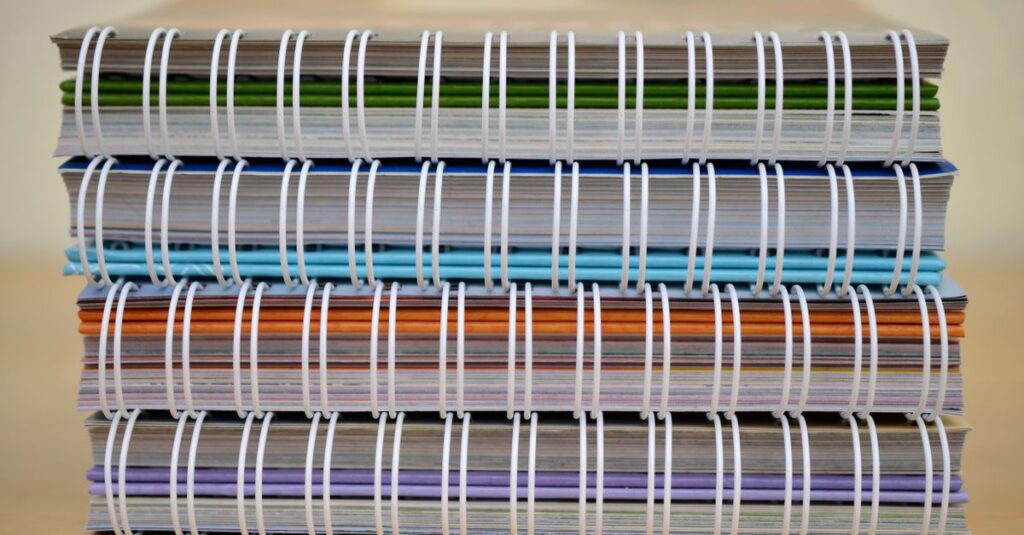
- Binding Type: Spiral binding (metal or plastic) for lay-flat use. Stitched binding for a more traditional, durable feel. Perfect binding (glued) for a clean, book-like edge.
- Page Count: This directly affects thickness. A 92-page A4 notebook is slim. A 320-page one is substantial. Decide based on use—a year-long diary vs. a project notebook.
- Paper GSM & Finish: Specify the writing experience. Do you want a smooth, creamy 80 GSM paper for executives, or a sturdy 60 GSM for general staff?
- Custom Printing: Logo on the cover, branded headers on each page, even custom layouts inside. This is where your company’s identity comes in.
And honestly? Most people don’t realize they can control all this. They just ask for “A4 notebooks, 200 pages.” But the difference between a generic notebook and a tool that people actually want to use is in these details.
The Manufacturing Reality: How A4 Notebooks Are Actually Made
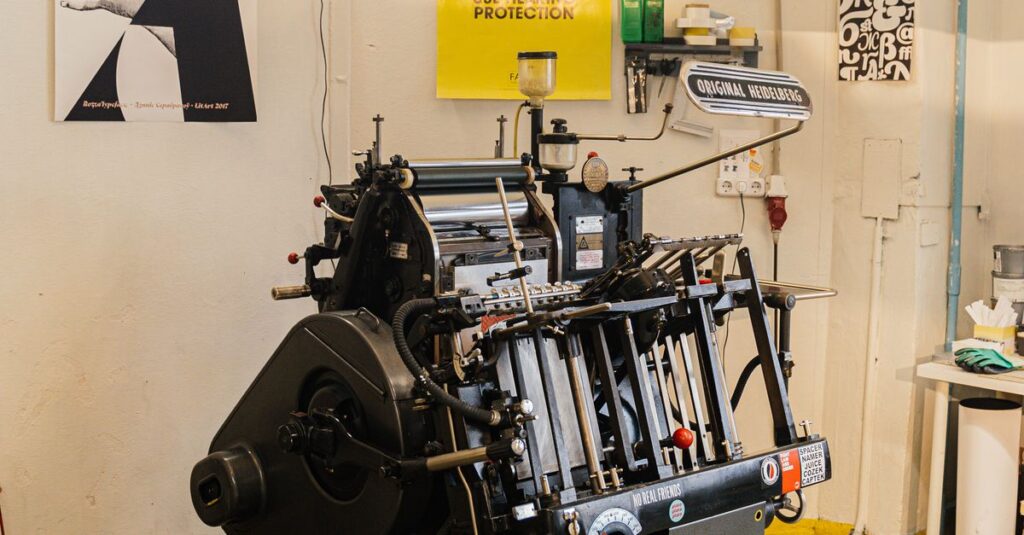
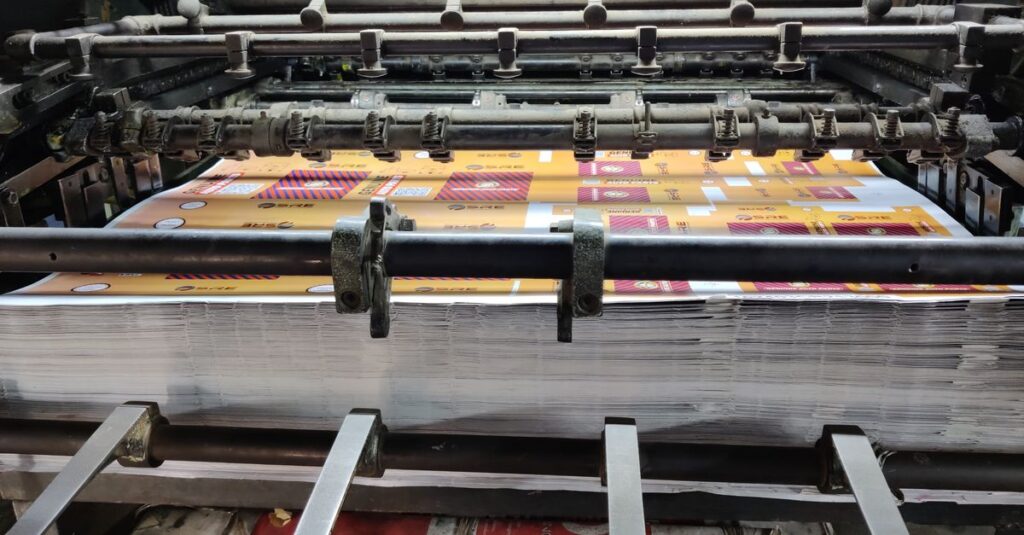
From our floor in Rajahmundry, the process is physical. Large rolls of paper come in. They’re slit and cut into A4 sheets—that 210×297 mm precision is the first cut. Then those sheets are collated into sets of 52, 92, 200… whatever the order specifies. They move to the ruling machines if needed, printing lines or grids. Then to the binding station.
Spiral binding is a different line. The punched sheets are gathered, the spiral wire or plastic coil is twisted through. The ends are clipped. It’s fast. Stitched binding is slower, more manual, but gives that classic notebook feel. The cover is applied last—glued, or wrapped around the bound spine.
The final step is trimming and quality check. Every notebook is measured. Because a batch of A4 notebooks that aren’t uniform causes problems in packaging. We check dimensions, we check page count, we check binding strength. It’s not just about making a notebook. It’s about making a batch of identical, reliable products. That’s what bulk buyers need.
Our printing services handle the customization part. From a simple logo stamp to full-color cover designs and even branded interior pages.
Frequently Asked Questions
Are A4 notebook dimensions exactly the same as A4 paper dimensions?
Not exactly. The paper inside is standard A4 (210×297 mm). But the finished notebook includes cover overhang and binding, adding a few millimeters. Always ask your manufacturer for the final product dimensions, especially for storage or packaging planning.
What is the best binding for an A4 notebook?
Depends on use. Spiral binding lets the notebook lay flat, perfect for desk work or drawing. Stitched binding is more durable and traditional, great for notebooks that will be handled a lot. Perfect binding gives a clean, book-like look for corporate gifts. Discuss the primary use with your supplier.
Can I get custom-printed A4 notebooks in bulk?
Absolutely. Most manufacturers, like us, offer full customization. You can add your logo, corporate design, even change the internal layout. Bulk orders (500+ units) are where customization becomes cost-effective. It’s about turning a generic product into your branded tool.
How many pages should a standard A4 notebook have?
There’s no single standard, but common counts are 92, 200, and 240 pages. For a corporate diary used daily, 200-240 pages covers a year. For a project notebook, 92-120 pages might suffice. Consider the writing volume.
Is A4 the most cost-effective size for bulk school notebook orders?
Often, no. A4 uses more paper per unit than smaller sizes like King Size or A5. For large-scale school orders where cost is critical, manufacturers often recommend their standard sizes (like our King Size) which balance space and economy. A4 is chosen for specific needs where its formal size is required.
So, What Should You Do Next?
If you’re reading this because you’re about to place an order, start with the spec sheet. Decide the primary use. Is it for formal documentation, portable notes, or general school work? That tells you if A4 is the right choice or if another size might serve better. Then, talk to your manufacturer. Ask for finished dimensions. Specify GSM, ruling, binding. Don’t just order “A4 notebooks.” Order the right tool.
I don’t think there’s one perfect answer here. Probably there isn’t. But if you’ve read this far, you already know the size you need—you’re just figuring out how to build it right.
If you want to talk specifics, we’ve been doing this since 1985. A phone call or an email with your requirements is where the real numbers get settled.