Here’s something you probably don’t see in a lot of those “printing near me” search results.
You type in “color print out near me” because you need something physical, tangible, and in your hands by this afternoon. Maybe it’s a last-minute proposal, some presentation handouts for a meeting, or custom covers for a batch of notebooks you’re ordering. You want a local shop, a fast quote, and the work done right.
But if you’re a business, a school, or a wholesaler — that search is just the surface. What you’re really looking for, nine times out of ten, isn’t just a copy shop. It’s a reliable supply chain. It’s understanding the difference between a one-off print job and a production run that needs to be consistent, durable, and cost-effective across thousands of units.
I see this all the time. People call us for printing services thinking it’s just a bigger version of what they get at the local FedEx. It’s not. It’s a whole different world. And frankly, most retail print shops can’t touch it. If you’re reading this because you’ve got a bulk need niggling at the back of your mind, not just a single poster, that’s what we should talk about.
What “Color Print Out Near Me” Actually Means for Businesses
Look, when you search that phrase, Google shows you Kinko’s, Staples, maybe a local print shop in a strip mall. And for 20 color copies of a flyer? Perfect. Go there.
But the intent behind the search often shifts when the numbers get bigger. The headache isn’t finding a printer; it’s finding one that understands volume, deadlines, and the specific demands of professional stationery. The conversation changes from “per page cost” to paper weight, binding methods, color consistency across a run, and freight logistics.
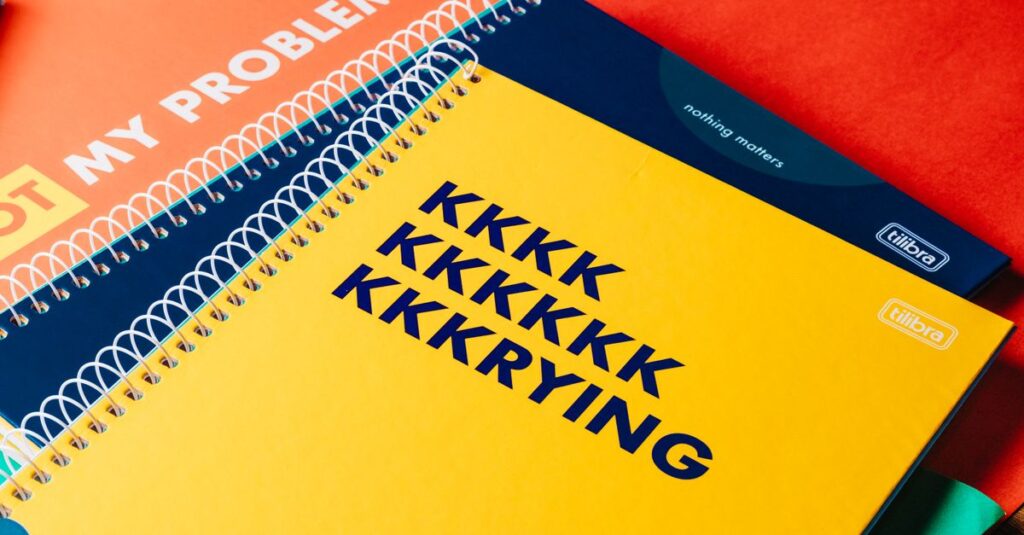
Think about it this way. A corporate procurement manager needs 5,000 custom diaries with the company logo in full color on the cover. A school needs 10,000 premium notebooks with a vibrant, educational cover design. A distributor wants a private label notebook line. This isn’t “printing.” This is manufacturing. The “near me” part becomes less about physical proximity and more about having a partner who is accessible, understands your timeline, and reliably delivers a product that feels premium.
That’s the gap a lot of people hit. The local shop says they can do it, then the price skyrockets for bulk, or the quality isn’t uniform. And suddenly you’re back on Google, frustrated.
The Real Cost of Color: Decoding Quotes for Bulk Jobs
This is where things get messy. And I’ve been on these calls for decades.
You’ll get a quote for a color print job. Seems straightforward. Then you ask: what’s the paper GSM? Is that a digital print or offset? What’s the color consistency guarantee across the batch? Cue the silence. Or a vague answer.
For bulk orders, the cost isn’t just ink on paper. It’s about the process. Let’s break down what you’re actually paying for:
- Set-up & Plates: For offset printing (the gold standard for large runs), there’s a one-time cost for creating the printing plates. This is why unit cost drops dramatically with volume.
- Paper Stock: “Color print out” on 80gsm bond paper feels flimsy. On 200gsm card stock for a diary cover? It feels substantial. The paper is often the biggest variable in cost and feel.
- Finishing: This is everything after the ink dries. Trimming, binding (spiral, perfect, stitched), laminating, embossing. This is where a notebook manufacturer like us has the edge over a general print shop.
- Consistency: The real test. Does the 1st copy look identical to the 5000th? In offset printing, it does. In some digital processes, it can drift.
So when you’re comparing “price per page,” you’re probably comparing apples to oranges. Or maybe apples to abstract paintings of fruit.
A Quick Story From Last Week
I was on a call with Priya, a procurement lead for a chain of coaching institutes in Hyderabad. She needed 8,000 custom workbooks with full-color interior pages — charts, diagrams, the works. She’d gotten quotes from three local printers. One was surprisingly cheap. Red flag. I asked her to check if the quote included paper that could handle writing without bleed-through. It didn’t. They were quoting for standard photocopy paper. The workbooks would have been unusable. She hadn’t even thought to ask. Most people don’t. They just see the bottom line.
Anyway. The point is, the cheapest “color print out” quote can end up being the most expensive mistake.
Local Print Shop vs. Dedicated Manufacturer: A Side-by-Side Look
Right. Let’s make this crystal clear. When your need scales, the partner you need changes.
| Consideration | Local Print / Copy Shop | Notebook & Stationery Manufacturer |
|---|---|---|
| Best For | Small batches (1-500), quick turnarounds, one-off documents. | Bulk orders (500+), multi-page products, bound items, brand consistency. |
| Printing Method | Almost always digital printing. | Offset for large runs (better color/ cost), digital for short runs & variable data. |
| Paper & Material Knowledge | Limited stock options (usually pre-set). | Deep expertise in paper GSM, grain, opacity, and suitability for writing/binding. |
| Binding & Finishing | Basic stapling, spiral coil (limited sizes). | Full range: stitched binding, perfect binding, hardcover, wire-o, specialized packaging. |
| Cost Structure | High per-unit cost, no volume efficiency. | High initial setup, very low per-unit cost at scale. |
| Project Management | Order-taker. You specify everything. | Consultative. Can advise on specs, design for manufacturability, logistics. |
The table makes it obvious, I think. It’s not that one is better than the other. They serve different masters. Trying to force a retail model into a wholesale need is where budgets and timelines go to die.
How Bulk Color Printing Actually Works (The Inside View)
Let me pull back the curtain a bit. When an order for, say, 20,000 color notebooks comes into our facility in Rajahmundry, it’s not a giant photocopier we turn on.
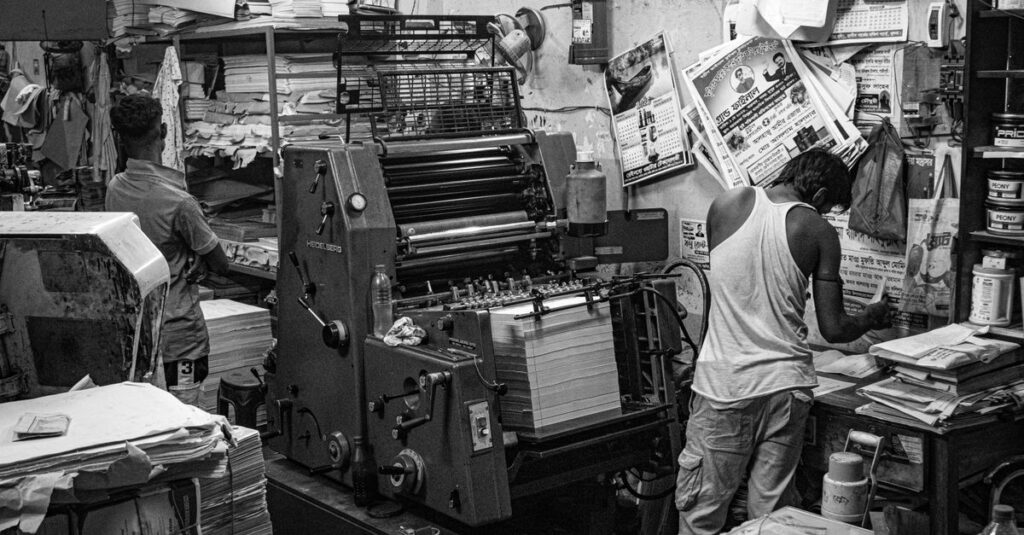
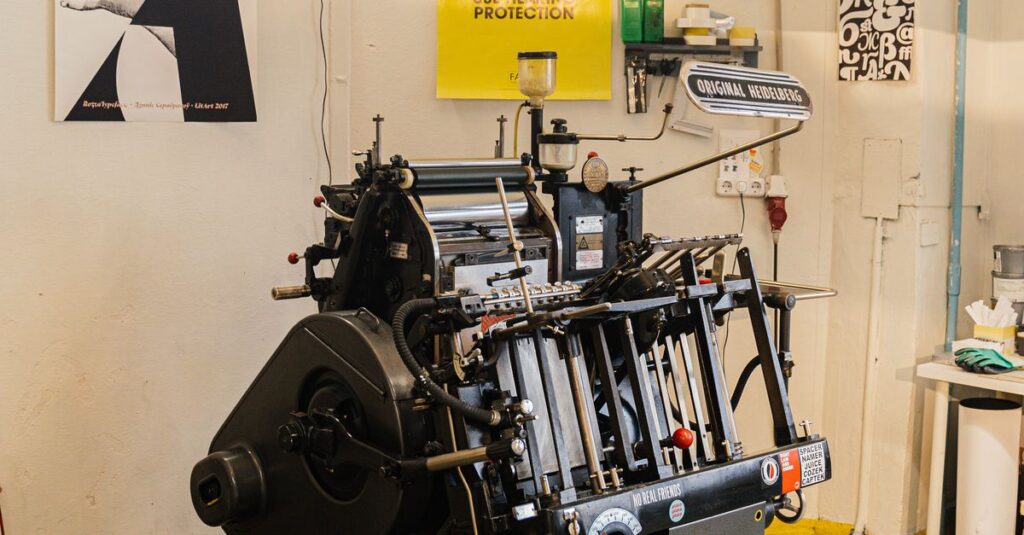
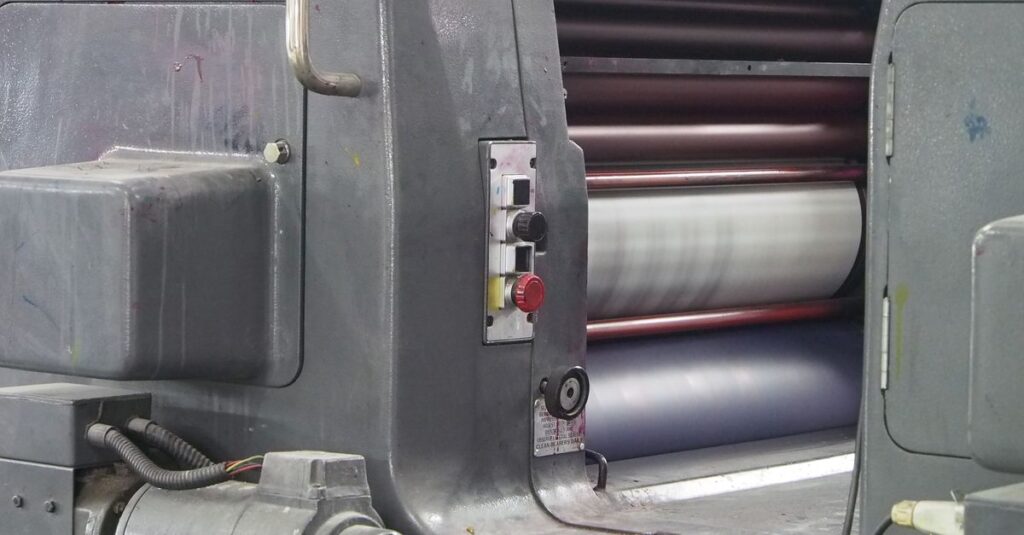
The process is a dance of machinery and precision. First, the large sheets of paper — we call them parent reels or sheets — are loaded into the offset press. Each color (CMYK) is applied in layers by separate plates. This is why color matching is so precise. The printed sheets then go through a drying process.
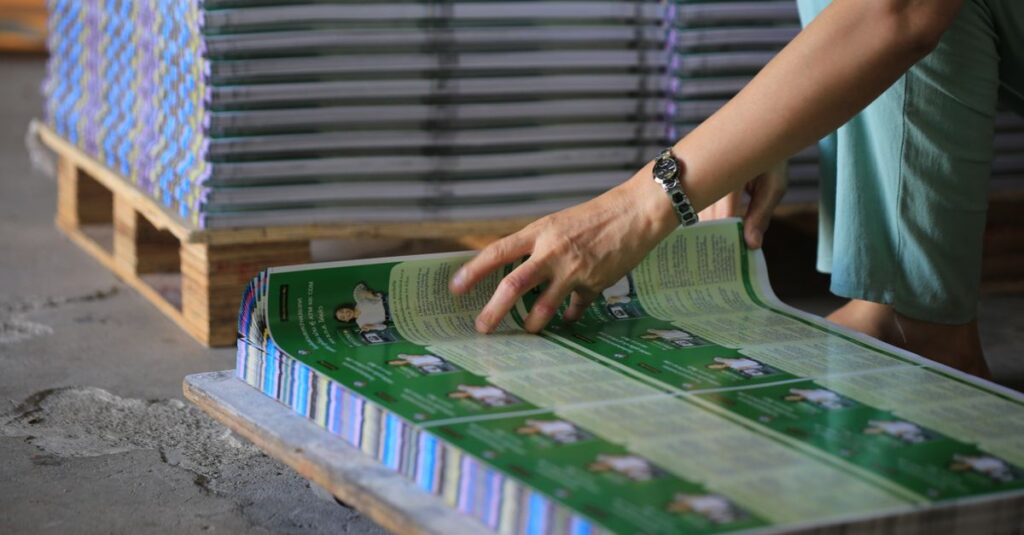
Next is cutting. Guillotine cutters slice the large sheets down into the correct notebook page size. This is where efficiency comes from; we print many pages at once on a giant sheet. After that, the pages are collated in sequence, then sent to the binding line — maybe for stitching, maybe for perfect binding with glue.
Finally, the cover — which has been printed separately, often on heavier stock and possibly laminated for durability — is attached. Then it’s trimming, quality checks, and packing into cartons.
The scale changes everything. The smell of ink and paper, the rhythmic thump of the binder, the stacks of finished notebooks waiting for shipment. It’s a physical thing. You can’t get that from a desktop printer, no matter how fancy.
Expert Insight
I was reading something last month and one line stuck with me. A veteran print buyer said the biggest mistake companies make is treating printing as a commodity service, like buying electricity. It’s not. It’s a technical craft with a thousand variables. The relationship with your manufacturer matters because when a problem crops up — a color is off, a shipment is delayed — you need a partner who solves it, not a vendor who points to a clause in a contract. I don’t have a cleaner way to put it than that. The cheaper bid often costs you more in stress.
When “Near Me” Becomes “Anywhere” – The Export Angle
Here’s a twist you might not expect. A big chunk of our clients searching for reliable color printing aren’t even in our city, or even our country.
We get inquiries from the Gulf, from Africa, from the US. The search starts as “color print out near me” but quickly evolves into “notebook manufacturer India” or “bulk diary supplier.” Why? Because when your volume is high enough, geography becomes a logistics problem, not a sourcing barrier. The per-unit savings from manufacturing in a dedicated facility like ours outweigh the shipping costs. And you get a partner who lives and breathes stationery production, not a shop that also does business cards and wedding invitations.
The trust shifts. It’s no longer about driving to pick up your order. It’s about clear communication, samples sent by courier, production updates, and containers leaving a port on time. The “near me” need transforms into a need for “direct access” — a phone number, a WhatsApp contact, a person who answers your questions. Like +91-8522818651, for instance. It’s a different kind of proximity.
And honestly? For a corporate buyer responsible for ordering 50,000 branded notebooks, that direct line is worth more than a shop around the corner that can’t handle the job.
Frequently Asked Questions
What’s the difference between digital and offset color printing for bulk?
Digital is great for short runs and super quick jobs. No plates needed. But for bulk, offset is king. The color is more consistent across thousands of sheets, the cost per page plummets, and you can use a wider range of papers. Think of digital as a sprinter and offset as a marathon runner with perfect pace.
How do I ensure the color on my prints matches my brand logo?
This is critical. Always ask for a physical proof on the actual paper stock you’ll be using. Screen colors lie. Provide a Pantone (PMS) number if you have one — that’s the universal language for color. A good manufacturer will color-match to that standard. Don’t just approve a PDF.
What paper weight (GSM) should I choose for color notebook covers?
For a standard notebook cover that needs to feel durable but flexible, 200-250 GSM art card is a sweet spot. For a premium diary or hardcover look, go for 300 GSM or higher, often with lamination. For internal pages, 70-80 GSM paper is standard for writing. We can guide you through the options based on your product.
Can I get a small sample before placing a large color print order?
Any reputable manufacturer will insist on it. You should always get a physical dummy or sample notebook made exactly to your specs. This lets you check color, paper feel, binding strength, and overall quality. It’s non-negotiable. If a supplier refuses, walk away.
What’s the typical turnaround time for 10,000 custom color notebooks?
It depends on complexity, but for a standard notebook, a professional manufacturer with a daily production capacity like ours can typically turn that around in 3-4 weeks from final approval. This includes plate making, printing, binding, finishing, and packing. Rush jobs are possible but affect cost. Planning ahead is the best cost-saver.
The Bottom Line
Searching for “color print out near me” is a starting point, not the destination. For personal, urgent needs, the local shops are heroes.
But if your search is being driven by a business requirement, an institutional purchase, or the need to build a branded product line, you’ve already outgrown that model. The real search is for a manufacturing partner. Someone who gets the nuances of bulk production, who talks about paper grain and binding signatures, and who sees your order as the start of a process, not a transaction.
I don’t think there’s one perfect answer for every situation. Probably there isn’t. But if you’ve read this far, you already know what you’re looking for — you’re just figuring out if it’s okay to skip the retail middleman and go straight to the source. In my experience, that’s almost always the smarter move. If you want to talk specifics about a project, that’s what we’re here for.