Here’s the thing about double lined notebooks.
If you’re buying notebooks for an office or a school, you’ve probably looked at a specification sheet and seen “DR” or “Double Ruled.” And you might have just nodded along. Most people do. But then the order arrives, someone opens a box, and there’s a moment of quiet confusion. The pages look… different. There are two lines, close together, where you’d usually see one. A junior accountant or a new student might hold one up and ask, “What’s this for?”
And if you’re the person who placed the order, that question lands right in your gut. Because you need to be sure. You need to know that the money you’re spending on hundreds, maybe thousands, of these notebooks is being spent right. That they aren’t just a weird, unused stockpile in a storage room. I’ve seen it happen. It’s not about the cost of the paper — it’s about the trust in your decision. You want to know the why behind the spec.
So let’s talk about it. Not from a catalogue description, but from the floor. What a double lined notebook actually does, who really needs it, and why it’s one of the most quietly practical choices you can make for certain jobs. If you’re trying to decide what to order for your institution, this might be worth a look.
What a Double Ruled Notebook Actually Is (And Isn’t)
Okay, let’s get the simple part out of the way. A double ruled (DR) notebook page has two parallel horizontal lines running across it, with a narrow gap between them. They’re not for drawing a train track. Think of them as a guide lane. The space between the two lines is where your writing sits. The top line marks the ceiling for taller letters (like ‘b’ or ‘d’), and the bottom line is the floor for letters with tails (like ‘g’ or ‘y’).
Most people think of the standard single ruled (SR) notebook. One line. You write on it. Simple. But that single line is just a baseline — it doesn’t give you a upper boundary. Your writing can get tall and messy. A double ruling creates a defined channel. It’s structure. Control.
It’s also not Four Ruled (FR), which is for teaching young kids the proportions of letters. And it’s definitely not Unruled (UR) for sketches. Double ruled is for a specific kind of functional, consistent writing. It’s for when uniformity matters more than expression.
I was talking to a procurement manager for a state university last month — over a very rushed phone call — and he put it perfectly: “We order SR for arts students. We order DR for the law and accountancy departments. For them, the notes aren’t ideas; they’re evidence.” The page has to hold up in a system.
The Quiet Power of the Second Line: Real-World Use Cases
So who actually uses these? It’s not everyone. But for the people who need them, that second line is the only thing that matters.
First, Accounting and Bookkeeping. This is the big one. When you’re entering figures, clarity is non-negotiable. A ‘7’ that looks like a ‘1’ because it’s floating too high is a problem waiting to happen. The double lane keeps numbers consistently sized and legible. It forces a neatness that audit trails appreciate. I’ve seen entire back-office operations standardize on double ruled ledger books for this exact reason. The data is cleaner from the source.
Second, Legal and Administrative Documentation. Drafts, case notes, official minutes. These documents often get referenced, scanned, photocopied, and passed around. Sloppy handwriting gets lost in reproduction. The constrained space of a double ruling improves legibility dramatically. It’s about creating a professional, authoritative record on paper.
Third, Specific Educational Tiers
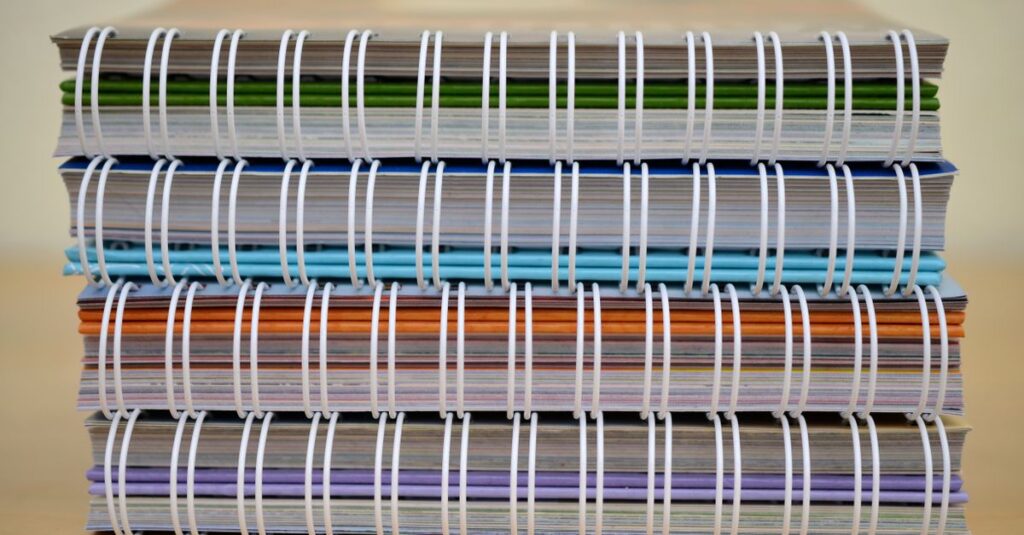
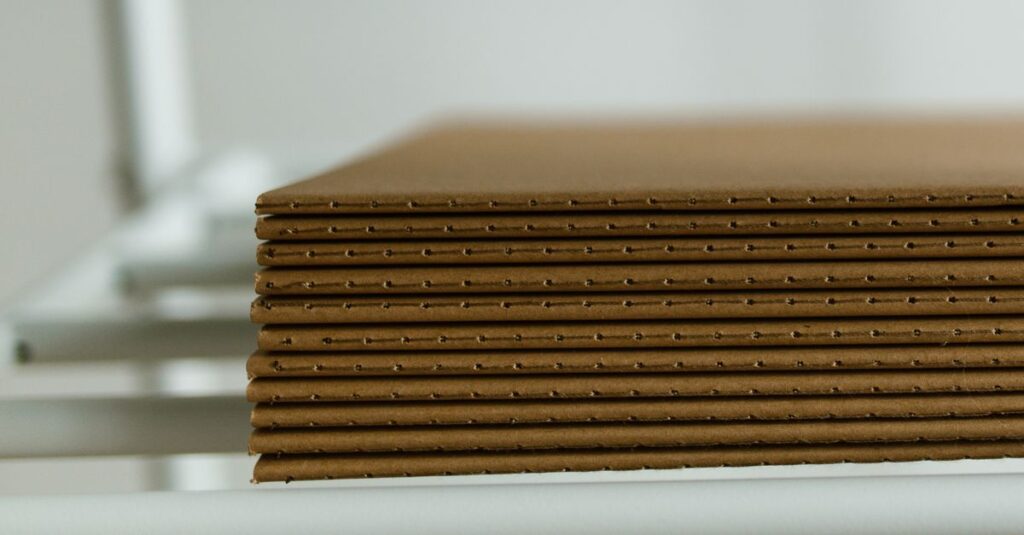
Let me tell you about Anika. She’s 28, a junior audit associate in a Bangalore firm. Her firm switched from single to double ruled notebooks for all client workbooks last year. At first, she thought it was just a cost thing from procurement. Then she spent a month on a complex audit. “I had to go back through my notes from week one,” she said. “And for the first time, I could actually read my own handwriting from a stressful, fast-paced session. The numbers were in a clear line. I found the discrepancy in ten minutes. It felt like the notebook was working with me, not against me.” She didn’t thank the procurement manager. But she never complained about the stationary again. You see? It’s a small thing. Until it’s the thing that saves you an hour of squinting. This is where most bulk buyers get stuck. They default to single ruled because it’s the “normal” one. But that’s like using a butter knife for every job in a workshop. Sometimes you need a scalpel. The choice isn’t about better or worse. It’s about fit. Ordering SR for your finance team is a minor inefficiency. Ordering DR for a primary school art class is just wasting money on a feature they’ll never use. Look, if you’re reading this, you’re probably not buying one notebook. You’re buying pallets. So the questions change. It’s not “Do I like it?” It’s “Will this work for 500 people for a full year?” First, don’t guess the ratio. Profile your users. How many are in roles that demand precision writing? For a corporate order, talk to department heads. For a school, talk to the commerce and science faculty. Maybe only 30% of your total need is DR. But for that 30%, it’s critical. Mixing your carton sizes is standard practice for a manufacturer like us. We do it all the time. Second, paper quality matters even more here. That writing channel needs to be crisp. If the printing is faint or blurry, you lose the whole benefit. And the paper itself has to take ink cleanly without bleed. A good 54 GSM paper, like we use, is pretty much the baseline. Anything lighter, and your beautiful double lines are just guidelines for a smudge. Third, binding for heavy use. These notebooks aren’t for gentle journaling. They’re flipped through, referenced, carried to meetings. A stitched binding or spiral binding will last longer than a cheap glued spine. It’s a small cost increase for a dramatically longer product life. Think total cost of ownership, not just unit price.A Quick, Real Story
Single Ruled vs. Double Ruled: Picking the Right Tool
Consideration
Single Ruled (SR) Notebook
Double Ruled (DR) Notebook
Primary Purpose
General notetaking, ideas, essays, free-form writing.
Structured data entry, financial records, legal notes, precise documentation.
Writing Style
Encourages a more natural, flowing hand.
Enforces consistency in letter/number height and alignment.
Best For Users
Students (most subjects), creative professionals, meeting notes.
Accountants, auditors, lawyers, administrators, engineering students.
Visual Clarity
Can become messy under time pressure.
Superior legibility, especially for numbers and dense text.
Bulk Order Tip
Your safe, all-purpose default. Order for general distribution.
Order for specific departments or roles where data integrity is key.
Procurement Mindset
“We need notebooks.”
“We need tools for a specific job.”
What You Need to Know When Ordering in Bulk
Expert Insight
I was reading an old industry piece a while back — one of those trade magazines that only people in printing get — and a line from a production manager stuck with me. He said, “The most expensive notebook is the one that doesn’t get used.” He wasn’t talking about price. He meant that if you buy the wrong ruling, the wrong size, the wrong binding, it sits in a cupboard. It becomes waste. The goal isn’t to just supply paper. It’s to supply the right paper. For us, that means asking a lot of questions before we even quote. Sometimes we tell a client, “You actually need more single ruled than double.” It’s not about selling more of one thing; it’s about making sure the order works. Because that’s how you get a re-order next year.
Common Questions (The Ones You’re Too Busy to Ask)
Frequently Asked Questions
Can we get double ruled notebooks with custom logos?
Absolutely. In fact, it’s very common for corporations and universities. The ruling is printed on the paper during manufacturing, and your logo/cover design is printed separately. We do this all the time for custom corporate orders. You get the functionality of the double lines with your brand on the front.
Is double ruled the same as “broad ruled”?
No, they’re completely different. Broad Ruled (BR) has single lines, but they’re spaced farther apart — usually for younger students or people with larger handwriting. Double Ruled (DR) has two close-together lines creating a writing channel. Don’t mix up the specs!
What page counts are best for double ruled work?
For serious record-keeping, go thicker. A 92-page or 200-page notebook gives a substantial record for a single project or client. It reduces the need to switch books mid-stream. For daily task logging, a 52-page might be fine. We offer all standard counts.
Do you export double ruled notebooks?
Yes, regularly. The demand for structured stationery is global, especially in professional and educational sectors in the Gulf, Africa, and elsewhere. We handle the export packaging and documentation. The paper quality and clear ruling are big reasons international buyers work with us.
Can we mix rulings in one bulk order?
Of course. This is standard for institutional supply. You might order 70% Single Ruled, 20% Double Ruled, and 10% Graph or Unruled. We pack them in separate cartons by type for easy distribution. Just specify the breakdown in your quote request.
Wrapping This Up
At the end of all this, the point of a double lined notebook is control. It’s a tool for imposing order on information. It’s for the work that can’t afford to be messy. If you’re supplying an office of creatives, you probably don’t need it. If you’re supplying an audit team or a law college, you probably do.
The trick is to see past the notebook as a commodity. See it as a piece of equipment. The right tool makes the job easier, faster, and more reliable. And in bulk procurement, that’s the only metric that actually counts. It’s not about stationery; it’s about workflow.
I don’t think there’s one perfect ruling for everyone. Probably there isn’t. But if you’ve read this far, you’re already thinking about the specific needs of your people — you’re just figuring out how to match a product to them. And that’s the whole game. If you want to talk specifics about an upcoming order, we should talk.