Okay, Let’s Talk About Lines on Paper
You’re ordering notebooks. Maybe for a school, a corporate office, a whole government department. You see the product list: SR, UR, DR, BR, FR, CR, OSR, CBR. And you stop at “BR” — Broad Ruled.
You know you need it. But what exactly is it? Why is it called “broad”? Who actually uses this, and why would you order thousands of them? Most suppliers just list it as an option without explaining. Here’s the thing — the ruling isn’t just a line. It’s a tool. And picking the wrong one is a headache, honestly.
I’ve been in this business for decades. I’ve watched procurement managers scratch their heads over this simple detail. It’s not complicated, but nobody talks about it. So let’s talk. If you’re looking to order, understanding this first saves you a lot of time.
What is a Broad Ruled Notebook?
It’s simple. A broad ruled notebook has writing lines that are spaced wider apart than a standard single ruled notebook. The space between the lines is bigger — “broad.”
Think of it this way. A standard single ruled notebook (SR) has lines maybe 7-8mm apart. A broad ruled notebook (BR) pushes that to 10mm or more. It gives more vertical room between each line of writing.
Why? Because not everyone writes small. Kids learning to write, people with larger handwriting, anyone who needs extra space for clarity — they need that room. It’s not a luxury. It’s a functional requirement.
The question isn’t whether broad ruled exists. It’s whether you know who needs it in your order.
Who Actually Uses Broad Ruled Notebooks? (The Real Users)
Most people think it’s just for children. That’s only part of the story.
Primary Schools & Early Learners
This is the biggest use case. In India, and across many countries, primary school notebooks (Class 1 to Class 5) are often broad ruled. The wider spacing helps children form letters without cramping. Their motor skills are developing. Giving them space reduces frustration. I’ve seen orders from schools in Rajahmundry, Visakhapatnam, even exported to Gulf countries — they specify BR for grades 1-4 without question.
People with Larger Handwriting or Special Needs
It’s not just kids. Some adults naturally write bigger. Others might have visual or motor challenges where closer lines cause confusion. Broad ruled provides a cleaner, less cluttered writing surface. It’s an accessibility feature, really.
Certain Professional Contexts
Think about rough drafting, sketching ideas alongside text, or making quick notes that need emphasis. The extra space allows for annotations between lines. I’ve supplied broad ruled notebooks to engineering firms and design studios for this exact reason. They weren’t for final reports — they were for the messy, creative, first-draft work.
A Micro-Story: Mrs. Reddy’s Order
Mrs. Reddy runs a primary school in Guntur. She called last month for a bulk order — 5,000 notebooks. She said, “We need BR for grades 1-3, SR for grades 4-7, and DR for the seniors.” She knew exactly what each ruling did for her students. She didn’t need a explanation. She needed a manufacturer who could deliver all three types in one batch. That’s the kind of clarity you get after forty years in the game.
Broad Ruled vs. Other Common Ruling Types
Let’s put them side by side. This is where most confusion happens.
| Ruling Type | What it looks like | Primary Use | Typical Users |
|---|---|---|---|
| SR (Single Ruled) | Single, evenly spaced horizontal lines | General writing, notes, standard work | Most students (Class 6+), office staff, general use |
| BR (Broad Ruled) | Wider spacing between horizontal lines | Learning handwriting, larger script, clarity | Primary students, some adults, special needs |
| DR (Double Ruled) | Two close lines (like a channel) for each writing row | Practicing letter height & alignment | Young students learning letter formation |
| FR (Four Ruled) | Four lines per row (two outer, two inner) | Teaching cursive, detailed handwriting practice | Early primary classes (often Class 1-2) |
| CR (Cross Ruled/Squared) | Grid of small squares | Math, graphs, diagrams, technical drawings | Engineering students, accountants, designers |
| UR (Unruled) | Blank pages | Drawing, free-form writing, sketching | Art students, designers, anyone needing freedom |
The biggest mistake I see? Institutions ordering SR for everything because it’s “standard.” But if you’re supplying to a primary school, BR or DR might be the actual standard for them.
How Broad Ruled Notebooks Are Made (The Manufacturing Side)
This is the part nobody asks about, but it matters if you’re ordering bulk.
The Printing Process
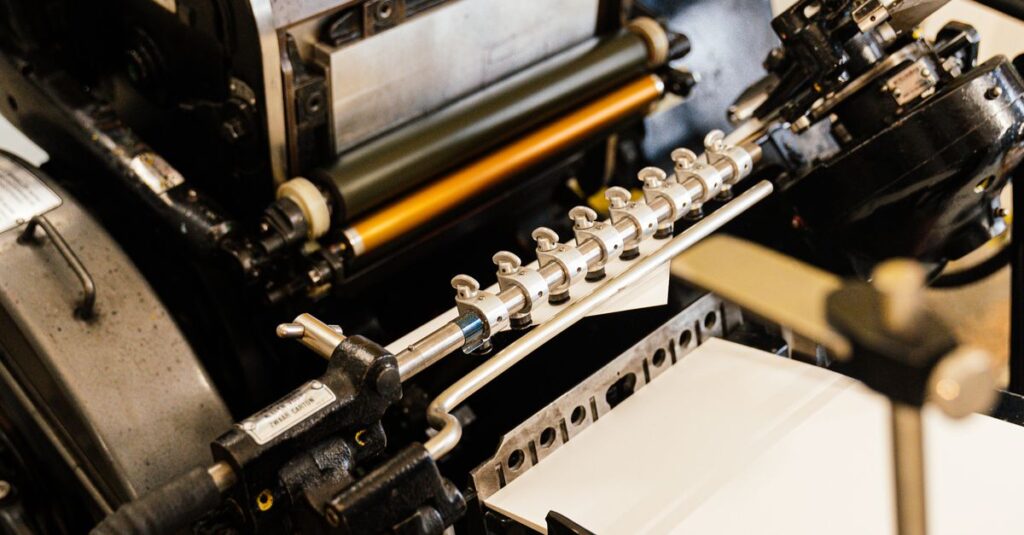
Broad ruled lines are printed using the same offset printing machines as other rulings. The difference is in the plate. The printing plate for BR has the line pattern with increased spacing. It’s one more plate in the factory. At our unit, we keep plates for all ruling types — SR, BR, DR, FR, CR — ready to go. Switching between them for a custom order isn’t a problem.
Paper & Binding Considerations
The paper is the same. Usually 54 GSM writing paper, smooth finish. The ruling doesn’t change the paper quality. Binding — whether stitched, spiral, or perfect bound — also stays the same. So a broad ruled notebook costs the same to produce as a single ruled one. The only cost difference might be in the plate setup if you’re mixing rulings in a single order. But for a dedicated BR order, it’s straightforward.
Expert Insight
I was talking to a procurement manager from a Hyderabad-based school chain last week. He said something I keep thinking about. He told me, “We used to just order SR for all grades to simplify things. Then we got complaints from junior teachers that the kids’ writing was spilling over the lines, looking messy. We switched to BR for the lower grades. The teachers didn’t complain about handwriting anymore. They complained about other things — which is progress, I guess.” The lesson? The right tool removes one friction point. It doesn’t solve all problems, but it solves the one it’s meant to.
If you’re looking at custom notebook options, the ruling is a spec you need to lock in early.
Why Bulk Buyers Need to Specify Ruling Clearly
Here’s a practical truth. When you order 10,000 notebooks, a misunderstanding on ruling type means 10,000 unusable notebooks. It’s not a small error.
- Check the existing stock: What ruling are the users currently using? Don’t guess.
- Ask the end-users: If it’s for schools, ask the teachers. If for offices, ask the staff.
- Sample before bulk: Always request a physical sample notebook with the exact ruling before confirming the full order. We provide samples for every custom specification. It’s the only way to be sure.
- Mix rulings in one order: You can. We do it regularly. You can order 5,000 BR and 5,000 SR in the same batch, same delivery. Just specify the quantities per ruling clearly.
Look, I’ll be direct. The ruling seems like a minor detail. Until it’s wrong. Then it’s the only detail anyone talks about.
Common Questions About Broad Ruled Notebooks (FAQ)
Is broad ruled notebook better for children?
Yes, for primary school children (typically grades 1-5), broad ruled is generally better. The wider line spacing accommodates their larger, developing handwriting and gives them room to practice letter shapes clearly.
Can I get broad ruled notebooks in different sizes?
Absolutely. Broad ruling can be applied to any notebook size — Long, Short, Crown, or Account size. The ruling pattern is printed relative to the page dimensions.
What’s the difference between broad ruled and double ruled?
Broad ruled has wider spaces between single lines. Double ruled has two closely spaced lines creating a “channel” for each row of writing. Double ruled is often used for stricter handwriting practice, while broad ruled is for general spacious writing.
Do you manufacture custom broad ruled notebooks for businesses?
Yes. We regularly produce custom printed notebooks with broad ruling for corporate clients, schools, and institutions. You can specify the ruling, page count, size, and cover design.
How do I know if I should order broad ruled or single ruled?
Consider the user. If they are young learners, have larger handwriting, or need extra clarity, choose broad ruled. For general, compact writing by older students or adults, single ruled is standard. Request samples of both to compare.
Wrapping This Up
Broad ruled isn’t a niche product. It’s a functional variant designed for a specific need — space. Whether that need comes from a child’s hand, a visual preference, or a drafting style, it’s valid.
The manufacturing process is identical to other rulings. The cost is the same. The only difference is the pattern on the plate and the space on the page.
I don’t think there’s one perfect ruling for everyone. Probably there isn’t. But if you’re ordering in bulk, you need to match the ruling to the task. You already know what your users need — you’re just figuring out how to specify it to your supplier correctly.
If you want to talk specifics or get samples, that’s where we can help. No guesswork.