So, What On Earth Are ‘E Notebooks’ Anyway?
Look, I get it. You typed it in. Maybe it was a typo, maybe you’re just trying to figure out what people are talking about. “E notebooks.” It’s a mess of a search term, right? Is it electronic notebooks? Exercise books? Something else entirely? I’ve been in this business long enough to see the search logs, and here’s what I think nine times out of ten is happening: someone — probably a procurement manager, a school administrator, someone in charge of buying stuff — is trying to find notebooks. Just… regular, paper, write-in-them notebooks. But maybe they’re in a hurry, maybe they’re looking for “exercise books,” maybe it’s a shorthand. The “e” gets thrown in. It’s not a tech product. It’s the real, physical thing. The kind my factory has been making for over forty years. That’s what we’re talking about. If you’re here trying to source notebooks in bulk for your school, your office, or your distribution business, you’re in the right place. Honestly, if this is the headache you’re dealing with, seeing what a real manufacturer does might clear things up.
The Real-World Hunt for Notebooks (And Why It’s Harder Than It Sounds)
You need 5000 notebooks for the new school year. Or 2000 custom diaries for your corporate clients. Seems simple. Go online, find a supplier, place the order. Done. Right? Not even close. The reality is a swamp of confusing jargon, inconsistent quality, and suppliers who vanish after you pay. You’ll see terms like “e notebooks” and have to guess. You’ll get quotes that don’t specify the paper GSM. The covers in the sample look vibrant, but the production run feels flimsy. I’ve talked to enough frustrated buyers to know the pattern. The problem isn’t a lack of options. It’s a lack of clear, honest information from people who actually make the things. The search becomes less about finding a product and more about finding a partner you don’t have to babysit. Which is exhausting.
A Quick Story From Last Month
I was on a call with a guy named Arjun. He runs a stationery distributorship in Hyderabad. He’d ordered 10,000 long notebooks from a new “manufacturer” he found online. The price was great. Too good, honestly. The shipment arrived. The binding was coming apart on a third of them. The ruling was faint, almost unreadable. He was sitting on a mountain of returns and angry retail customers. His exact words to me: “I just wanted someone who knew what ’52 pages, SR, 54 GSM’ actually meant and could deliver it.” He wasn’t asking for magic. Just basic competence. We fixed his order, but that initial trust was already broken. You can’t get that back.
Breaking Down the Notebook Code: Sizes, Paper, and All That Jazz
Alright, let’s cut through the noise. When you’re evaluating a notebook manufacturer — whether you call them e notebooks suppliers or whatever — you need to speak the language. It’s not complicated, but it matters. Get these specs wrong, and your whole order is useless.
First, size. This isn’t just “big” or “small.” It’s precise:
- Long Notebook: 27.2 cm × 17.1 cm. The standard for most senior school students.
- Short Notebook: 19.5 cm × 15.5 cm. Think younger kids, easier to handle.
- Account Notebook: 33.9 cm × 21 cm. For ledgers, large registers.
- King Size: 23.6 cm × 17.3 cm. A popular all-rounder.
Then, paper. GSM is grams per square meter. It tells you the thickness. For everyday writing, 54-60 GSM is the sweet spot. Thinner than that, and ink bleeds through; it feels cheap. Thicker is great for drawing books, but you’re paying for weight you might not need. And the ruling — SR (Single Ruled), DR (Double Ruled), UR (Unruled). This seems minor until you hand a Double Ruled notebook to a college kid who needs single lines, or vice versa. It’s the kind of detail that separates a generic bulk order from one that actually fits the purpose.
Custom Notebooks vs. Standard Stock: What’s Actually Worth It?
This is where most businesses get stuck. Do you go for plain, off-the-shelf notebooks? Or do you customize them with your logo, your colors, your specific layout? The answer isn’t yes or no. It’s “it depends on what you’re trying to achieve.” I think — and I could be wrong — that people overestimate the cost of customization and underestimate the impact. A standard notebook is a commodity. It gets the job done. A custom notebook with your school’s crest, your company’s brand, a tailored inner page design? That’s a tool. It builds identity. It looks professional. For corporate gifting, it’s a no-brainer. For a school, it fosters pride. The manufacturing process is the same for us; we just swap out the printing plates and cover stock. The setup has a cost, but spread over a few thousand units, it becomes negligible. The real question is about intention. Are you just buying paper, or are you buying a statement?
| Consideration | Standard Stock Notebooks | Custom Printed Notebooks |
|---|---|---|
| Lead Time | Short (often ready to ship) | Longer (for design & plate setup) |
| Cost Per Unit | Lower | Slightly higher (includes setup) |
| Branding Impact | Zero | High – acts as mobile advertising |
| Flexibility | Limited to existing specs | Full control over cover, layout, paper |
| Best For | Internal use, quick replenishment | Corporate gifts, schools, branded promotions |
| Minimum Order | Often lower | Higher to amortize setup costs |
The Binding Truth: Stitched, Spiral, and Why It Matters
Let’s talk about how the thing holds together. Because a notebook that sheds its pages is worse than useless. You’ve got three main types, and each has a personality.
Stitched Binding: This is the classic. Pages are gathered into sections, stitched with thread through the spine, then glued into the cover. It’s durable, lies relatively flat, and has a professional feel. It’s what we use for most of our school and account books. The downside? You can’t tear pages out cleanly. But that’s also the point – it’s permanent.
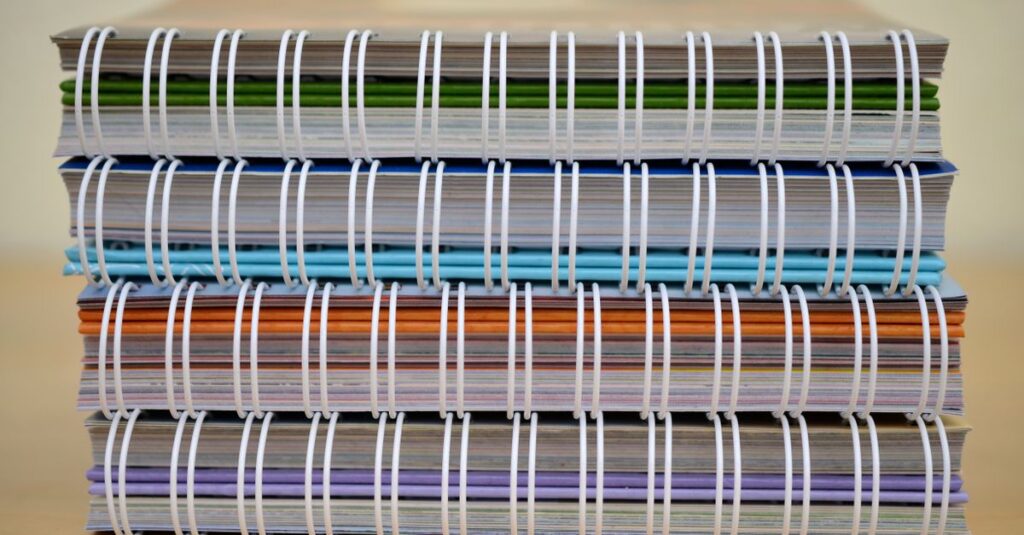
Spiral Binding: That metal or plastic coil running through punched holes. It lets the notebook fold back on itself completely, which is genius for artists, students, or anyone who needs a flat surface. It also allows for easy page removal. The weakness? The spiral can get bent in a bag, and once it’s mangled, the whole book is compromised. It’s a trade-off between flexibility and ruggedness.
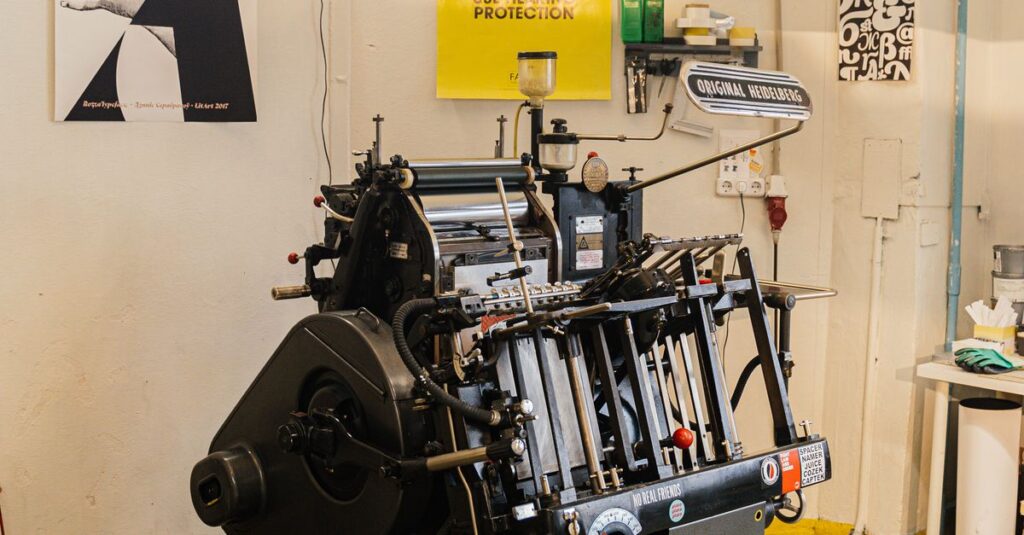
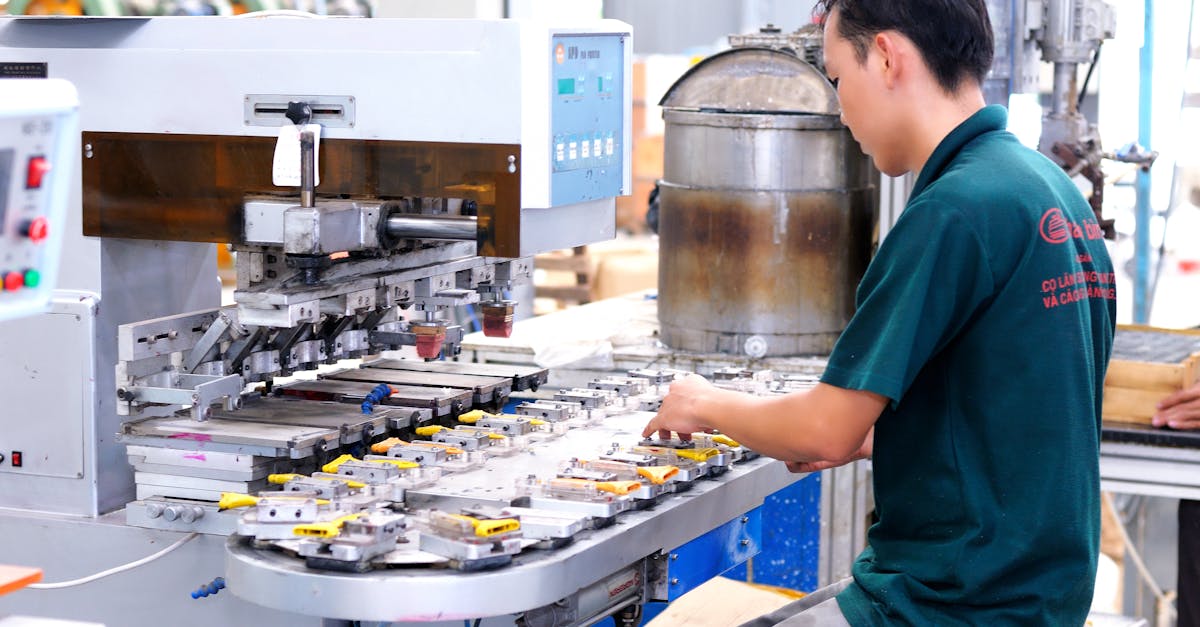
Perfect Binding: Think of a paperback book. The pages are glued together at the spine with a strong adhesive. It gives a very clean, squared-off look, great for corporate diaries or premium notebooks. It doesn’t lay as flat as a spiral, but it looks sharp on a desk. The glue has to be good, though. Cheap perfect binding cracks and pages fall out. This is where working with an experienced manufacturer isn’t just nice – it’s the only thing that matters here. You can learn more about how we handle these different methods in our printing and binding services.
Expert Insight
I was reading an industry report last year – one of those dry, technical ones – and a line about adhesive chemistry stuck with me. The researcher said something like, the difference between a notebook that lasts a year and one that lasts a decade isn’t the paper. It’s the binding adhesive’s flexibility in humidity. Rajahmundry isn’t exactly the Sahara; we have real humidity. So we source adhesives that account for that. Most buyers never think about this. They just know one book falls apart and another doesn’t. I don’t have a cleaner way to put it than that: the invisible stuff is what builds trust.
How to Vet a Notebook Manufacturer (Without Losing Your Mind)
So you’ve got a list. Five companies promising the world. How do you pick one? Don’t just look at the price. That’s the last step. First, ask for physical samples. Always. A website photo tells you nothing about paper feel, binding tightness, print quality. Second, ask about their production capacity. If you need 50,000 units and their max daily output is 5,000, you need to know that timeline upfront. Third, be specific about your specs. “I need 5,000 A4 notebooks” is vague. “I need 5,000 Long Notebooks (27.2×17.1cm), 92 pages, Single Ruled, 54 GSM white paper, stitched binding, with a custom cover print” is a real order. The way they respond to that level of detail tells you everything. A good manufacturer will ask more questions. A bad one will just say “yes” and give you a price. The former is a partner. The latter is a headache waiting to happen. And honestly? Most people know this already, but they skip the steps because they’re in a rush.
Frequently Asked Questions
What does “e notebooks” usually mean in a search?
Ninety percent of the time, it’s a misspelling or shorthand for “exercise notebooks” or just general notebooks. People searching this are typically institutional buyers, schools, or businesses looking for bulk supplies of standard paper notebooks, not digital products. It’s a common entry point into the market.
What is the minimum order quantity (MOQ) for custom notebooks?
It varies wildly by manufacturer. For a basic custom print run, expect MOQs to start around 500 to 1000 pieces. For fully custom paper, ruling, and size, it might be higher. The MOQ exists to cover the setup cost of creating your unique printing plates and adjusting the production line. Always ask this first.
How long does it take to produce a bulk order of notebooks?
For standard stock items, shipment can often be within days. For a custom order, factor in 2-3 weeks for production after final design approval, plus shipping time. Larger orders (100,000+) obviously take longer. A reliable manufacturer will give you a clear, phased timeline, not just a single promise date.
Can I get notebooks with my school’s logo and map printed inside?
Absolutely. That’s a core part of custom notebook manufacturing. You can print logos on the cover, and even customize the inner pages with specific headers, footers, maps, rules, or motivational quotes. The only limits are the printable area and your budget.
Do you export notebooks internationally?
Yes. We regularly ship bulk notebook orders to the Gulf, Africa, the USA, Europe, and other regions. The key is understanding export packaging (to protect against moisture and damage), proper documentation, and shipping logistics. It’s a routine part of the business for established manufacturers.
Wrapping This Up
The search for “e notebooks” is really a search for reliability. It’s about translating a basic need — something to write on — into a physical product that doesn’t let you down. It comes down to specs, to binding, to a manufacturer who answers your detailed questions with even more detailed answers. I don’t think there’s one perfect supplier for everyone. Probably there isn’t. But if you’ve read this far, you already know the questions to ask — you’re just figuring out who’s actually listening. The right partner makes the whole process, from that messy initial search to the final delivered pallet, feel simple. And that’s the goal, isn’t it? To make one part of your job just work. If sourcing notebooks is that part, starting a conversation might be the next step.