Introduction
You know that moment when you’re looking at a procurement list, and you see “Factor Notes”? It’s right between plain notebooks and account books. And if you’re not in the manufacturing game, you’re probably wondering what the hell it is.
It’s a niche term. A proper industry one. It doesn’t come up in a Google search the way “custom notebooks” does. It’s something you hear in meetings with suppliers, in emails from bulk buyers, or when a school principal is explaining their annual order. And yet, it’s one of the most important notebooks you can buy.
I’ve been at this for years. More than forty, actually. And the number of procurement managers, school administrators, and stationery distributors who ask me about Factor Notes — but don’t have a clear picture of what they are — is kind of surprising. They just know they need them. So let’s clear that up. If you’re buying notebooks in bulk, you should understand this.
What Exactly Are Factor Notes?
Think of Factor Notes as the workhorse notebook. They’re not for show. They’re not fancy corporate diaries with leather covers. They’re the notebooks that get used every single day, in classrooms, offices, and warehouses. The “factor” part is about dimensions. Basically, they’re notebooks made to a specific, standard size — a “factor” size — that’s optimized for bulk manufacturing and efficient use of paper.
It’s about geometry. About cutting paper sheets in the most economical way so you get the maximum number of notebooks out of a single roll. Less waste. More product. That’s the factor. So when you order Factor Notes, you’re ordering notebooks built on a production line designed for volume and consistency. No odd sizes. No weird cuts. Just clean, predictable, cost-effective notebooks.
A Real-Life Example
Let me tell you about Neela. She’s the procurement manager for a network of schools in Hyderabad. Age? Probably mid-40s. She orders thousands of notebooks every quarter. Her office is cluttered with samples — but she keeps one Factor Note on her desk, open. It’s her reference. She told me last month, over a very quick phone call, that when she hears “factor notes” she thinks “no surprises.” She knows exactly how many will fit in a box, how much they’ll weigh, and what the per-unit cost will be. That predictability is everything when you’re managing a tight budget.
The Anatomy of a Factor Note: Sizes, Paper, and Ruling
So what makes a notebook a Factor Note? Three things. The size, the paper, and the ruling. It’s a specific combination.
First, the size. You’re usually looking at what we call “Crown Size” — 23.6 cm by 17.3 cm. Or sometimes the Long Notebook size — 27.2 cm by 17.1 cm. These aren’t arbitrary. They’re calculated from standard paper sheet sizes (like Double Crown or Quad sheets) used in rotary printing machines. The “factor” is the division of that big sheet into these smaller, perfect rectangles. No trimming waste.
Then the paper. This is where people get confused. Factor Notes typically use what we call “writing paper” — around 54 GSM. It’s smooth, takes ink well, but isn’t so thick that it becomes expensive. It’s the Goldilocks zone of paper for daily use. Thick enough to not tear easily, light enough to keep costs down.
And finally, the ruling. This is huge. Most Factor Notes are Single Ruled (SR) or Double Ruled (DR). Single ruled is for general writing. Double ruled, with two lines close together, is often for account-keeping or detailed notes. Some are Four Ruled (FR) for younger students learning to write. The ruling is precise, consistent across every page. No blurry lines, no misalignment. Because in bulk manufacturing, consistency is the whole game.
You’re not getting a custom cover or fancy binding here. You’re getting a core, reliable product. That’s where our work really is.
Who Uses Factor Notes and Why?
Okay, so who actually buys these? And why do they specifically ask for “Factor Notes” instead of just “notebooks”?
Schools and Colleges are the biggest buyers. They need uniformity. When you’re distributing notebooks to 500 students, you want every notebook to be the same. Same number of pages, same ruling, same size. It makes distribution simple, and it ensures every student has the same tool. Factor Notes deliver that uniformity at a price that fits an educational budget.
Corporate Offices, especially for internal use. Think of training departments, warehouses for inventory logs, or admin teams for daily logs. They don’t need branded diaries for this. They need durable, cheap, functional notebooks that can be used, replaced, and not thought about too much. Factor Notes are the behind-the-scenes stationery.
Government Institutions. Tenders for stationery supplies often specify Factor Notes. Because the tender document needs to define the product precisely to avoid getting ten different types of notebooks from ten different suppliers. The term “factor notes” becomes a standard specification — it locks down the size, paper, and ruling.
Stationery Distributors and Wholesalers. They stock Factor Notes because they know their clients (schools, small businesses) will ask for them. It’s a staple product. A category that always sells.
The reason is always about scale and predictability. When you’re buying in thousands, you can’t deal with variations. You need a product that is, mathematically and physically, consistent.
The Manufacturing Process: Why “Factor” Matters
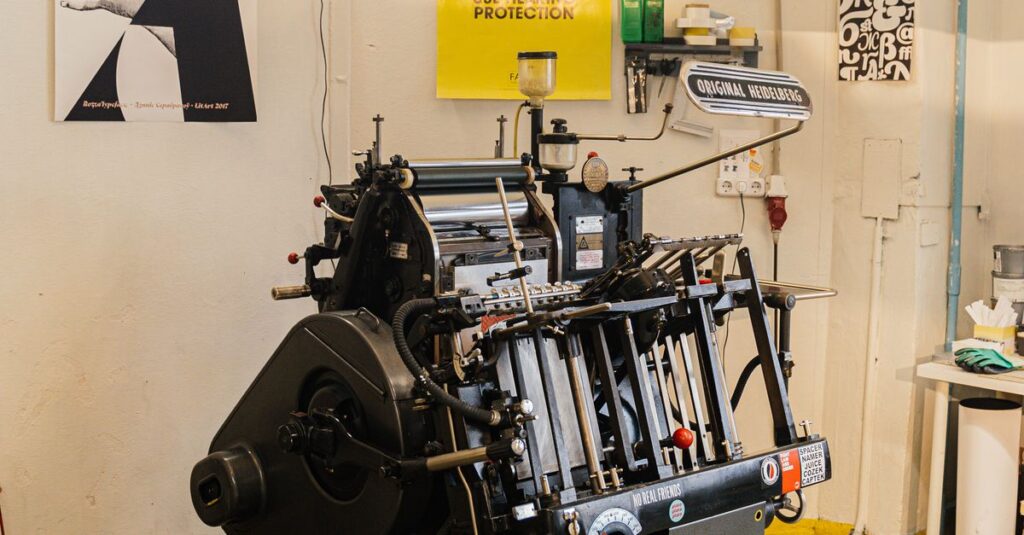
This is the part most buyers don’t see, but it’s the reason Factor Notes exist. The manufacturing line is set up for them.
We start with huge rolls of paper. The machine cuts these into sheets based on the “factor” — the pre-calculated dimensions for the notebook size. This cutting pattern maximizes yield. It’s like cutting a cake — you want every slice to be the same size and you want no leftover crumbs. That’s the factor calculation.
Then those sheets go through ruling printing. Lines are printed on them with high-precision offset machines. Alignment is critical. A misaligned ruling sheet means a whole batch of notebooks with crooked lines — and that batch gets rejected. We check this constantly.
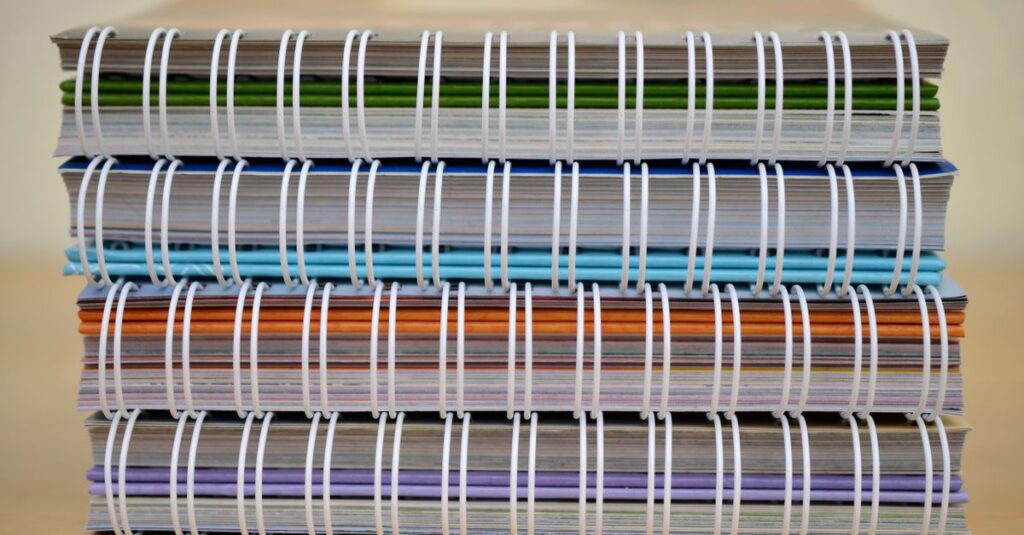
Binding is usually stitched binding. It’s strong, cheap, and fast. We can stitch thousands of notebooks a day. Spiral binding is possible, but for true Factor Notes in bulk, stitching is the standard because it’s more efficient on a massive scale.
The covers are often simple — a standard printed design, maybe a single colour. Because the focus is on the inside, the usable pages. The cover is just protection.
I was reading something last month about industrial design. One line stuck with me. The author said something like — the most beautiful industrial products are often the ones you never notice, because they just work, perfectly and silently, every time. I don’t have a cleaner way to put it than that. Factor Notes are that. They’re the notebook you don’t think about. You just use it.
Factor Notes vs. Custom Notebooks: A Practical Comparison
When you’re ordering, you might be weighing Factor Notes against custom printed notebooks. They serve different purposes. Let’s lay it out clearly.
| Consideration | Factor Notes | Custom Notebooks |
|---|---|---|
| Primary Purpose | Internal, daily, functional use | Branding, gifting, premium presentation |
| Cost per Unit | Low — optimized for bulk | Higher — includes design, special features |
| Lead Time | Short — often from standard stock | Longer — design approval, special production |
| Customization | Limited — mostly ruling & page count | High — cover design, paper type, binding, size |
| Best For | Schools, corporate internal use, government supply | Corporate clients, events, premium retail |
| Order Volume | Very high (10,000+) | Variable (500 to 10,000+) |
| Binding | Usually stitched | Any (stitched, spiral, perfect) |
The choice isn’t about which is better. It’s about what you need. If you need 20,000 notebooks for student distribution next month, you go Factor Notes. If you need 500 branded notebooks for a conference, you go custom. Trying to use a custom notebook for a massive internal supply chain is like using a sports car to haul gravel. It’ll work, but it’s wasteful.
How to Order Factor Notes in Bulk: A Buyer’s Checklist
If you’re ready to order, here’s what you need to specify. Don’t just say “Factor Notes.” Break it down.
- Size: Crown Size (23.6 x 17.3 cm) or Long Size (27.2 x 17.1 cm)? This decides the notebook footprint.
- Page Count: 92 pages? 200? 240? This is about thickness and usage lifespan.
- Ruling Type: Single Ruled (SR), Double Ruled (DR), Four Ruled (FR), or Unruled (UR)? This is about the user’s writing needs.
- Paper GSM: Standard 54 GSM writing paper? Or a heavier variant? This affects cost and feel.
- Binding: Stitched? Or do you need Spiral? Stitched is standard for true bulk factor notes.
- Cover: Simple single-color printed cover? Or a specific design? Even Factor Notes can have a basic branded cover.
- Packaging: How are they packed? 50 per box? 100? This matters for logistics and storage.
Get these details clear in your quote request. It saves time, back-and-forth emails, and confusion. And honestly? Most manufacturers appreciate it. It shows you know what you’re buying.
When you talk to a manufacturer, have this list ready.
Common Mistakes When Buying Factor Notes
I’ve seen buyers make a few classic errors. And they cost time and money.
First, assuming all Factor Notes are the same. They’re not. The ruling type difference between SR and DR is significant for the end-user. Ordering SR for an accounting team is a problem. Ordering DR for young school kids is also a problem. Know the user.
Second, not specifying the page count. Some think “notebook” means 100 pages. But we make them from 52 pages to 700 pages. If you need durability, go higher page count. If you need lightweight for young students, go lower. Don’t leave it vague.
Third, forgetting about packaging. You’re getting 10,000 notebooks. How will you receive them? In loose bundles? In boxes of 50? This affects your unloading, storage, and distribution. Specify it.
And the biggest one: not asking for a sample. Always, always ask for a physical sample before confirming a bulk order. Check the paper feel, the ruling alignment, the stitching strength. A sample costs us nothing to send, and it saves you from a massive disappointment.
FAQ Section
Frequently Asked Questions
What is the standard paper quality for Factor Notes?
Most Factor Notes use 54 GSM writing paper. It’s a smooth, mid-weight paper designed for daily writing with pens or pencils. It’s not too thin (so it doesn’t tear easily) and not too thick (so it keeps the cost down for bulk orders). Some manufacturers offer heavier options, but 54 GSM is the industry standard for this category.
Can Factor Notes be customized with a logo?
Yes, but within limits. You can usually customize the cover with a simple logo or text. However, the internal pages — the ruling, paper, size — remain standard to keep them as true Factor Notes. If you need full customization (special paper, unique size, custom interior design), then you’re moving into custom notebook territory, which is a different product and price point.
What is the typical delivery time for a bulk order of Factor Notes?
For a standard Factor Notes order (say 10,000 units of a common size and ruling), if it’s from existing stock patterns, delivery can be within 2-3 weeks. If it’s a new specification needing production time, expect 4-6 weeks. Always confirm lead times with your manufacturer before placing the order, as it depends on their current production schedule.
Are Factor Notes suitable for export and international shipping?
Absolutely. They are one of the most commonly exported notebook types because of their standardized size and packing. They’re robust, stack neatly, and are cost-effective to ship in large quantities. We regularly supply Factor Notes to markets in the Gulf, Africa, and Europe. Just ensure your packaging specs are clear for the shipping method.
What’s the difference between a Factor Note and a regular school notebook?
In practice, many school notebooks are Factor Notes. The term “Factor Note” specifically refers to the manufacturing origin — it’s made from a calculated “factor” size of paper for efficiency. A “regular school notebook” might be the same product, just without that technical specification. So when a school orders Factor Notes, they’re ordering notebooks built on that efficient, bulk-production standard, which usually means better pricing and consistency.
Conclusion
Factor Notes are, in a way, the invisible backbone of the stationery world. They’re not the products you see in fancy shops. They’re the ones stacked in school storerooms, issued to employees, or logged in government supply lists.
Understanding what they are — the size, the paper, the ruling, the manufacturing logic — gives you control when you’re buying them. You’re not just ordering “notebooks.” You’re ordering a specific, efficient, scalable tool. And for procurement managers, that specificity is power. It means predictable costs, reliable supply, and a product that does its job without fuss.
I don’t think there’s one perfect notebook for every need. Probably there isn’t. But if you’ve read this far, you already know whether Factor Notes fit your list — you’re just figuring out how to specify them correctly. That’s where a conversation with a manufacturer helps.