Right. Let’s talk about the thing you never think about until it fails.
You’re a procurement manager. You’ve signed off on 5,000 notebooks for the new school year. The delivery shows up. The boxes look fine. But then a teacher opens one, and pages just… come loose. Or the spiral catches on everything. Or the cover separates from the block after a week. That’s a minor catastrophe, right? Reputation, waste, angry calls. All because of something that seems trivial: the binding.
And honestly? Most people in your shoes don’t know what to look for. They just know “notebooks.” But the binding is the unsung hero — or villain — of the entire operation. It’s the difference between a product that lasts a semester and one that lasts a week. I’ve seen it happen enough times to know it’s not just bad luck; it’s a specification oversight. If you’re in charge of ordering notebooks for your school, business, or institution, understanding this one thing changes everything.
What is Notes Binding? (It’s Not Just Glue)
Okay, so “notes binding” sounds like a technical term. It is. But strip that away, and it’s simply the method used to hold the pages of a notebook together and attach them to the cover. The spine. The guts.
Think about it this way: the paper is the content, the cover is the face, but the binding is the skeleton. You don’t see it, but if it’s weak, the whole thing collapses.
I was talking to a college admin from Hyderabad last week — over a very rushed phone call, actually — and she said something that stuck with me. “We switched suppliers to save three rupees per book,” she said. “By mid-term, half the library notebooks were shedding pages. The ‘savings’ cost us double in replacements and complaints.” The problem? The new supplier used a cheaper, weaker adhesive in a process called perfect binding. It looked the same on the spec sheet. It failed completely in real life.
That’s the part nobody says out loud: THE SPEC SHEET LIES IF YOU DON’T KNOW WHAT YOU’RE READING.
Binding isn’t one thing. It’s a category. And the type you choose dictates the notebook’s lifespan, its lay-flat ability, its durability under stress, and frankly, its perceived quality. Get it wrong, and you’ve bought a problem. Get it right, and nobody notices — which is exactly what you want.
Stitched Binding: The Old-School Workhorse
This is the classic. Threads, not glue. Signatures of pages are sewn together through the fold, then that sewn block is attached to the cover, often with a strip of reinforcing cloth — the “mull.”
Here’s the thing about stitched binding: it feels substantial. There’s a heft to it. When you open a stitched notebook, it wants to stay open. It lies flat. You can write near the gutter without wrestling the pages. This is why it’s the gold standard for account books, high-page-count registers, or any notebook that’s going to see heavy, daily use.
But — and this is a big but — it’s more expensive. The process is slower. It requires more skilled labor and specific machinery. So, for a basic 100-page school notebook, it might be overkill. But for a 700-page record book that needs to survive years of handling? It’s the only choice.
Use case? Think long-term. Government institutions that need archival-quality books. Corporate ledgers. Master record books for schools. Anything where data integrity over time is non-negotiable.
The question isn’t whether it’s good. It’s whether your use case justifies the cost.
Expert Insight
I was reading something last month from an old print journal — the physical kind, sitting in our waiting area — and one line about binding stuck with me. A binder said, “A stitch isn’t just a connection; it’s a hinge.” That clicked. Glue is a rigid bond. Thread allows for movement, for flex, for the natural arc of an open book. That’s why stitched books feel so alive in the hand. I don’t have a cleaner way to put it than that. It’s engineering disguised as craft.
Spiral Binding: The Practical Compromise
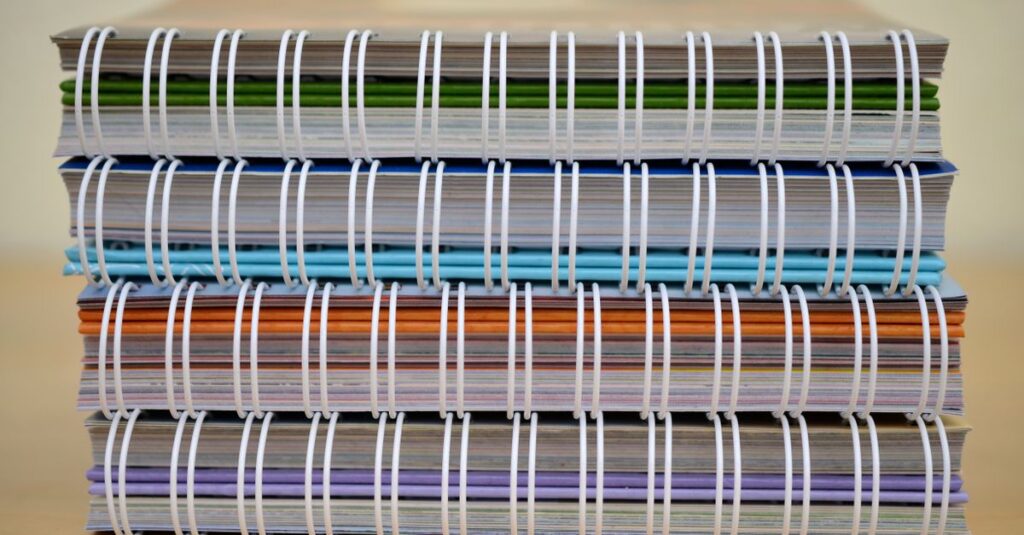
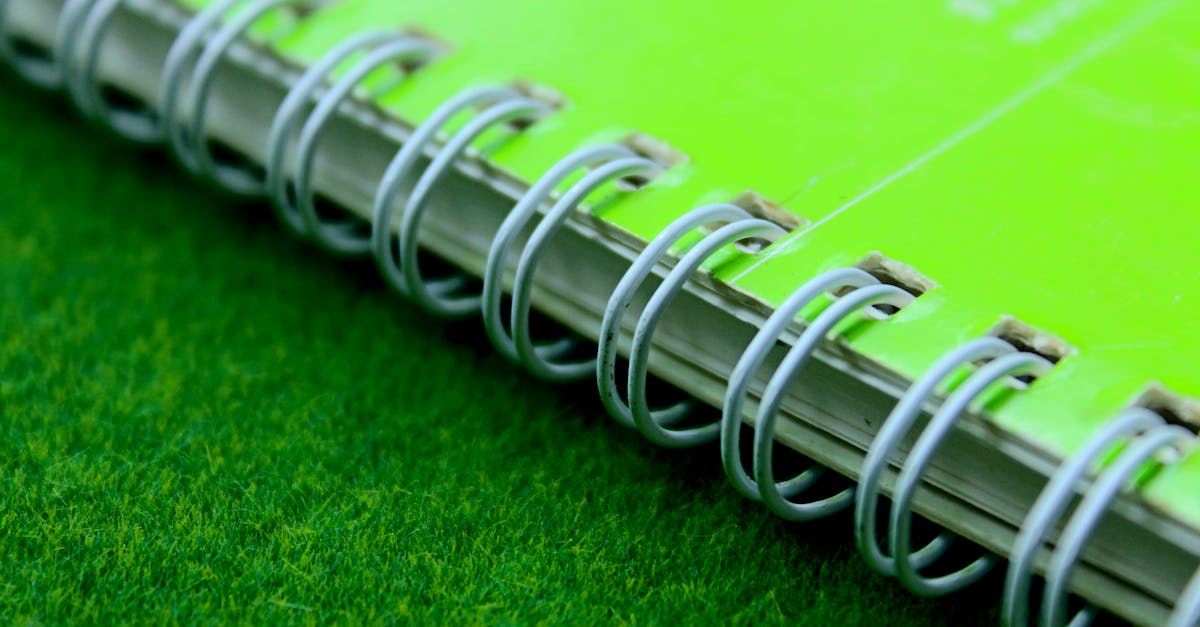
Spiral binding — or coil binding — is the king of flexibility and total lay-flat ability. You know it: the metal or plastic coil wound through closely spaced holes along the edge of the pages.
Most people I’ve spoken to in schools love it for drawing books, lab notebooks, or anything where students need to work across a completely flat surface. No fighting the spine. You can even fold the book completely back on itself, which is weirdly useful.
But.
It has two massive, glaring flaws that make procurement managers nervous. First, the spiral can snag. In a bag, on a shelf, against another book. I’ve seen notebooks arrive with bent coils that won’t turn properly. It’s a quality control nightmare if the wire isn’t high-grade or the punching isn’t precise. Second, it’s not as… professional looking for corporate settings. A spiral-bound corporate diary sends a different message than a hardbound, stitched one.
So it’s a trade-off. Ultimate functionality versus potential for damage and a certain aesthetic.
For bulk orders, you need to ask your notebook manufacturer about the wire gauge and the punching tolerance. Cheap wire bends. Bad punching leads to torn holes. Don’t just assume “spiral” is spiral.
Perfect Binding: The Modern (and Risky) Standard
Perfect binding is everywhere. Paperbacks, magazines, most corporate notepads. The pages are stacked, the edge is roughened, and a flexible adhesive is applied before the cover is wrapped around.
It’s cheap. It’s fast. It looks clean and modern. From a production standpoint, it’s why we can make 40,000 notebooks a day.
Here’s the real talk, though: the quality range here is a canyon. A good perfect binding uses a specific, flexible PU (polyurethane) adhesive that remains pliable in heat and cold. It allows the book to open without cracking the spine. A bad one uses cheap glue that dries brittle. The first time someone opens the book wide, you hear that terrible cracking sound, and the structural integrity is gone.
I think about this a lot when we get inquiries for custom printed notebooks. Everyone wants perfect binding for the look and price. My first question is always: “What’s the environment? Will these live on a desk or be thrown in a bag every day?” Because the answer decides the adhesive spec. We probably lose a few orders because we insist on the better, more expensive adhesive for rough-use cases. But we don’t get complaint calls later.
It’s a headache, honestly, when buyers only see unit cost.
Choosing the Right Binding: A Buyer’s Checklist
So you’re not a binding expert. You shouldn’t have to be. Your job is to get durable, fit-for-purpose notebooks at a good price. Here’s what to actually ask your supplier:
- End Use: Is this for rough, daily student handling? (Consider stitched or heavy-duty spiral). Is it for a corporate gift desk diary? (Stitched or high-quality perfect binding). Is it a throwaway notepad for meeting notes? (Economy perfect binding is fine).
- Lay-Flat Need: Do users need to write across the entire page, like in a drawing book? Spiral is the only real answer.
- Page Count: Over 200 pages? Stitched binding starts to make more sense. Under 100? Perfect binding is likely sufficient.
- Durability Test: Ask for samples. Seriously. Bend them. Open them violently. Leave them in a hot car for a day. Try to pull a page out. Your hands are the best QC tool.
- Supplier Transparency: A good manufacturer will tell you what they use and why. “We use PU adhesive for flexibility” is a good sign. “Don’t worry, it’s strong glue” is a red flag.
Look, I’ll be direct. Nine times out of ten, the binding failure I see comes from a mismatch between the application and the method. Not from some intrinsic failure of the method itself.
Stitched vs. Spiral vs. Perfect Binding: The Breakdown
| Feature | Stitched Binding | Spiral Binding | Perfect Binding |
|---|---|---|---|
| Durability | Highest. Withstands repeated opening & heavy use. | Medium. Depends on coil quality; can snag/bend. | Variable. Ranges from good to poor based on adhesive. |
| Lay-Flat Ability | Excellent. Lies flat naturally at any page. | Best. Pages fold 360°; completely flat surface. | Poor to Fair. Can crack spine if forced flat. |
| Cost (Relative) | Highest. More labor & material intensive. | Medium. Coil & punching add cost. | Lowest. Fast, automated process. |
| Professional Appearance | High. Seen as premium & long-lasting. | Low. Functional, often seen as ‘student-grade’. | High. Clean, modern, sleek look. |
| Best For | Account books, corporate diaries, archival records. | Drawing books, lab notebooks, project pads. | Standard school notebooks, corporate notepads, promotional items. |
| Page Count Suitability | Ideal for high page counts (200+). | Good for medium counts; very high counts get bulky. | Best for low to medium page counts (52-240). |
Why Your Bulk Notebook Order Depends on This
Let me tell you about Ravi. He’s a distributor in Chennai, mid-50s, been in stationery for decades. He ordered 20,000 short notebooks from a new, cheap supplier for the back-to-school rush. The binding was a low-grade perfect binding. They looked fine in the box.
Two months into the school term, the complaints started. Pages falling out. Covers detaching. Kids coming home with half-empty books. He had to replace the entire lot from his own pocket. The supplier vanished. His reputation with the schools took a hit that took years to rebuild.
The silence had weight when he told me this. It wasn’t anger; it was this tired, expensive lesson learned.
When you’re ordering in bulk — whether you’re a school, a corporation, or a distributor — you’re not buying a product. You’re buying a function. That function is to hold information reliably for a defined period. The binding is the only thing guaranteeing that function. Skimping on it turns a bulk buy into a bulk liability.
It’s probably the biggest reason serious institutional buyers start with samples and stress-test them. They’re not being difficult. They’ve been burned.
Frequently Asked Questions
What is the most durable type of notebook binding?
For sheer, long-term durability, stitched binding is the strongest. It uses thread to sew the pages together, which creates a flexible but incredibly tough hinge. It’s what you find in high-end account books and corporate diaries meant to last for years. Spiral binding is durable too, but the metal coil can bend or snag, which is a different kind of failure.
Which binding is best for school notebooks?
It depends on the use. For standard writing notebooks that will be thrown in school bags, a good quality perfect binding with flexible adhesive is cost-effective and sufficient. For drawing books or lab notebooks that need to lie completely flat, spiral binding is better. For higher-grade notebooks or record books that see heavy use, stitched binding is worth the investment.
Can I get custom branding on any type of binding?
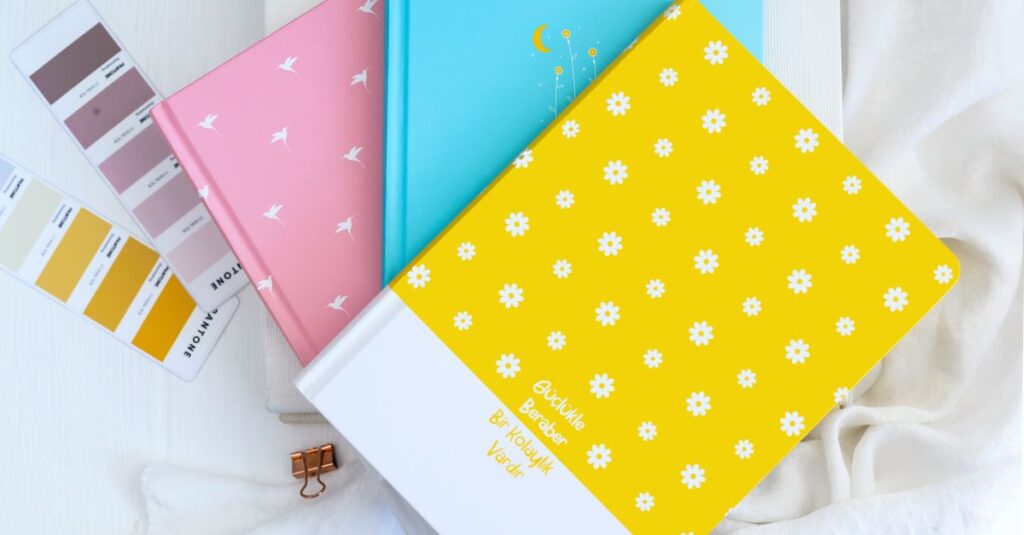
Yes, absolutely. Whether it’s stitched, spiral, or perfect bound, the cover can be fully customized with your logo, colors, and design. The binding process happens after the pages and covers are printed. So you can choose the right notes binding for your function and still have a fully branded, custom printed notebook.
Why do some perfectly bound notebooks fall apart quickly?
Almost always, it’s the adhesive. Cheap, brittle glue dries out, doesn’t flex, and cracks when the book is opened. Humidity and temperature changes speed this up. A good perfect binding uses a specific polyurethane (PU) adhesive that stays flexible. Always ask your manufacturer what type of adhesive they use for your climate and use case.
What should I look for when checking notebook binding quality?
Do the ‘stress test’. First, open the notebook to the middle. Does it lie reasonably flat without forcing it? Second, gently flex the cover back. Do you hear cracking from the spine? Third, try to pull a page from the middle with steady pressure. It shouldn’t come out easily. Finally, look at the spine edge. Is it neat, or are there globs of glue? Your eyes and hands are the best tools.
Conclusion
So here’s the takeaway, the only thing that matters here: binding isn’t a minor detail. It’s the core engineering of the notebook. Stitched for permanence. Spiral for total access. Perfect for economy and style.
Choosing wrong costs more than money. It costs trust. I don’t think there’s one perfect answer for every order. Probably there isn’t. But if you’ve read this far, you already know what you need the notebooks to do — you’re just figuring out how to make sure they actually do it.
The next time you’re evaluating a quote or a sample, look past the paper weight and the cover finish. Look at the spine. Ask about the glue, the thread, the coil. That’s where the real value — or the real risk — is hiding. And if you want to talk it through with someone who’s been dealing with this since 1985, that’s what we’re here for.