A5 Notebooks Explained: What You’re Actually Buying
You’ve seen the term “A5” thrown around when ordering notebooks. It’s on websites, in product catalogs, even in your own procurement lists. But what does it really mean? What are you actually getting when you specify A5 for an order of 5,000 student notebooks or 500 corporate diaries?
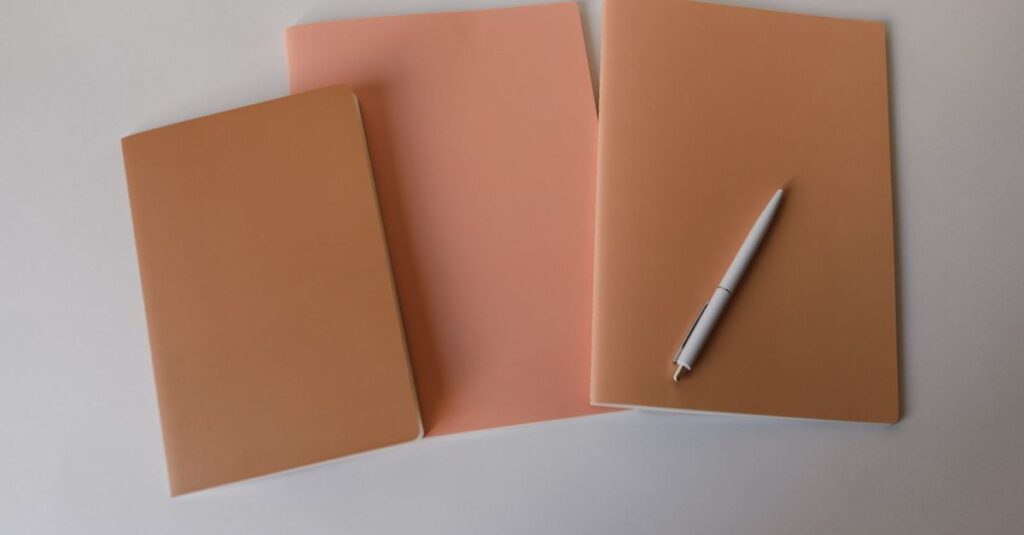
It’s not just a random label. A5 is a specific, standardized size within the ISO 216 paper system — the international standard most of the world uses. It’s part of a family of sizes, and it’s defined by a simple, mathematical ratio. An A5 page is exactly half the size of an A4 sheet. Think of a standard A4 printer paper. Fold it in half, short edge to short edge. That new, smaller size? That’s A5.
The precise dimensions of an A5 page are 148 mm by 210 mm, or roughly 5.83 inches by 8.27 inches. That’s the part you can look up anywhere. But here’s what they don’t tell you: the real value of A5 isn’t just in the centimeters. It’s in how perfectly that size slots into daily use. It fits in a backpack without taking up the whole thing. It sits neatly on a cramped office desk or a lecture hall armrest. It’s big enough to write in comfortably, but small enough to carry all day without feeling like a burden.
If you’re sourcing notebooks, understanding this size is step one. Because the wrong size, ordered in bulk, is a headache that doesn’t go away.
The Perfect Fit: Where A5 Notebooks Actually Get Used
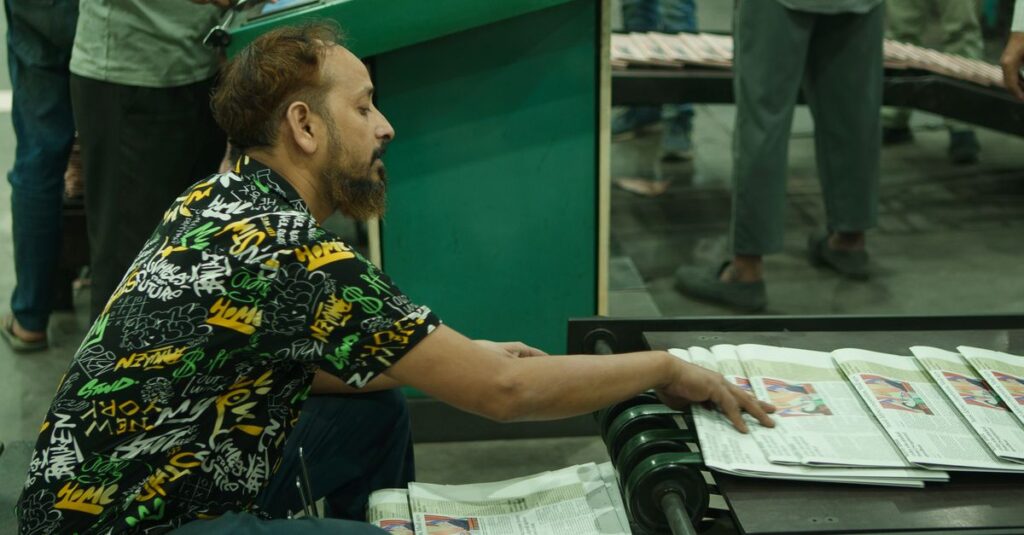
Let me tell you about the orders I’ve seen come through our factory floor for over 40 years. You can predict a lot by the page size someone chooses.
Corporate offices? They love A5 for diaries and personal planners. It’s professional but not bulky. It fits in a briefcase or a laptop bag without adding weight. We print thousands of these every year for banks, insurance companies, you name it. They get handed out at annual meetings, engraved with the company logo. The A5 size says “organized” without screaming “corporate drone.”
Universities and colleges? They order A5 notebooks in massive quantities for student unions and campus bookstores. It’s the Goldilocks size for lecture notes — not as intimidating as a huge A4 ledger, not as cramped as a tiny pocket notebook. Students can fit a semester’s worth of a subject in one book without breaking their backs.
And then there are the creative professionals — designers, writers, architects who sketch on the go. They’ll order custom A5 notebooks with specific paper rulings. They want that portable canvas. The size is just… practical. Which, in my experience, is the highest compliment a product can get.
I remember a school procurement manager from Hyderabad calling a few years back. He needed notebooks for their middle school. He was stuck between A4 and A5. We talked for twenty minutes. Not about price, but about desk space in their classrooms and the size of the kids’ backpacks. He went with A5. The next year, he ordered twice as many. Said the teachers reported less clutter and the students were actually using the full books. Size matters. More than most people think.
Expert Insight
I was reading a trade journal last month — one of those print magazines that still shows up — and a paper technologist said something that stuck with me. He pointed out that the A-series paper sizes, A5 included, are based on the √2 aspect ratio. This means that when you fold an A4 sheet to make A5, the proportions stay exactly the same. It’s elegant engineering, really. But the practical takeaway for someone ordering 10,000 notebooks? It means efficient cutting. Less paper waste from the master sheet. That efficiency translates into cost, which is why standardized sizes like A5 are often a smarter buy for bulk orders than custom, quirky sizes. The math is already solved.
A5 vs. The Usual Suspects: A Quick Comparison
Okay, so A5 is great. But how does it stack up against the other common sizes you see in the market? This is where procurement managers start pulling their hair out. You’ll see “Long Size,” “Crown Size,” “A4,” “A5” all in the same catalog. It’s a mess.
Let’s clear it up. Here’s a straightforward breakdown.
| Feature | A5 Notebook | A4 Notebook | Common ‘Long’ Notebook (Indian Market) |
|---|---|---|---|
| Dimensions | 148 x 210 mm (5.8″ x 8.3″) | 210 x 297 mm (8.3″ x 11.7″) | ~272 x 171 mm (10.7″ x 6.7″) |
| Best For | Portability, daily journaling, lecture notes, corporate diaries | Formal reports, large sketches, accounting sheets, detailed project notes | School essays, lengthy note-taking, subjects with diagrams |
| Feel in Hand | Compact, lightweight, easy to hold open with one hand | Substantial, requires a desk or lap, feels like formal documentation | Feels familiar in Indian schools, a longer, narrower format |
| Bulk Order Consideration | Lower per-unit paper cost, cheaper to ship in large quantities | Higher paper cost, more expensive shipping, often requires sturdier binding | Non-standard size can mean less efficient paper cutting, variable pricing. |
| Binding & Durability | Works well with spiral, perfect, or stitched binding for long-term use. | Needs robust binding (like stitched or thick spiral) to handle size and page count. | Typically side-stapled or center-stitched; durability varies with paper quality. |
The main thing? Don’t assume one is universally “better.” It’s about the job. Ordering diaries for sales reps who travel? A5. Ordering lab notebooks for a university engineering department? Probably A4. Supplying a chain of secondary schools? You need to know their specific syllabus requirements — sometimes they mandate a size.
Beyond the Page: What Really Defines a Good A5 Notebook
Right. So you’ve decided A5 is the right size for your bulk order. Good start. But the size is just the box the product comes in. The real quality — what makes a notebook last a full school year or survive in a corporate bag for twelve months — is in the details most procurement sheets forget to ask about.
First, paper GSM. GSM stands for grams per square meter. It’s the weight of the paper. For a standard A5 writing notebook, you’re typically looking at 54 to 70 GSM paper. 54 GSM is common, cost-effective, and fine for pencil or ballpoint pen. But if your users are going to use fountain pens or markers that might bleed through, you need to look at 70 GSM or higher. I’ve seen schools order cheap 52 GSM books only to have parents complain that the kids’ writing shows through to the other side. That’s a year-long headache you don’t want.
Second, the ruling. Single Ruled (SR) is the classic for text. Double Ruled (DR) is for younger kids learning letter formation. Unruled (UR) is for sketching or freeform notes. We also do Four Ruled (FR) for specific language practice, and Cross Ruled (CR) for graphs. This isn’t a small choice. A class of thirty students with the wrong ruling is a teaching problem.
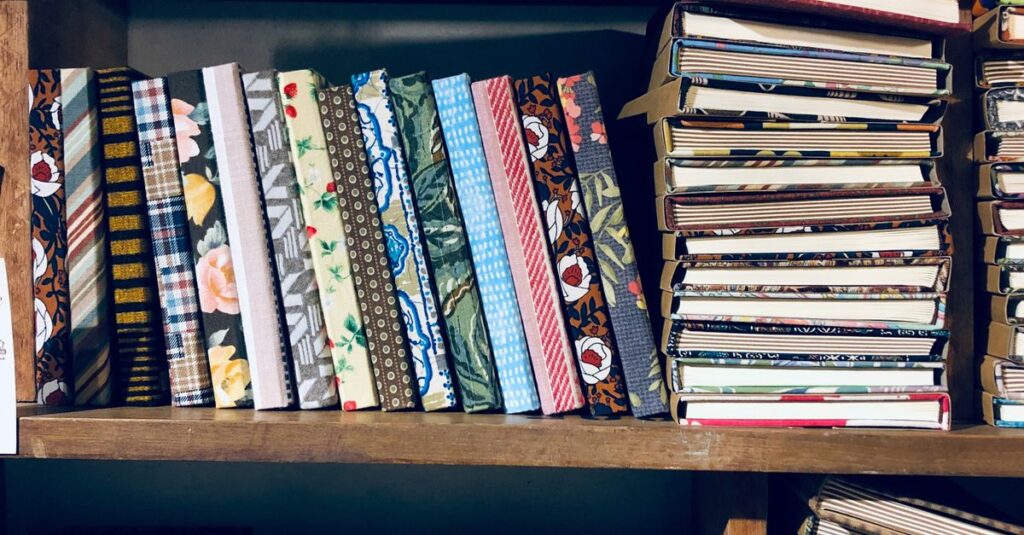
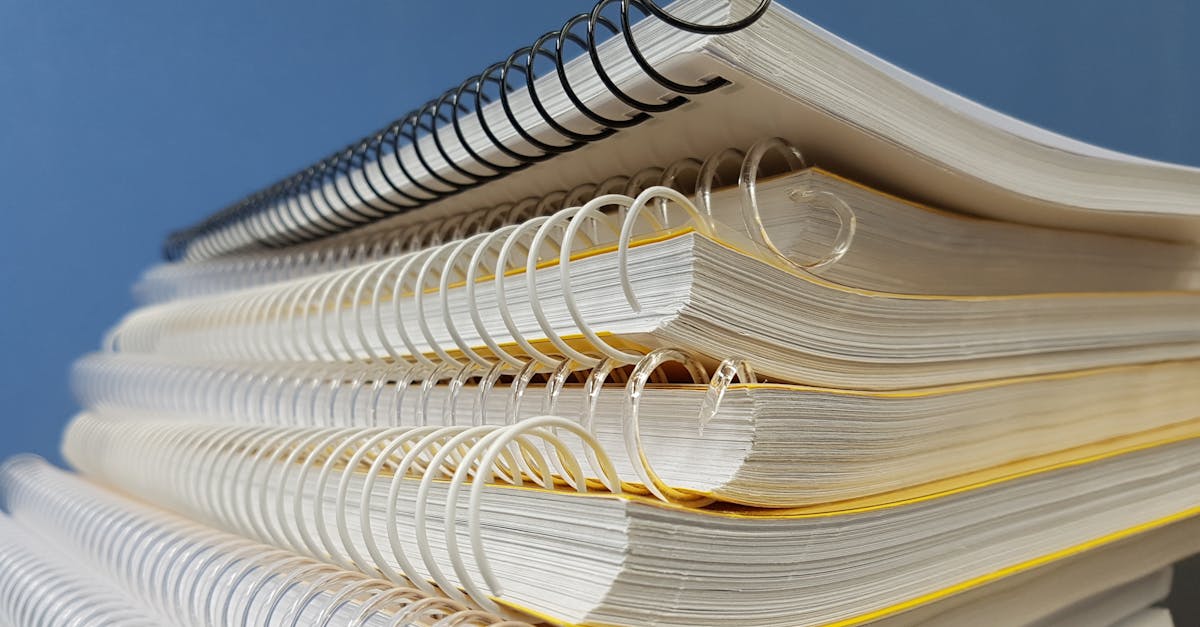
Third, binding. For an A5 notebook, you have options. Spiral binding lets it lay flat — great for artists or for writing near the gutter. Perfect binding (where pages are glued at the spine) gives a clean, professional look, ideal for corporate diaries. Stitched binding is the workhorse. We use thread to sew sections of pages together. It’s the most durable. It’s what we use on our heavy-duty 200+ page A5 notebooks because it won’t fall apart. The binding should match the page count. A 320-page A5 notebook with weak glue binding is a disaster waiting to happen.
And look, I’ll be direct. The cover matters more than people think. A flimsy cover on an otherwise good notebook gets destroyed in a backpack in a month. We use thicker paperboard or laminated covers for institutional orders. It costs a bit more, but the notebook looks used, not abused, at the end of the term.
Making the Call: How to Specify Your A5 Notebook Order
Let’s say you’re convinced. You need A5 notebooks. Maybe 2000 for a corporate event, or 10,000 for a new academic session. What do you tell the manufacturer?
You need to be specific. Vague orders get vague results. Here’s your checklist:
- Exact Dimensions: “A5 (148mm x 210mm).” Confirm this is the finished, trimmed size.
- Page Count: Not “number of sheets,” but “number of pages.” A 100-sheet notebook has 200 pages. Common counts are 92, 120, 200, 240 pages.
- Paper GSM: “70 GSM white writing paper” or “54 GSM cream paper.”
- Ruling: “Single Ruled (SR) with a 7mm line spacing.” Be precise.
- Binding: “Saddlestitch (center staple) binding” or “Spiral bound with 20mm diameter wire.”
- Cover: “250 GSM art card cover, laminated.” “Printed one colour on front.”
- Packaging: “Bundled in 50s, shrink-wrapped.” “Individually poly-wrapped.” This affects shipping and storage.
The biggest mistake I see? People focus only on the unit price. They don’t calculate the total cost of a notebook that falls apart, or that users reject. A slightly more expensive, well-specified A5 notebook often has a lower total cost of ownership because it actually gets used fully. Custom printing your logo or design adds another layer, but that’s a conversation for another day.
Anyway. The point is this: Knowing the A5 size is the first step. Knowing how to ask for what goes *into* that size is what separates a good bulk order from a great one.
Frequently Asked Questions
Is A5 the same as a half letter size?
No, it’s not. A5 (148×210 mm) is an ISO standard size used globally. Half letter size (about 140×216 mm) is a U.S. standard. They’re very close, but not identical. If you’re sourcing internationally or need precise compatibility with binders or folders, specify ISO A5 to avoid fit issues.
What is the best binding for a thick A5 notebook?
For page counts above 120 pages (60 sheets), stitched binding is your best bet. We use thread to sew the signatures together. It’s far more durable than perfect binding (glue) for thick books and lays flatter than spiral binding when you get into higher page counts. It’s the standard for high-quality, long-lasting A5 notebooks.
Can I get custom branding on A5 notebooks?
Absolutely. Most manufacturers, including us, offer custom printing on the cover. You can print your company logo, school crest, or a specific design. For very large orders, you can even customize the page headers or footers. It’s a common request for corporate gifts and school merchandise.
How many A5 pages fit on an A4 sheet?
Two. The A system is designed this way. One A4 sheet (210×297 mm) can be cut into two perfect A5 pages (148×210 mm) with virtually no paper waste. This is a key reason A5 is cost-effective for bulk manufacturing — the paper yield from standard-sized parent sheets is maximized.
What is the standard GSM for a good quality A5 notebook?
For everyday writing with ballpoint pens, 60-70 GSM paper is a great balance of quality, opacity, and cost. It feels substantial, resists show-through, and is still affordable for bulk orders. For pencil work or very budget-conscious projects, 54 GSM is common. For artists or fountain pen users, you’d look at 80 GSM or higher.
Wrapping It Up
Choosing A5 isn’t just about picking a size from a dropdown menu. It’s understanding a tool. You’re picking the right container for ideas, for records, for plans. For a student, it’s the space where a year of learning lives. For a company, it’s the daily companion for its team. Get the details right — the paper, the binding, the cover — and that container serves its purpose perfectly.
I don’t think there’s one perfect notebook for everyone. Probably there isn’t. But if you’re reading this, you’re likely not buying one notebook. You’re buying hundreds, or thousands. And that means the details stop being minor specs. They become the difference between a successful order and a logistical complaint. You already know you need notebooks. The question is just how to get the ones that actually work.
If you’re looking at a large order and want to talk specifics, that’s a conversation we have every day. Sometimes it starts with a simple question about A5 page size, and ends with a truckload of perfect notebooks heading to a school or office. That’s the part I like.