Okay, let’s talk about that famous notebook
You’ve seen them everywhere. Schools, college campuses, office meetings. That green and white cover, the spiral binding, the recognizable logo. Everyone knows a ‘Classmate’ notebook when they see one. It’s become shorthand for a certain type of school notebook, almost like how we say ‘Xerox’ for photocopies. But here’s the thing – when you’re the one responsible for buying notebooks in bulk, you can’t just say “get me Classmate notebooks.” You need to know what that name actually means, what you’re paying for, and frankly, if there are other ways to get the same quality without the brand premium. Because that’s the real headache for procurement managers and school administrators. You need hundreds, maybe thousands, of reliable notebooks. You can’t afford surprises. You just need them to work, every single time.
(We’ve been in Rajahmundry since 1985, and I’ve lost count of how many times a school principal has walked in with a worn-out Classmate book, pointed at it, and said “Can you make this?”. The answer, if you’re curious, is usually yes – and for less. This is where we do that.)
What people are *actually* asking for
When someone says “I need Classmate spiral notebooks,” they’re rarely asking for the brand itself. What they’re describing is a set of features. It’s a specific expectation of quality. They want the paper that doesn’t bleed through, the spiral that doesn’t snag and lasts the whole year, the cover that doesn’t tear after two months in a backpack. The brand just packaged it all up nicely and got it into every stationery shop in the country.
But that expectation? It’s built on real manufacturing specs. A Classmate spiral notebook, at its core, is usually a few things: A specific paper GSM (somewhere in the 50-70 GSM range for a good writing feel), a specific binding (a double-wire spiral for durability), and a standardized ruling (single or double ruled). That’s it. It’s not magic. It’s just consistent manufacturing. And once you know the components, you can find – or specify – that exact combination from any competent manufacturer.
I think a lot of bulk buyers get stuck on the name because it feels safe. It’s a known quantity. But the question isn’t “Can I get Classmate?” It’s “Can I get a notebook that performs exactly like a Classmate, reliably, and maybe even customized for my institution?” That’s a completely different – and far more powerful – conversation to have.
The anatomy of a durable spiral notebook
Let’s pull one apart, at least in theory. Picture holding one. You’re not just holding paper. You’re holding a series of decisions a manufacturer made.
- The Paper: This is the biggest one. The GSM (grams per square meter) determines the thickness. Too thin, and ink bleeds, pages tear. Too thick, and the book is bulky and expensive. The sweet spot for a student or general-purpose notebook is around 54-70 GSM. It’s substantial enough to write on both sides but still cost-effective. The ruling is printed cleanly, without smudging.
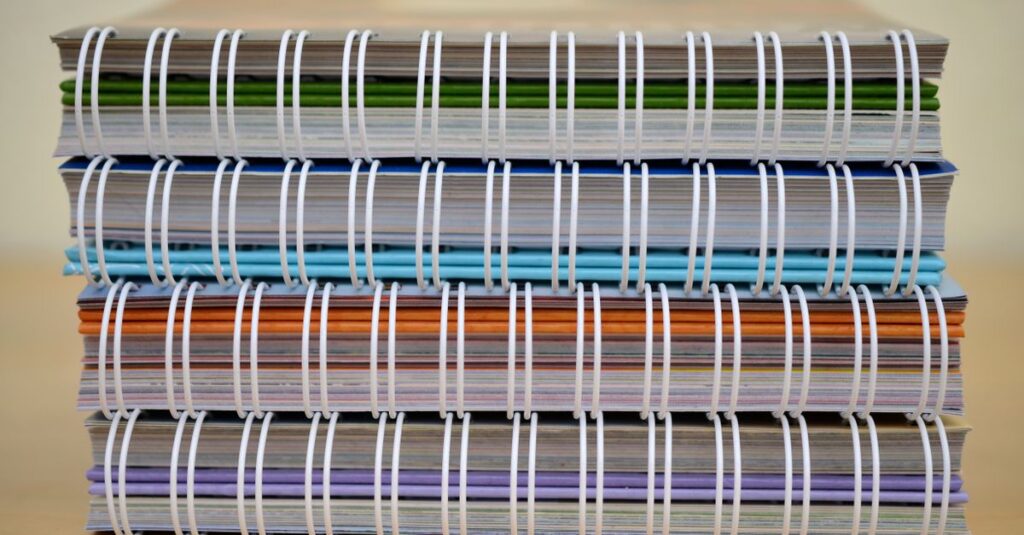
- The Spiral Binding: Not all spirals are equal. A flimsy single-wire spiral will bend, the coils will pop out. A double-wire (or double-loop) spiral is what you see on the heavy-duty ones. The wire is thicker, it’s crimped at both ends, and it’s machine-punched through pre-aligned holes. This is the part that makes a notebook lay flat and survive being stuffed in a bag.
- The Cover: It’s usually a mid-weight art card, laminated for protection. The lamination is key – it resists water splashes, dirt, and general wear. The printing on it is offset printing, which gives those sharp, vibrant colors.
Three components. Each one a checkpoint. When you’re ordering 10,000 units, you get to define every single one of those checkpoints. You can say “70 GSM paper, double-wire spiral, 300 GSM laminated cover.” And that’s your spec. That’s your “Classmate,” but it has your logo on it.
Expert Insight
I was talking to a procurement head from a big corporate training academy last month. They’d been buying branded notebooks for years. He said the shift happened when he realized he was paying, in his words, “for the advertising on the kid’s TV channel.” The actual cost of materials and manufacturing was maybe 60% of his price. The rest was brand, distribution, marketing. He looked at me and said, “I don’t need my trainees watching cartoons. I need them to have a good notebook to write in.” I don’t have a cleaner way to put it than that. The value is in the product, not the label.
A real-life thing that happens
Meet Anjali. She’s 42, the admin head for a chain of coaching centers in Vizag. Every quarter, she orders 5,000 notebooks. She used to source branded ones through a distributor. The price kept ticking up. Last monsoon, a shipment arrived damp – the covers were wavy, the pages stuck together. The distributor shrugged. “Transport issue.” She was stuck with them. She called us, frustrated, holding a soggy notebook. “I just need these,” she said, slapping it on the table. “But I need them to arrive dry, and I need my center’s name on the front.” We showed her the paper stock, the binding machine, the waterproof packaging we use for exports. She ordered a trial run of 500. They arrived perfect. Now she orders direct. She doesn’t call them “Classmate” notebooks anymore. She calls them “our notebooks.”
The bulk buyer’s dilemma: Brand vs. custom-made
This is where it gets practical. You have a budget. You have a quality threshold. You have a timeline. Let’s lay out the actual choice on the table. It’s not as obvious as it seems.
| Consideration | Buying Branded (Classmate, etc.) | Custom Manufacturing (Like ours) |
|---|---|---|
| Cost Per Unit | Higher. You pay for the brand name, national advertising, and distributor margins. | Lower. You’re paying for material + production + profit. No brand tax. |
| Customization | Zero. You get what’s on the shelf. Your logo? Not a chance. | Total. Cover design, logo, page layout, even the back page can have your info. |
| Minimum Order | Flexible. Can buy a few cartons from a wholesaler. | Requires a bulk commitment. Typically 1,000+ units to make production viable. |
| Supply Control | Low. You’re at the mercy of distributor stock and price hikes. | High. You plan production runs, lock in prices, control inventory timing. |
| Consistency | High (if genuine). The brand maintains standards. | High (if you choose right). A good manufacturer’s entire reputation depends on it. |
| Lead Time | Short. Pick from warehouse stock. | Longer. Production, printing, binding takes time (usually 2-4 weeks). |
The table makes it look like a simple trade-off, right? Brand convenience vs. custom value. But it’s more subtle. For a school ordering 10,000 books annually, that “brand tax” adds up to a new computer lab, or a library bookshelf. For a corporation, the custom cover isn’t just vanity – it’s daily brand exposure for every employee. The “dilemma” melts away when you start thinking in totals, not just unit price.
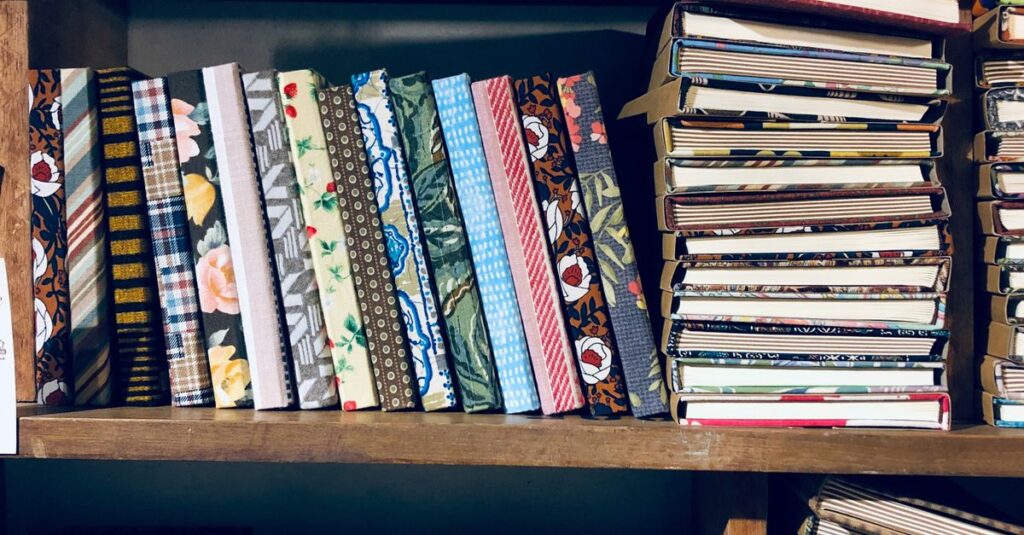
Seeing the range of specs we work with usually helps people visualize what’s possible beyond the standard shelf item.
How to find a manufacturer who won’t let you down
Alright, so you’re thinking about going direct. Good move. But now you’re staring at a search engine full of “notebook manufacturers in India.” How do you pick one? This is probably the most important part of this whole article.
First, ask for samples. Always. Don’t just look at a shiny brochure. Have them send you physical notebooks. Test the paper with the pens you use. Try to tear a page. Bend the spiral. Leave it in a sunny window. A reputable manufacturer will happily send samples – it’s their best salesperson.
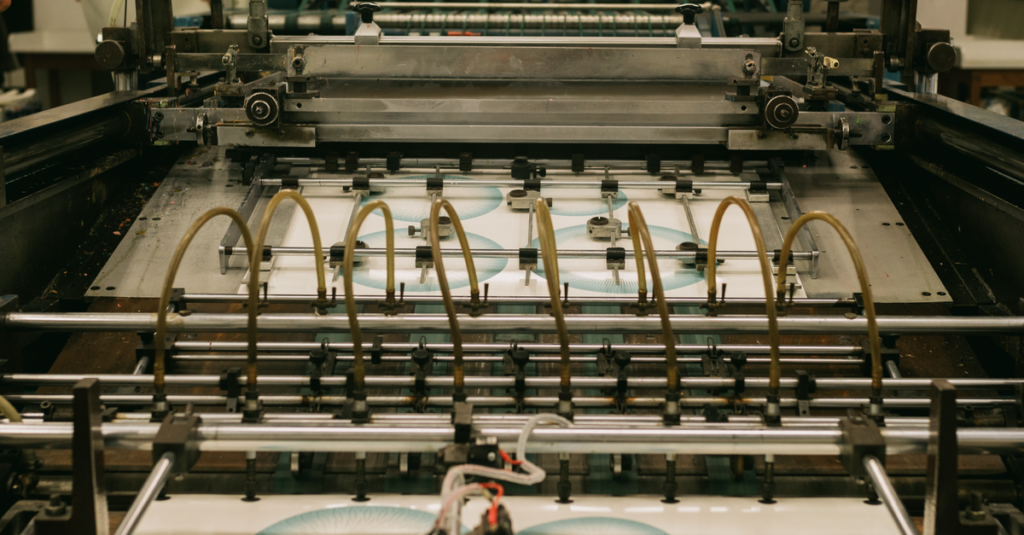
Second, ask about capacity and lead time. Be blunt. “If I place an order for 20,000 notebooks on the 1st, when can they ship?” You need to know if they’re a small workshop or a factory that can handle your volume. Our factory in Rajahmundry, for instance, runs 30,000 to 40,000 bound notebooks a day. That capacity means we can schedule your order and hit a deadline.
Third, talk about paper sourcing. Where does the paper come from? Is it consistent? Paper mills have quality grades. You want a manufacturer who sources from reliable mills and can tell you which ones. This is the difference between paper that yellows in six months and paper that stays white.
Look, I’ll be direct. The stationery business in India is full of fly-by-night operators. They’ll underquote by using cheap paper, then disappear when the books fall apart. Your job is to find the ones who’ve been around for decades. The ones whose address you can actually visit. The ones who answer the phone themselves. Because you’re not just buying a product; you’re buying a promise that next year’s order will be exactly the same.
Beyond the classroom: Where these notebooks really work
We always think schools. But that’s just the start. The spiral notebook – the durable, lay-flat, professional kind – has a life way beyond algebra homework.
Think about corporate training programs. Giving every participant an identical, branded notebook sets a tone. It’s organized. It says the materials matter. It’s a takeaway that lasts longer than a PowerPoint slide.
Or government workshops and surveys. Field agents need sturdy books that can survive rain, dust, and being hauled around in a jeep. A flimsy staple-bound pad won’t cut it. A thick-cover, spiral-bound logbook will.
Hospitality staff notepads. Concierges, managers on duty. They need something professional-looking, with the hotel logo, that they can flip open and write in quickly while standing. A spiral book is perfect.
The use case isn’t the notebook. It’s the need for reliable, repeated, physical note-taking in a professional or institutional setting. Once you see that, you realize the market is enormous. And it’s not served by one brand on a retail shelf. It’s served by manufacturers who understand bulk, durability, and customization.
Frequently Asked Questions
What is the difference between a spiral notebook and a normal notebook?
The binding. A “normal” or standard notebook usually has its pages stitched and glued at the spine (perfect binding). A spiral notebook has a metal or plastic coil punched through holes along the edge. The big advantage? A spiral notebook lays completely flat when open, which makes writing easier, especially near the inner margins. It’s also generally more durable for heavy use.
Can I get custom printed spiral notebooks like Classmate?
Absolutely. In fact, that’s a core service for manufacturers like us. You can customize everything: the cover design with your logo, the paper GSM, the type of ruling (single, double, unruled), the number of pages, and even the spiral wire color. You’re not limited to retail designs when you go direct to a manufacturer for bulk orders.
What paper quality (GSM) is best for a spiral notebook?
It depends on use. For everyday student or office writing, 70 GSM paper is an excellent, durable standard that prevents ink bleed-through. For cost-sensitive bulk orders like school notebooks, 54-60 GSM is common and perfectly functional. For premium corporate diaries or sketchbooks, you might go up to 90-100 GSM. A good manufacturer will guide you based on your budget and purpose.
What is the minimum order quantity for custom spiral notebooks?
It varies, but for custom printing and binding, most manufacturers need a minimum order to make the setup and production run worthwhile. This can start from 500 to 1,000 pieces for simpler jobs. For fully custom designs with unique specs, 2,000 to 5,000 units is a more common starting point. Always ask – some are flexible.
How long does it take to manufacture bulk spiral notebooks?
Once the design is finalized and approved, a typical production lead time is 2 to 4 weeks for an order of several thousand units. This includes paper cutting, printing, hole-punching, spiral binding, and packaging. Larger orders (50,000+) may take longer. Always factor this into your procurement timeline.
Wrapping this up
So, a “Classmate spiral notebook.” It’s not a mythical object. It’s a well-made combination of specific materials. Understanding that is your first step out of the brand-name trap. The second step is realizing that those materials – that quality, that durability – are available to you directly. You can own the spec. You can put your name on it. You can control the cost and the supply.
The shift isn’t just logistical; it’s psychological. You stop being a retail buyer and start being a production client. Your relationship is with the factory floor, not the distributor’s catalogue. And in my experience, that’s when you get real value, consistency, and something that actually fits your needs, not a mass-market compromise.
I don’t think there’s one right answer for every institution. Probably there isn’t. But if you’re reading this, you’re likely tired of the yearly price haggle, the inconsistent quality, or seeing a generic notebook on desks when your own logo should be there. You already know what you need – you’re just figuring out if it’s possible. (Spoiler: It is).
If you want to see what that process looks like from the other side, this is a good place to start.