Here’s the Thing About Notebook Paper Most People Don’t Get
You’re ordering 10,000 notebooks for your school district. Or maybe you’re a procurement manager at a corporate firm, sourcing branded diaries for the new fiscal year. You get the specs: “54 GSM paper, white, single ruled.” You nod, assuming it’s good. But deep down, you have this nagging feeling — what the hell does 54 GSM actually mean for the teacher who’s grading on it, or the employee who has to carry it for a year?
It’s not just paper. It’s the single most important part of the product you’re buying. Get it wrong, and you’re left with a warehouse full of complaints. Get it right, and nobody even notices — which is exactly the point.
Look, I’ve been on the other side of this for a long time. When you’re buying notebooks in bulk, you’re not buying a cute little journal from a bookstore. You’re buying a tool. A reliable, durable, everyday tool. And the tool’s core is the writing surface. That’s it. If you want to get this part right, it helps to start from the ground up at a place like Sri Rama Notebooks.
What “Writing Paper” Really Means (It’s Not What You Think)
Here’s where the confusion starts. People say “paper,” and they think it’s one thing. It’s not. The stuff you use for a printer is different. The stuff used in your average sketchbook is different. And the paper made specifically for someone to write on with a pen or pencil all day, every day? That’s a whole other animal.
Think of it as a sandwich. The bread is the thickness and weight — we call that the GSM (grams per square meter). The filling is the texture and finish of the paper. And the packaging is the ruling — the lines or grids that guide the writing. All three have to work together.
The goal? To create a surface that’s smooth enough for writing to feel effortless, but with just enough tooth to keep the pen from slipping. It needs to be opaque enough that ink doesn’t bleed through to the other side (the dreaded ghosting), and it has to have a consistent color that’s easy on the eyes. Too bright and it’s glaring. Too yellow and it looks cheap. Most people don’t realize this is a conscious choice.
Real-Life Moment
I was talking to a procurement manager from a college in Hyderabad last month — over a very quick phone call, he was busy. He was re-ordering long notebooks for an entire freshman class. He said, “Last year we got a great price, but the paper was so thin the students’ gel pens bled through. The complaints were endless.” He wasn’t mad about the cost. He was frustrated because he’d bought a tool that failed at its only job. That’s the real cost of getting the paper wrong.
The GSM Trap: Why Thicker Isn’t Always Better
Let’s talk about GSM. This is the number everyone focuses on, and nine times out of ten, they focus on it wrong.
- 50-55 GSM: This is the sweet spot for standard school and office notebooks. It’s thin enough to keep the notebook lightweight and cost-effective for bulk orders, but thick enough to handle ballpoint pens, pencils, and even some rollerballs without issues. This is what we use for probably 80% of our standard notebooks.
- 60-70 GSM: You move into a premium feel here. This is great for corporate diaries, executive notebooks, or any product where perceived quality is a big part of the value. The pages feel more substantial. Less see-through.
- 70+ GSM: Now you’re in sketchbook or high-quality journal territory. For everyday writing? It’s overkill. The notebook gets heavy, bulky, and the cost per unit shoots up. For a bulk order of student notebooks, it’s probably a waste of your budget.
The trap is thinking a higher GSM number automatically means “better quality.” For a notebook? Not necessarily. Better quality is paper that performs its specific function perfectly. A 54 GSM paper engineered for writing is miles better than a 70 GSM paper that’s rough and fibrous. It’s about the right tool for the job.
Honestly, most institutional buyers we work with find the 52-54 GSM range is where the magic happens for value and performance. It just works.
The Unseen Hero: Paper Finish and Opacity
GSM gets the headline, but the finish does the quiet, important work. This is where manufacturing experience — like the kind you get from working with a company that’s been at it since 1985 — actually matters.
A smooth, calendared finish gives you that effortless glide for fast note-taking. A vellum or slightly textured finish provides more control, which is why artists or architects might prefer it. For general writing paper, you want something in the middle. A subtle, smooth surface.
Then there’s opacity. This is the paper’s ability to block show-through. Cheap, low-opacity paper means you can see the writing from page 3 when you’re on page 1. It’s distracting and makes the notebook feel flimsy. Good writing paper has high opacity. You shouldn’t be thinking about the other side of the page while you’re writing on this side. It should just disappear.
Expert Insight
I was reading an old industry manual once — one of those dense technical ones. And there was a line that stuck with me. It said the primary function of notebook paper isn’t to be written *on*, but to make writing *disappear* into it. The paper should receive the thought without resistance and then get out of the way. I don’t have a cleaner way to put it than that. It’s not a canvas; it’s a conduit. Most manufacturers forget that.
Ruling, Sizing, and the Practical Reality of Bulk Orders
Okay, so you’ve got good paper. Now it needs to be cut and lined. This seems simple, but it’s another layer of practical decisions.
Sizing: A King Size notebook (23.6×17.3 cm) is perfect for a student’s school bag. A Long Notebook (27.2×17.1 cm) gives more line space, great for meeting notes. An Account Book size (33.9×21 cm) is for ledgers, data. Choosing the wrong size for your audience is like giving someone the wrong size shoe.
Ruling: Single ruled for essays. Double ruled for accounting. Four ruled for young kids learning to write. Unruled for drawing or freeform thinking. Cross ruled (graph paper) for engineers or designers. This isn’t decoration; it’s functional guidance. Getting the ruling wrong for your user’s need makes the entire notebook less useful.
When you’re ordering 30,000 units, these aren’t small details. They’re the difference between a product that gets used up and re-ordered, and one that gathers dust in a stockroom. If you’re customizing, this is where you make those calls. Our printing services handle this exact thing every day.
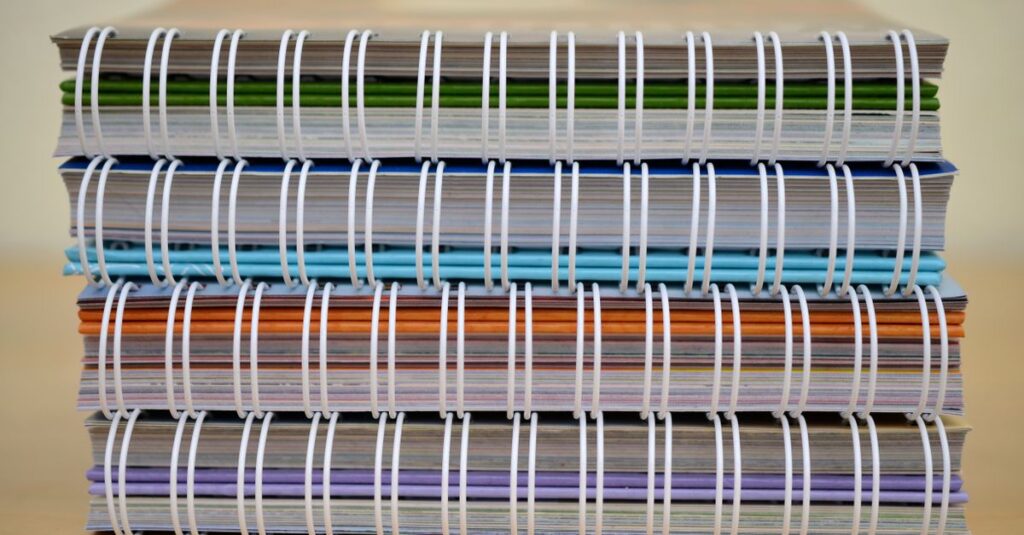
Spiral vs. Stitched vs. Perfect Bound: The Binding Truth
The paper is great. But how is it held together? This decision impacts how the notebook lays flat, how durable it is, and yes — how the paper *feels* when you’re writing on the left-hand margin.
| Feature | Spiral Binding (Wire-O) | Stitched Binding (Saddle Stitch) | Perfect Binding (Glued) |
|---|---|---|---|
| Lay-Flat Ability | Excellent. Lies completely flat. | Good. Lies flat with some resistance at the spine. | Poor. Needs to be broken in; spine can crack. |
| Durability | Wire can snag and bend. Pages can tear out. | Very durable. Pages are sewn in. | Durable if glued well. Weak if glue fails. |
| Page Count Suitability | Low to medium (up to ~120 pages). | Low to medium (ideal for 52-92 pages). | High (best for 200+ page diaries/books). |
| Cost for Bulk | Moderate. | Most cost-effective for standard notebooks. | Higher. |
| Professional Look | Casual, academic. | Classic, standard for school books. | Premium, book-like (for corporate diaries). |
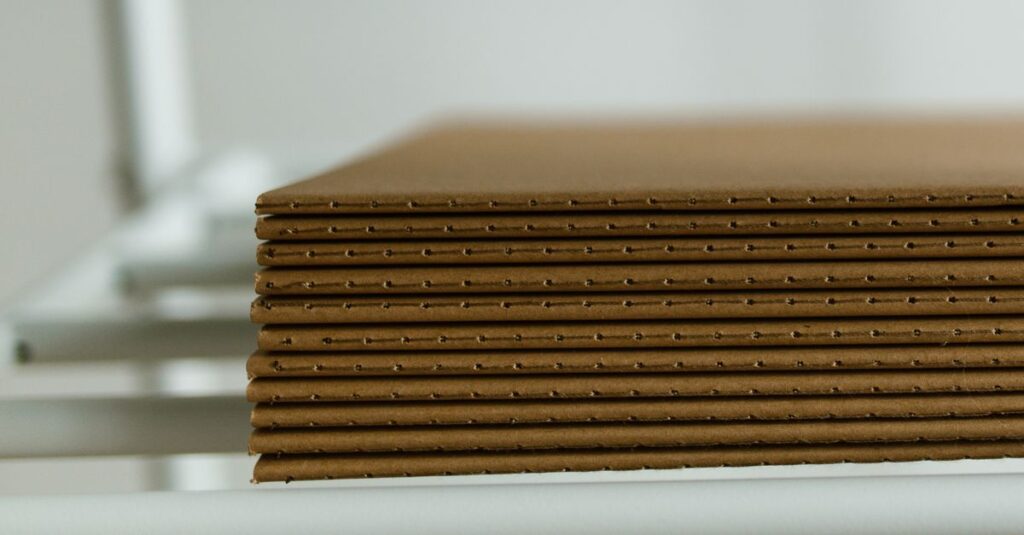
For most bulk school notebook orders, stitched binding is the workhorse. It’s cheap, tough, and it works. Spirals are for specific use-cases where lay-flat is critical. Perfect binding is for your annual corporate diary that needs to look like a book on a desk.
Earlier I said the paper is the most important part. That’s true. But a bad binding can ruin good paper. If the notebook won’t stay open, or pages fall out, the quality of the paper becomes irrelevant.
So, What Should You Actually Look For?
Cut through the specs. When you’re evaluating a notebook manufacturer for a bulk order, ask for samples. Always. Then do this:
- The Scratch Test: Write on it with the pen your users will actually use. A blue ballpoint, a red pen for grading, a pencil. Does it feel smooth? Does the ink sit on the surface cleanly?
- The Ghost Test: Turn the page over. Can you clearly see what you just wrote? If it’s a dark shadow, the opacity is low. That’s a problem.
- The Tear Test: Gently tug at a page from the binding. It shouldn’t come out with light pressure. That’s a binding quality check.
- The Reality Check: Does this feel like a tool that will last a school year or a fiscal year? Or does it feel disposable?
I think — and I could be wrong — that most institutional buyers skip the sample step because they’re busy. They trust the spec sheet. Don’t. The spec sheet tells you what it is. The sample in your hand tells you what it’s like to use.
And if you’re looking at custom options, from logo printing to full private label, the paper quality is the foundation you build that custom house on. A fancy cover with poor paper inside is just a disappointment with your logo on it.
Frequently Asked Questions
What is the best GSM for school notebooks?
For standard, cost-effective school notebooks that handle everyday ballpoint pens and pencils, 52-54 GSM writing paper is the industry standard and your best bet. It balances durability, opacity, and weight perfectly for a student’s backpack and a school’s budget.
Does higher GSM paper prevent ink bleeding?
Not always. While thicker paper (higher GSM) helps, the paper’s finish and density are actually more important. A well-made, densely formed 54 GSM paper can resist bleed-through better than a porous, rough 70 GSM paper. It’s about the quality of the pulp and the manufacturing process.
What’s the difference between writing paper and printing paper?
Writing paper is engineered for pen and pencil. It has a smoother, more closed surface so ink sits on top and dries cleanly. Printing paper (like copier paper) is more porous to absorb printer ink quickly. Using printing paper in a notebook often leads to feathering and bleed-through with pens.
How do I choose between ruled and unruled notebooks for a bulk order?
Think about the primary use. For note-taking, lists, journals — single ruled or broad ruled is standard. For creative work, sketching, diagrams — go unruled. For young children learning letter formation, four-ruled is essential. Match the ruling to the task, not just to a generic “notebook” idea.
Can you customize the paper quality in a private label notebook order?
Absolutely. Any reputable manufacturer offering private label or OEM notebook production should let you specify the GSM, finish, and ruling. This is where you can upgrade from a standard 54 GSM to a 70 GSM for a premium corporate diary, for example. Customization starts with the paper.
The Takeaway That Actually Matters
When you’re sourcing notebooks in bulk, you’re making a practical decision with real-world consequences. Teachers will complain. Employees will grumble. Or, they’ll just use the product without a second thought — which is the highest compliment you can get.
The paper is the heart of it. Ignore the flashy covers for a second. Forget the marketing jargon. Get the writing paper right. The right GSM for the job. The right finish for the pen. The right ruling for the hand. Everything else is just packaging.
I don’t think there’s one perfect answer for every order. Probably there isn’t. But if you’ve read this far, you’re not just looking for a supplier — you’re looking for a partner who understands that the paper isn’t just a component. It’s the point. And maybe that’s the point of finding the right manufacturer, too.
If you’re tired of guessing and want to talk to someone who’s been figuring this out since 1985, we should talk.