Let’s get one thing straight about paper sizes
You’ve got an order to place. A hundred corporate diaries for the new year. Or maybe five thousand notebooks for a school district. The supplier asks for your sheet size preference, and you say “A4.” It feels right. Everyone uses A4, right?
But then the quote comes in, or the samples arrive, and something feels… off. The dimensions aren’t what you pictured. The notebook doesn’t fit the leather folio you bought. The diary pages feel cramped. You realize you weren’t just ordering paper—you were ordering a tool people use every day. And you might have guessed wrong.
Here’s the thing: “A4” is one of those terms we all use but rarely stop to understand. And in bulk orders, that misunderstanding costs real money and creates real headaches. I’ve seen it happen for forty years. Someone orders “A4 notebooks” expecting one thing, and gets another, because the conversation never went deeper than the letters. So let’s actually talk about what an A4 sheet is, why it dominates the professional world, and—more importantly—when you should or shouldn’t choose it for your bulk order. If you’re sourcing notebooks, diaries, or any printed stationery in volume, this is where the details start to matter.
What “A4 Size” actually means (beyond the numbers)
Okay, the textbook definition. An A4 sheet measures 210 millimeters by 297 millimeters. In the inches we still sometimes think in, that’s 8.27 inches by 11.69 inches. It’s the standard letter size in most of the world, sitting right in the middle of the “A” series paper sizes. You know, A3 is bigger, A5 is smaller.
But that’s just the geometry. The real reason A4 won is simpler: proportion. Fold an A4 sheet in half widthwise, and you get an A5 sheet. The aspect ratio stays constant. It’s elegant for design and scaling. For a manufacturer, it means less paper waste when cutting down from larger sheets. That efficiency gets passed down. It’s why you’ll find A4 paper in every office printer from Rajahmundry to London.
For a notebook, an A4 sheet becomes an A4 page. It’s a generous canvas. Think full-page financial reports, architectural sketches that need room, meeting notes that sprawl. It commands a certain presence on a desk. It says, “This is substantive work.” But that presence comes with a trade-off: portability. An A4 notebook or diary is not something you casually tuck into a small bag. It’s a desk-centric tool. You choose A4 because the content needs breathing room, not because you want something lightweight.
The A4 life: Who really uses it and why?
I was talking to a procurement manager for a law firm in Hyderabad last month. Coffee, not a meeting. He was finalizing the annual diary order. “We always do A4,” he said. “The partners need the space for margin notes on case files. A5 feels like a compromise.” Then he paused. “But the associates complain they’re too bulky to carry to court.”
There it is. The classic A4 dilemma.
Let’s break down who wins with A4 and who struggles. This isn’t about good or bad—it’s about fit.
Thriving with A4:
- Accountants & Auditors: Spreadsheets, ledger prints, financial statements. They live in A4. The ruled notebooks they use for manual entries? Often A4. It matches the printouts.
- Architects & Designers: Even in a digital age, first sketches, site notes, and client mark-ups need space. An A4 drawing book or unruled notebook is standard kit.
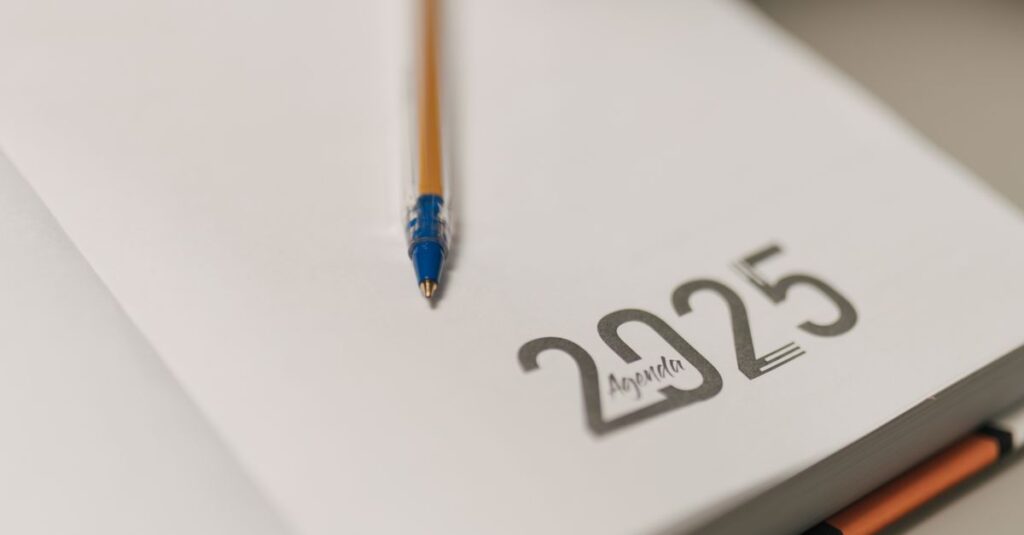
- Corporate Executives: Their desk diaries are frequently A4. It’s a status thing, sure, but also a practicality. Day-per-page layouts work here.
- University Students (Certain Fields): Engineering, science, and law students taking voluminous, diagram-heavy notes often prefer A4. The paper can handle it.
Struggling with A4:
- Salespeople & Consultants: Always mobile. An A4 notebook is a laptop-sized burden. They’ll migrate to A5 or smaller by week two.
- School Students (Younger): An A4 textbook is one thing. An A4 notebook for every subject is overkill and heavy in a backpack. Most standard school notebooks are a more manageable “Long” or “Short” size.
- Journalists & Writers: They’re hunting for ideas, not laying out grand plans. Portability and quick access win. A4 stays on the desk.
The pattern is clear. A4 is for deep, stationary work. If the work moves, the paper size usually shrinks.
A quick, real story.
Meena, 42, runs operations for a chain of co-working spaces in Bangalore. She ordered 500 custom-branded notebooks as welcome kits for new members. She chose A4, thinking “premium.” A month later, she noticed most of them were still on the giveaway shelves, untouched. The ones being used were the smaller, leftover A5 notepads from a previous order. She called us, a bit frustrated. “They look beautiful, but nobody’s taking them. Why?” We talked about her members—startup founders, freelancers, developers. They’re never at the same desk twice. They live out of backpacks. An A4 notebook was a desk anchor, not a companion. We redid the order in A5. They were gone in a week. The lesson wasn’t about quality. It was about context.
A4 vs. The World: A notebook buyer’s comparison
You’re choosing a format for thousands of units. This is where abstract preference becomes a concrete specification. Let’s put A4 next to other common notebook sizes you’ll encounter, especially in the Indian and bulk manufacturing context. This isn’t just about dimensions—it’s about use case, cost, and perception.
| Feature | A4 Size (210×297 mm) | “Long” Notebook (272×171 mm) | A5 Size (148×210 mm) | “Account” Size (339×210 mm) |
|---|---|---|---|---|
| Primary Feel | Formal, spacious, authoritative. | Traditional, familiar, balanced. | Portable, versatile, modern. | Expansive, for data, ledger-style. |
| Best For | Desk-bound reports, design sketches, executive diaries, formal minutes. | General school/college use, office memos, all-purpose writing. The Indian classic. | Mobile professionals, meeting notes, personal journals, to-do lists. | Financial accounts, wide tables, project planning spreadsheets. |
| Portability | Low. A desk fixture. | Medium. Fits in most bags. | High. Bag/purse friendly. | Very Low. Almost a folder. |
| Cost Implication (Bulk) | Higher. More paper per unit. | Moderate. Optimized for standard paper cuts. | Lower. Less paper, often cheaper. | Highest. Significantly more paper. |
| Custom Printing | Excellent for detailed logos, full-cover designs. | Good for standard branding. | Good, but space is limited. | Great for creating a bold, unique statement. |
See the shift? Ordering “notebooks” isn’t enough. You’re ordering a user experience. An A4 notebook sets an expectation of ample, serious work. A Long notebook (closer to a traditional composition book) is the reliable workhorse. A5 is the agile companion. Picking the wrong one is like giving a commuter a briefcase when they need a backpack.
The choice, honestly, starts with watching how your people actually work. Not how you imagine they work.
The insider stuff: Paper, binding, and the “feel” of A4
As a manufacturer, here’s what we think about when you order 10,000 A4 notebooks. It’s not just size. The size amplifies everything else.
Paper Weight (GSM) is Crucial: On a small A6 notepad, 70 GSM paper feels sturdy. On a sprawling A4 page, that same 70 GSM can feel flimsy, like it might buckle under a heavy hand. For A4, especially if it’s for writing, we often recommend moving up to 80 or 90 GSM. It gives the page a substantial, quality feel that matches its stature. For sketching or ink, even higher. The cost goes up, but so does the perceived value. A flimsy A4 notebook feels like a mistake. A hefty one feels like a tool.
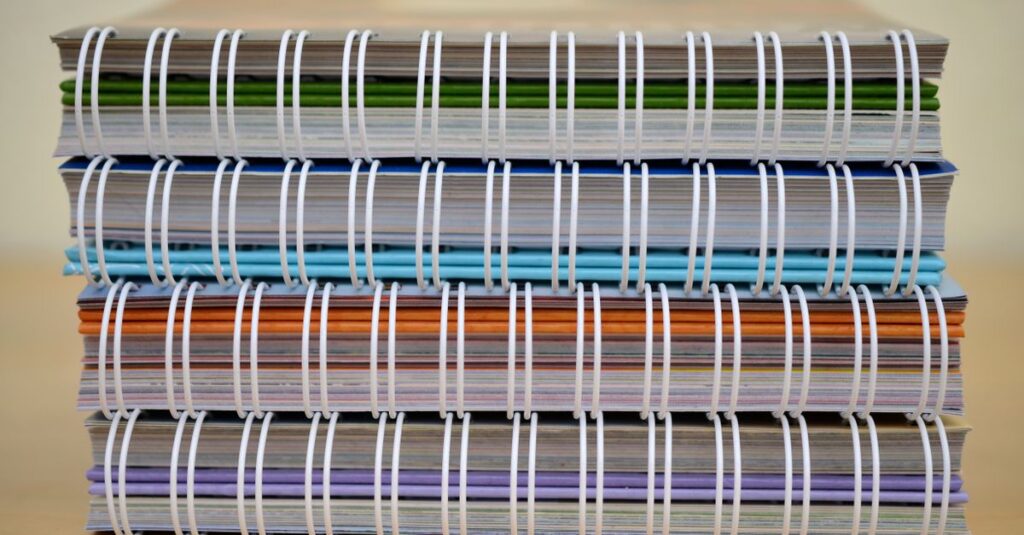
Binding Has to Hold Up: More pages, plus larger page size, equals more stress on the binding. A simple staple stitch might be fine for a 40-page A5 pad. For a 200-page A4 notebook? It’s a risk. The pages will sag. Spiral binding (wire-o or plastic coil) is a fantastic, functional choice for A4—it lays perfectly flat, which is a huge benefit for a desk notebook. Perfect binding (like a paperback book) gives a cleaner, more formal look for corporate diaries. The binding isn’t an afterthought; it’s the spine of the product. Literally.
Expert Insight
I was reading an article by a designer last year—forgot where, maybe a print blog. One line stuck with me. She said the most common error in custom notebook orders isn’t the logo placement. It’s the misalignment of size, paper, and purpose. A company will spend a fortune on a beautiful embossed leather cover for an A4 diary, then put 52 pages of 55 GSM paper inside. The user opens it, and the experience collapses. The paper whispers “disposable,” while the cover shouts “heirloom.” The insight was brutal: you’re not manufacturing a notebook. You’re manufacturing trust. Every specification is a promise. If the paper buckles, you’ve broken the promise. I don’t have a cleaner way to put it than that.
Your move: Key questions before you commit to A4
Before you send that PO for A4 diaries or notebooks, run through this list. It’ll save you a warehouse of regret.
- Where will these live 80% of the time? On a personal desk? In a conference room? In a backpack moving between client sites? (If it’s the backpack, seriously, reconsider.)
- What’s going on the pages? Paragraphs of notes? Sketches and diagrams? Just signatures and checkmarks? (A4 for checkmarks is overkill.)
- Who is the user, really? Is it a gift for a high-profile client (where A4 says “prestige”)? Is it a standard issue for your entire sales team (where A5 says “we know you’re mobile”)?
- What’s the page count? A 92-page A4 notebook is manageable. A 320-page A4 notebook is a tome. Have you held one? You should.
- What’s your budget per unit? Remember, A4 uses more paper, more cover material, and may need a heavier-duty binding. The cost isn’t linear. A4 can be 30-40% more expensive in bulk than A5, all else being equal.
Answer these, and the choice often makes itself. The goal isn’t to talk you into or out of A4. It’s to make sure that if you choose it, you’re doing it for the right, solid reasons. And that the product you get delivers on the specific need you have. That’s where working with a manufacturer who asks these questions matters.
Wrapping this up
Look, A4 isn’t magic. It’s just a size. But in the world of printed stationery and bulk orders, “just a size” is where the whole game is played. It dictates cost, utility, perception, and satisfaction.
Choosing A4 means you’ve decided the work inside needs room to breathe and deserves a certain gravity. It’s a commitment to stationary, thoughtful work. There’s a place for that. A big place. But it’s not the only place.
The real trick is matching the physical object to the human behavior it’s meant to support. Get that right, and the notebook disappears, and the work shines through. Get it wrong, and you’re left with a shelf of beautiful, unused paper. I don’t think there’s one universal answer here. Probably there isn’t. But if you’ve read this far, you’re not just looking for dimensions—you’re figuring out how to make a tangible thing work for real people. And that’s the only question that matters.
Frequently Asked Questions
Is A4 the same as Legal Size paper?
No, they’re different. A4 is 210×297 mm (8.27″x11.69″). Legal size, common in the US, is 8.5″x14″. It’s narrower and longer. For international consistency, especially in exports, A4 is the global standard.
What is the GSM of paper in a standard A4 notebook?
It varies, but for a good quality writing experience in an A4 notebook, look for 70-80 GSM paper. Thinner paper (like 55-60 GSM) can feel flimsy on such a large sheet, especially if you’re writing on both sides. For sketching or heavy ink, 90+ GSM is better.
Can I get custom-branded A4 notebooks in bulk?
Absolutely. Most manufacturers, including us, specialize in this. You can customize the cover (logo, design, material), paper ruling (lined, blank, grid), binding, and page count. A4 is a great format for branding because it offers ample space on the cover.
Is A4 or A5 better for corporate diaries?
Depends on the user’s role. A4 deskside diaries are perfect for executives or managers who do deep planning at their desk. A5 is better for employees who move between meetings and need portability. Many companies offer a mix.
What’s more cost-effective for bulk school notebooks: A4 or Long size?
For general school use, the traditional “Long” size (approx. 272×171 mm) is often more cost-effective and practical. It uses paper efficiently in manufacturing, fits in school bags well, and provides ample writing space. A4 can be overkill and more expensive for daily subject notes.