You have a logo, a brand, a vision. What you don’t have is the notebook.
Here’s the thing. If you’re looking to book customized notebooks, you’re probably sitting on a spreadsheet right now. You’ve got a budget column, a quantity field, a deadline staring back at you. And the most pressing question isn’t ‘Should we do this?’ It’s ‘How does this actually work?’ Because ordering 5000 notebooks with your school crest or your company logo isn’t like buying office supplies online. It’s a manufacturing process. And for procurement managers, school administrators, and business owners, that process can feel like a black box. What does the paper feel like? Will the binding hold up? How long does it take? The gap between your idea and a box of finished notebooks sitting in your storeroom can feel wide. I’ve been talking to buyers for years — over the phone, through emails that stretch into the night — and that anxiety is almost universal. If this sounds like your current headache, understanding the process from the inside might be the first step to solving it.
What ‘Booking Customized’ Really Means (It’s Not Shopping)
Most people think custom printing means picking a design from a template. That’s not it at all. When you book a customized notebook order, you’re commissioning a production run. You’re activating a factory line — cutting, printing, binding, packing — for your specific product. It’s a project, not a purchase. The keyword here is ‘book.’ You’re reserving capacity, locking in materials, scheduling machine time. And that changes everything about how you need to approach it.
Three things happen the moment you decide to book. First, you move from being a customer to being a client — there’s a partnership, however brief. Second, your timeline becomes a critical path with dependencies (artwork approval, paper sourcing, drying time). Third, the cost stops being a simple per-unit price and becomes a equation of volume, complexity, and lead time. Getting this wrong means ending up with notebooks that feel cheap, or worse, arriving three weeks after your corporate event. I think the biggest mistake I see is treating it like an off-the-shelf transaction. It’s not.
A Real-Life Snapshot
Let me give you a picture. Last month, I was on a call with Priya. She’s 34, handles procurement for a mid-sized tech firm in Bangalore. They wanted 2000 branded notebooks for a developer conference. She had the logo file, a Pantone colour, and a ‘modern, techie’ vibe in mind. But her last supplier had sent samples where the spiral binding snagged on the paper. “It felt like an afterthought,” she said. Not a major defect, but the kind of detail that makes a gift feel thoughtless. She wasn’t just buying notebooks; she was buying a feeling of quality for her brand. That’s the real product.
The Step-by-Step: From Your Idea to a Pallet of Books
Okay, so how does it work? Let’s walk through it. If you’ve ever managed any kind of production, some of this will feel familiar. If you haven’t, this is what you’re paying for — the orchestration.
- The Brief & Quote: This is where you tell us everything. Quantity, size (A4? Long book?), page count, paper quality, ruling type, binding style, cover finish. The more specific, the better. ‘A nice notebook’ is a nightmare. ‘3000 A4 notebooks, 200 pages, 70 GSM paper, spiral bound, with a matte laminated cover printed front and back’ is a dream. This stage sets the price.
- Artwork & Proofing: You send your design files. We check printability, colour matching, bleeds. A digital proof gets sent back. This is your last chance to spot a typo, adjust a colour, move a logo two millimeters to the left. Do not rush this. Seriously.
- Production Scheduling: We ‘book’ you in. This means allocating paper stock, scheduling the printing press, and lining up the binding line. This is why lead times exist — machines are running other jobs before yours.
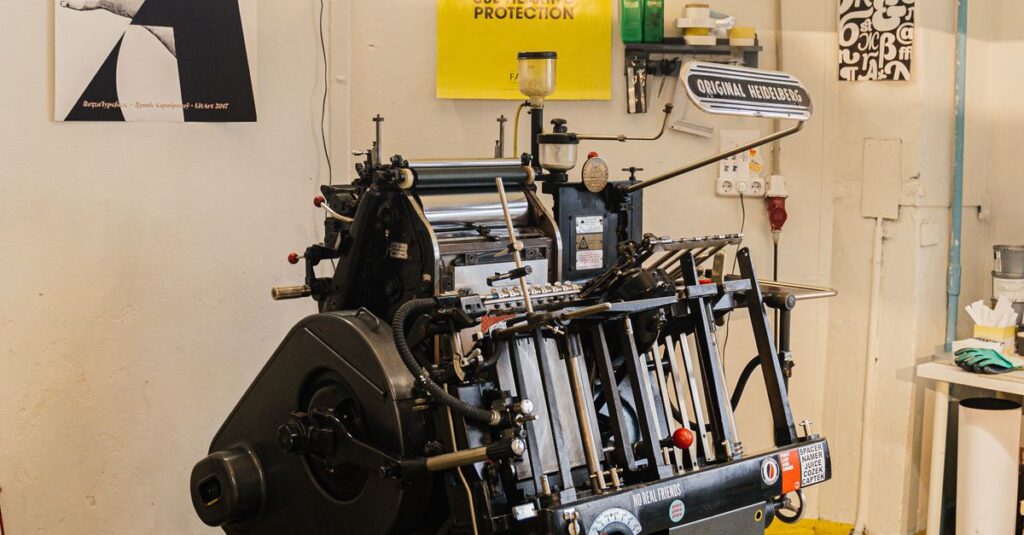
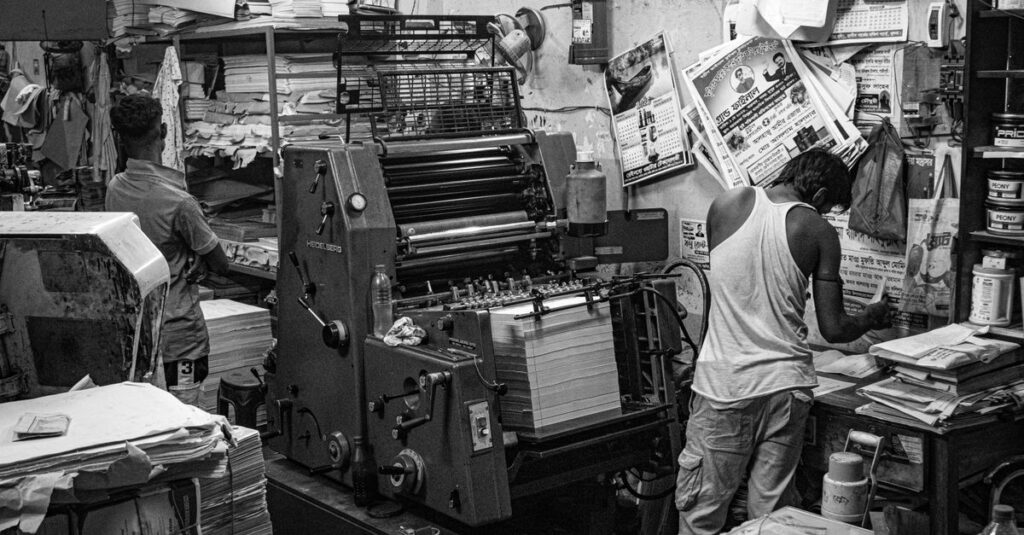
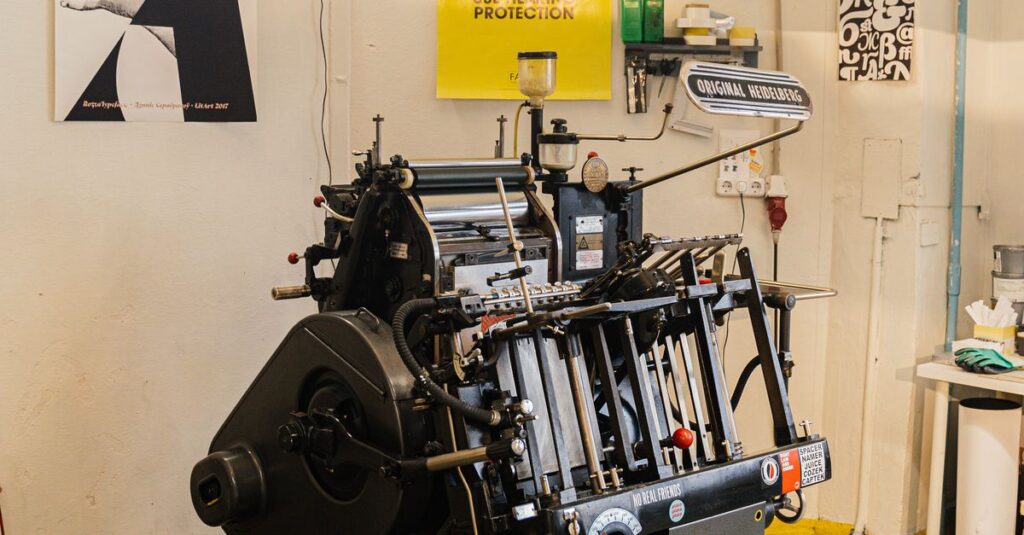
- Printing & Binding: The paper rolls go on press. Sheets are printed, cut, folded into signatures. Then they’re bound — stitched, perfect glued, or spiral wound. The sound of a perfect binder is a steady thump-thump-thump. It’s weirdly satisfying.
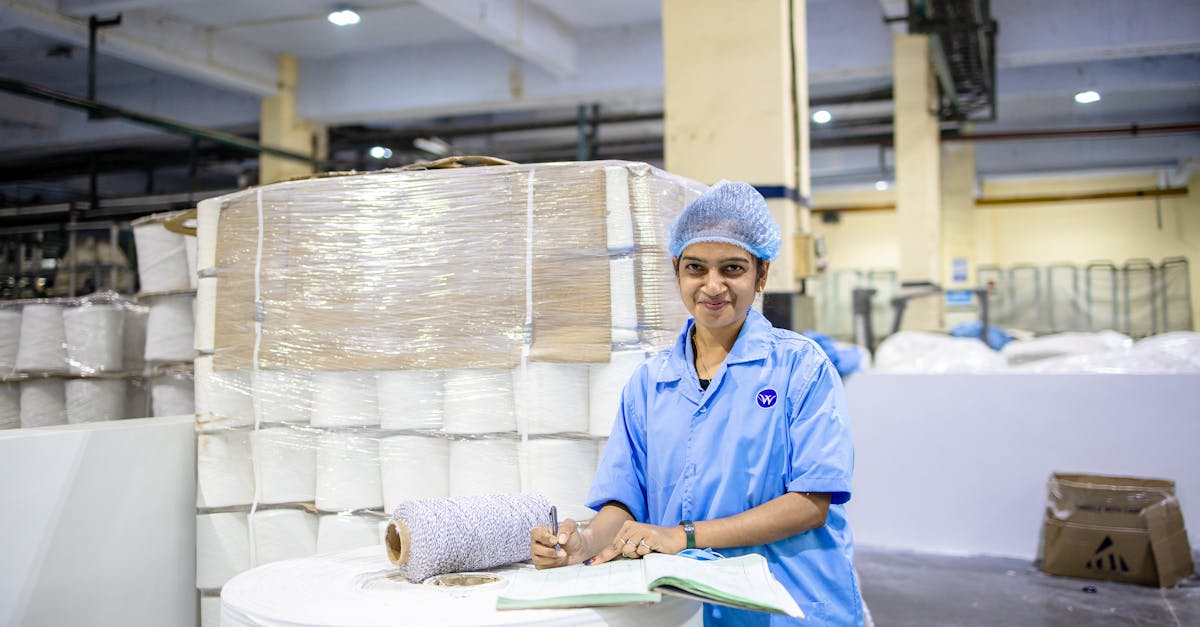
- Quality Check & Packing: Every batch gets sampled. We check for consistency, binding integrity, print alignment. Then they’re counted, boxed, and palletized for shipping. Your job is done. Ours is just starting on the logistics.
The whole thing feels less like magic and more like very precise, slightly messy, manufacturing. Which is what it is.
Spiral vs. Perfect Bound: The Binding Showdown
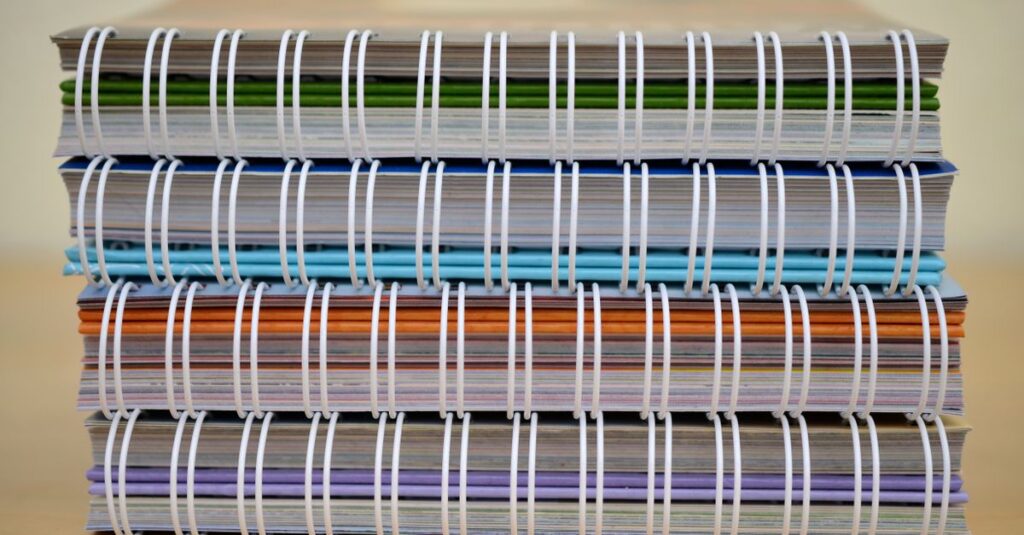
This is the decision that trips up more buyers than any other. It seems cosmetic, but it’s functional. The binding dictates how the book lies, how pages turn, and even how long it lasts.
| Feature | Spiral / Coil Binding | Perfect Binding (Glued) |
|---|---|---|
| Lay-Flat Ability | Lays completely flat, 360-degree fold. Ideal for note-taking. | Does not lay perfectly flat. Has a spine that cracks. |
| Durability | Extremely durable. Pages are physically held by coil. Can snag if coil is low quality. | Less durable over time. Glue can dry out or crack with heavy use. |
| Page Count Limit | Best for low to medium page counts (up to ~300 pages). Thickness limited by coil diameter. | Excellent for high page counts (200-700+ pages). Creates a ‘book-like’ spine. |
| Professional Look | Modern, utilitarian. Common for technical manuals, workbooks. | Classic, formal. Looks like a published book. Great for corporate diaries. |
| Customization | Coil colour can be matched to brand. Edge printing is difficult. | Full spine printing for title/logo. Creates a strong shelf presence. |
| Cost Implication | Generally slightly more expensive per unit due to extra step. | Often more cost-effective for very large runs of thicker books. |
So, which one? For student notebooks or training manuals that need to be written in constantly, spiral wins. For an annual corporate diary or a premium brand handbook you want on a desk, perfect binding is the way. It’s not about good or bad. It’s about use.
The Paper Question: GSM, Feel, and the Myth of ‘Thick’
“I want thick paper.” I hear this all the time. But thick doesn’t always mean good. Paper weight is measured in GSM (grams per square meter). Standard notebook paper is around 54-60 GSM. It’s designed to be written on with a ballpoint pen without bleeding through to the other side. Go up to 70-80 GSM, and you get a more substantial feel, but it also makes the book thicker, heavier, and more expensive. Go too high — say, 100 GSM — and suddenly a ballpoint pen might not imprint well, and you’ve doubled your paper cost for a feature nobody asked for.
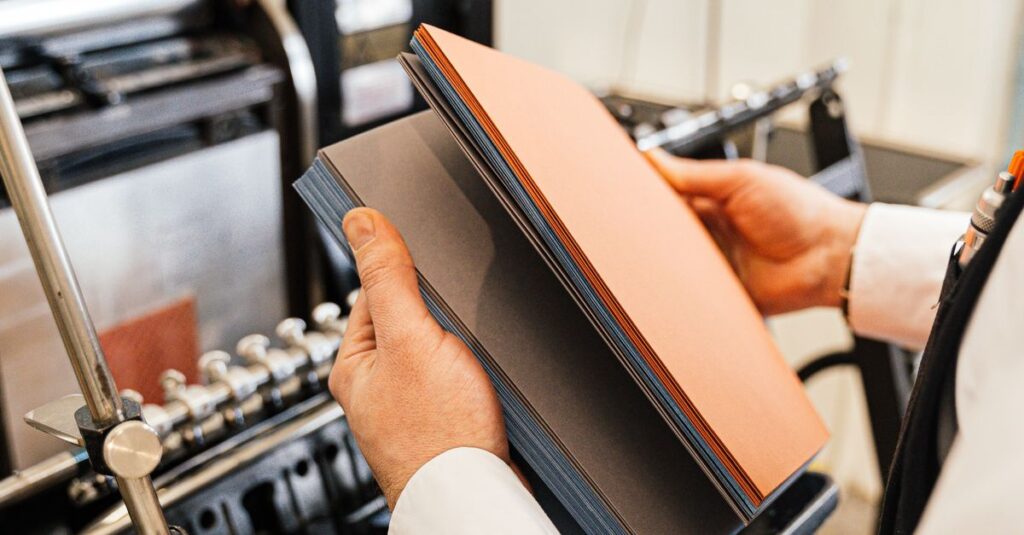
I was reading a paper spec sheet last week — honestly, it’s not thrilling stuff — and the technician had scribbled in the margin: “Smoothness > Weight. Every time.” He was right. The writing experience is about surface finish, not just thickness. A 54 GSM paper with a smooth, coated finish feels better to write on than a rough 70 GSM sheet. This is where samples are non-negotiable. You have to feel it. You have to try your pen on it. Don’t just pick a number from a dropdown menu.
Look, I’ll be direct. Nine times out of ten, for general corporate or school use, 60-70 GSM is the sweet spot. It balances cost, feel, and practicality. The 100 GSM request is usually about perceived value, not actual function. And that’s okay — but know what you’re paying for.
Pitfalls & How to Dodge Them (The ‘I Wish I’d Known’ List)
Let’s talk about what goes wrong. Because it does. In my experience working with schools and businesses, the problems are rarely catastrophic. They’re annoying. And preventable.
- Artwork in RGB: Your screen uses RGB light. Print uses CMYK ink. Send an RGB file, and your vibrant blue logo might print as a dull purple. Always convert your designs to CMYK before sending.
- Ignoring Bleed: If your design goes to the edge of the page, it needs ‘bleed’ — extra image that gets trimmed off. No bleed means a thin white border where the cut wasn’t perfect. It looks amateur.
- Last-Minute Changes: Asking to change the page count after the paper is ordered, or the logo after the plates are made. This isn’t a Word document. Changes cost time and money, often resetting the whole schedule.
- Sample Skipping: Never, ever approve a mass production without holding a physical sample in your hands. The screen lies. The paper tells the truth.
And honestly? The biggest pitfall is choosing a supplier based on the lowest price per unit, without asking about their process. A slightly higher quote from someone who explains their lead times, asks about your bleed, and sends samples proactively will save you more in stress than you’ll ever save in rupees.
When Does This Make Sense? (The Volume Threshold)
Custom manufacturing has a cost of entry. The setup — making printing plates, configuring binders, mixing custom ink colours — is a fixed cost. Spread that over 100 notebooks, and each book is wildly expensive. Spread it over 10,000, and it becomes trivial. So there’s a volume threshold where custom printing starts to make financial sense.
As a rough guide — and I mean rough, because paper prices move — if you need less than 500 units, you might be better with a print-on-demand service or buying high-quality generic stock and using a sticker or stamp. Between 500 and 2000 units, you’re in the zone where it becomes feasible, but you need to keep the design simple to control costs. Above 2000 units, the full custom route opens up — you can play with special papers, foil stamping, unique binding colours. This is where working with a dedicated manufacturer really pays off.
The question isn’t just ‘Can I afford it?’. It’s ‘What volume justifies the investment in a brand tool?’ For a school ordering annual notebooks for every student, it’s a no-brainer. For a startup giving away 100 notebooks at a trade show, maybe not.
Frequently Asked Questions
What is the minimum order quantity (MOQ) to book customized notebooks?
It varies by manufacturer, but a typical MOQ for a cost-effective custom run is around 500 pieces. For very simple customisation like a single-colour logo stamp, it might be lower. For complex, full-colour printing with unique specs, the MOQ might be 1000 or more to absorb the setup costs. Always ask.
How long does the entire process take from booking to delivery?
You should plan for a minimum of 4-6 weeks for a standard order. Break that down: 1 week for finalising artwork and proofs, 2-3 weeks for production, and 1-2 weeks for shipping (depending on your location). Rush orders are sometimes possible but will incur extra charges. Never assume it’s a two-week job.
What file format should I provide for my logo or design?
Provide a vector file if you have it — an .AI, .EPS, or .PDF with fonts outlined. This allows us to scale it to any size without losing quality. High-resolution (300 DPI) .PNG or .JPG files are okay for bitmaps, but vectors are king. And remember: CMYK, not RGB.
Can you match a specific brand colour (like a Pantone)?
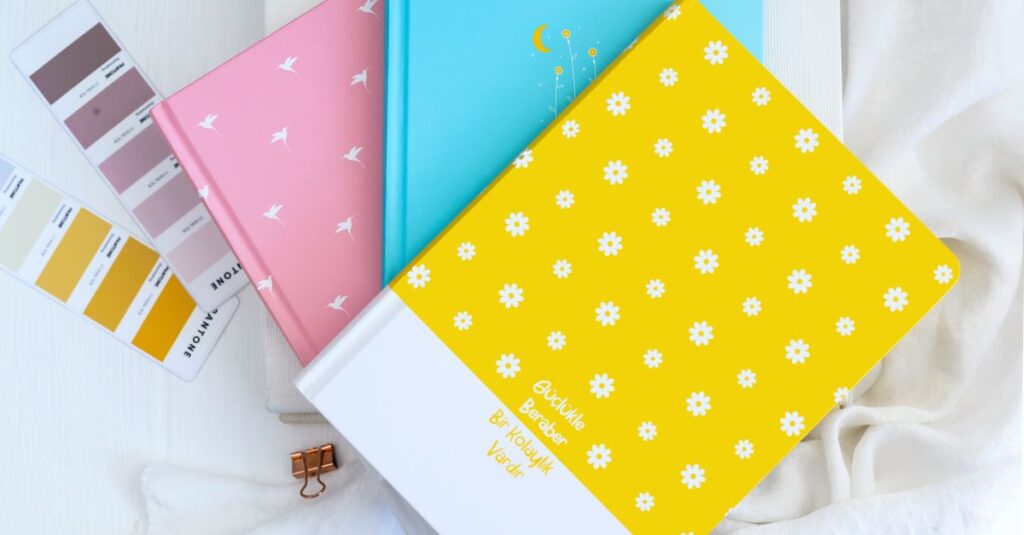
Yes, absolutely. This is a standard part of commercial printing. Provide the Pantone (PMS) number, and we can mix the ink to match it precisely. This does add a small cost, as it’s a custom ink mix rather than using standard CMYK process colours.
Do you handle shipping and logistics for bulk orders?
We do. Once the notebooks are packed on pallets, we coordinate with freight partners for delivery across India or for export shipments. You’ll get tracking information. For international buyers, we handle the commercial invoice and packing list needed for customs.
Look, it’s not about the notebook.
It’s about what the notebook represents. For a school, it’s identity and pride. For a business, it’s brand consistency and a tangible piece of marketing. For a procurement manager, it’s a project delivered on time, on budget, and without last-minute panic. The process of booking a custom order is the bridge between that intangible idea and the physical object.
I don’t think there’s one perfect way to do it. Probably there isn’t. But if you’ve read this far, you’re not just looking for a supplier — you’re looking for a partner who understands that your logo on the cover is the easy part. The hard part is delivering the quality and reliability that logo is supposed to stand for. And maybe that’s the whole point. If you’re ready to turn that idea into a spec sheet, the conversation starts with a single detail.