You’ve Seen the Request. Now What the Hell Does It Even Mean?
Right. So your procurement manager sends you an email. Or you’re the one looking at the RFP. “Booklets to print.” That’s the phrase. Could mean anything, honestly. You know it’s a stationery item. You know you need, like, 10,000 of them. But what exactly are they asking for? And how do you make sure you’re not ordering something that falls apart or looks cheap?
Look, I’ll be direct. The term is a bit of a mess. It’s what happens when corporate speak bumps into a factory floor. “Booklet” is a word that sounds official — implies structure, branding, information. “To print” means you need it customized. But together? It creates this blurry middle ground between a simple notepad and a full-blown catalog.
People usually search for booklet to print when they’re trying to give instructions to a vendor. It’s their way of saying: “We need a bound thing with custom pages. Please figure it out.” And that’s where things get lost. Because in our world — the notebook manufacturing world — that term needs to be translated into specs. Paper type. Binding method. Page count. Size.
If you’re staring at a bulk order form right now, this is the part that actually matters. Let’s break it down like I would for a client over the phone. Printing services start with clarity, not jargon. So let’s get clear.
The Anatomy of a “Booklet to Print” — It’s Not Just a Notebook
Here’s the thing. When you say “booklet,” most people picture a small, thin book. Think a program for an event. A training manual. A product guide. The feeling is more formal than a scribble pad. The purpose is information delivery, not just note-taking.
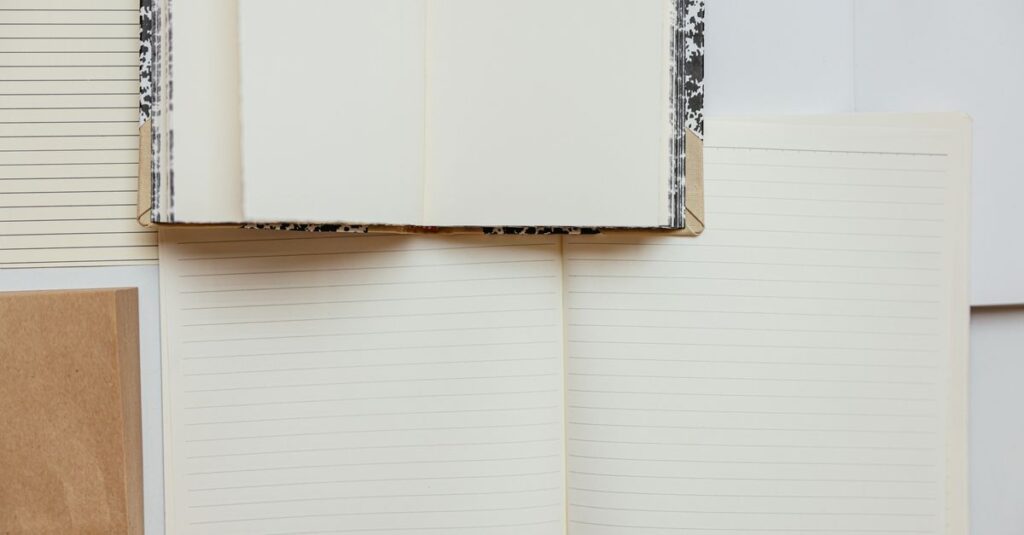
A booklet to print, in practical terms, is a multi-page, bound document that is 100% customized for your specific need. Let me pull the key parts apart:
- Binding: This is non-negotiable. A stack of loose sheets isn’t a booklet. It needs to be held together. The most common type is saddle-stitch — where it’s stapled down the spine. But it could also be perfect bound (glued) for a thicker feel, or even spiral bound if you need it to lay flat.
- Cover & Insides: Every single page is printed to your design. This is the “to print” part. The cover gets your logo, title, maybe a special finish. The inside pages have your content, layout, graphics.
- Structure: It has a logical flow — an intro, sections, a conclusion. It’s not random. This structure guides the reader.
The real difference between a notebook and a booklet? Intent. You give someone a notebook to fill with their own thoughts. You give them a booklet to receive yours. It’s a one-way communication tool.
I was talking to a client last week — a training manager for a big insurance company in Hyderabad — and she said something I keep thinking about. “We order booklets for every new hire,” she told me. “They look at it once. It sits on their desk. But if the paper feels flimsy or the printing is smudged, they judge the whole program before it even starts.”
That’s the unspoken part. A booklet is a physical representation of your standards. That’s why the details matter.
Expert Insight
I was reading something last month and one line stuck with me. A designer friend said — the best booklet isn’t the one with the fanciest graphics. It’s the one you can hold with one hand, thumb through quickly, and find exactly what you need without thinking. Function dictates form. I don’t have a cleaner way to put it than that. If you design for the user’s hand first, the rest falls into place.
The Most Common Use Cases (And the Mistakes to Avoid)
People ask for booklets to print for a handful of very specific jobs. Let’s walk through them.
- Corporate Training & Onboarding: New employee handbooks, process manuals, safety protocols. These need to be durable, easy to reference, and look professional.
- Event Programs: Conferences, seminars, award nights. The booklet here is often a schedule, speaker bio list, and sponsor showcase. It needs to be slightly glossy, have good image reproduction, and feel substantial enough for the ticket price.
- Product Catalogs: For businesses selling physical goods. This is where paper quality is everything. If you’re showing fabric or furniture, the paper needs a decent weight and smoothness to make the photos pop.
- Instruction Manuals & User Guides: These need to be clear, logical, and probably lay flat on a workbench. Spiral binding is a lifesaver here.
Now, the common mistakes. Three things I see buyers trip over every single time.
First, ordering the wrong paper. They see a cheap price per unit and jump on 60 GSM paper for a high-end product catalog. The result is see-through pages that feel like newspaper. Second, underestimating the importance of a strong, clean binding. A booklet that sheds pages after two uses is worse than useless — it’s embarrassing.
Third — and this is the big one — not planning for bleed. If your design has color or images that go right to the edge of the page, you need to account for the printer’s trim. If you don’t, you’ll get thin white borders where you didn’t want them. It looks amateurish. Every. Single. Time.
Anyway. The point is, knowing your use case is half the battle. The other half is communicating it to someone who can build the thing.
How to Specify Your Booklet Order (The Right Way)
Okay. So you need to send a request for quote, or you’re just trying to understand what your own team is asking for. What do you actually say? Stop using the vague phrase and start using the factory’s language.
Here’s a list of specs you need to decide on. This is your checklist.
- Finished Size: King Size (23.6 x 17.3 cm)? A5? Something custom? Don’t guess. Know.
- Page Count: Total number of pages. This determines thickness and binding options. Remember, pages are usually counted as “sides.” So 32 pages means 16 sheets, printed on both sides.
- Paper for Inside Pages: Specify the GSM (grams per square meter). Standard writing paper is around 70-80 GSM. For a premium feel, go 100 GSM or higher. For a budget booklet, 60-70 GSM might work.
- Cover Paper: This is almost always thicker than the inside. 250-300 GSM card stock is common. Do you want it gloss laminated? Matt laminated? Or just plain?
- Binding Type: Saddle stitch (staples). Perfect binding (glued spine). Spiral binding (wire or plastic coil). Which one fits how it will be used?
- Printing: Full color on all pages? Black and white insides with a color cover? This massively affects the cost.
- Quantity: The big one. Bulk pricing kicks in at different tiers. 500? 5,000? 50,000? Be realistic.
Look, I’ll just say it. The companies that get the best quality for their money are the ones who provide a clear, complete spec sheet from the start. It saves a dozen back-and-forth emails and prevents disappointment. A good manufacturer — like us — can take that sheet and give you a solid quote and timeline immediately.
It’s not magic. It’s just clear instructions. And honestly? Most people don’t give them. They just say “booklet to print” and hope for the best.
Don’t be that person.
Saddle Stitch vs. Perfect Binding: The Showdown
You’ll have to choose. So let’s put them side by side. This is the kind of table I wish more buyers had.
| Feature | Saddle Stitch Binding | Perfect Binding |
|---|---|---|
| How it’s made | Stapled through the folded spine | Pages glued to a square spine |
| Best for page count | Thinner booklets (8 to 64 pages) | Thicker booklets (48 to 400+ pages) |
| Lies flat? | Not really. Stays open awkwardly. | No. The glued spine resists flattening. |
| Professional look | Clean, classic. Good for programs. | More substantial, like a paperback book. |
| Durability | Good, but staples can snag/rust. | Very durable if glue quality is high. |
| Spine printing? | No spine to speak of. | Yes. You can print a title on it. |
| Typical use | Event programs, thin catalogs, guides | Training manuals, thick catalogs, reports |
See? It comes down to your page count and your need for a spine. If you have a lot of pages and want it to look like a “real book” on a shelf, perfect binding is your only choice. If it’s a slim, quick-reference thing, saddle stitch is cheaper and faster. Our product range handles both, but we always ask this question first.
The question isn’t which one is better. It’s which one is right for the life cycle of your specific booklet. Are people keeping it for years, or tossing it after the conference?
The Unspoken Truth About Bulk Orders & Timelines
I think about this a lot. There’s a tension between price, speed, and quality. You can pick two.
You want 20,000 custom booklets in a week? It’ll cost a premium and we might have to use a slightly thinner paper stock to meet the deadline. You want the absolute best price? That means we schedule your job in our normal production queue, which might be 3-4 weeks out. You want top quality with custom paper and special foil stamping? That adds time for material sourcing and setup.
This is the part nobody says out loud. Rush jobs have compromises. Always. The binding might be slightly less cured. The color matching might be 95% instead of 99% perfect. It’s not that we do bad work — it’s that fine craftsmanship needs time to dry, to set, to be checked.
In my experience working with corporate buyers, the smoothest projects are the ones where we have a realistic timeline from the start. A month is comfortable. Two weeks is tight but doable. Three days? That’s an emergency, and everyone needs to be on the same page about what “good enough” looks like.
Right. So where does this leave you? Probably with more questions than you started with. Good. That means you’re thinking about the right things.
Frequently Asked Questions
What’s the minimum order quantity for a custom booklet to print?
It depends entirely on the manufacturer. For us at Sri Rama Notebooks, we can handle orders as low as 500 units for a simple saddle-stitched booklet. For more complex perfect binding or special papers, the MOQ might be 1,000 to make the setup cost worthwhile. Always ask — some places won’t touch an order under 5,000.
How do I prepare my design files for booklet printing?
You need to provide print-ready PDFs. Each page should be the exact final size, with a 3mm “bleed” area if your design goes to the edge. Make sure all fonts are embedded and images are high-resolution (300 DPI). Don’t design in PowerPoint. Please. Use InDesign, Illustrator, or even a good online template tool.
What’s the typical turnaround time for 5,000 booklets?
For a standard specification, allow 3 to 4 weeks. This includes proof approval (which you should never skip), printing, binding, finishing, and packing. Rush service of 7-10 days is often possible but usually carries a surcharge. Always confirm the schedule before placing the order.
Can you print booklets in both English and regional languages?
Absolutely. We handle a variety of scripts and languages daily, including Telugu, Hindi, Tamil, and more. The key is you providing the final, proofread text in the correct font/software to ensure the characters print correctly. We can’t be responsible for translation errors.
What’s the difference between a booklet and a brochure?
A brochure is usually a single sheet, folded. It might have 4 or 6 panels. A booklet is multiple sheets, bound together at the spine. A brochure is lighter, cheaper, and often used for handouts. A booklet is more substantial, used for detailed information. Think of a brochure as a flyer’s older sibling, and a booklet as a small book.
Wrapping This Up
A “booklet to print” is a tool. A physical object with a job to do. The goal isn’t to buy the cheapest one. The goal is to buy the one that does its job without drawing negative attention to itself. It should feel right in the hand, look professional, and survive its intended use.
I don’t think there’s one perfect formula here. Probably there isn’t. Your training manual for factory workers has different needs than a luxury hotel’s wedding package catalog. But if you’ve read this far, you already know the questions to ask — you’re just figuring out who can give you honest, experienced answers.
That’s the whole game, honestly. Finding a partner who translates your need into a physical product that works. If you want to see how we approach it, the door’s always open. No jargon, just specs.