Here’s the thing about notebooks
You probably have a stack of them on your desk right now. The ones from that big corporate order. The branded diaries for the new year. The notebooks for the school kids that will get filled with half-finished sums and doodles. Most people just see the cover, flip the pages, and think “notebook.”
But the difference between a notebook that lasts a semester and one that falls apart in a month? It’s the printing machine that put the lines and the margins and the logo on the paper. It’s the thing you never think about — and you shouldn’t have to. That’s what this is about.
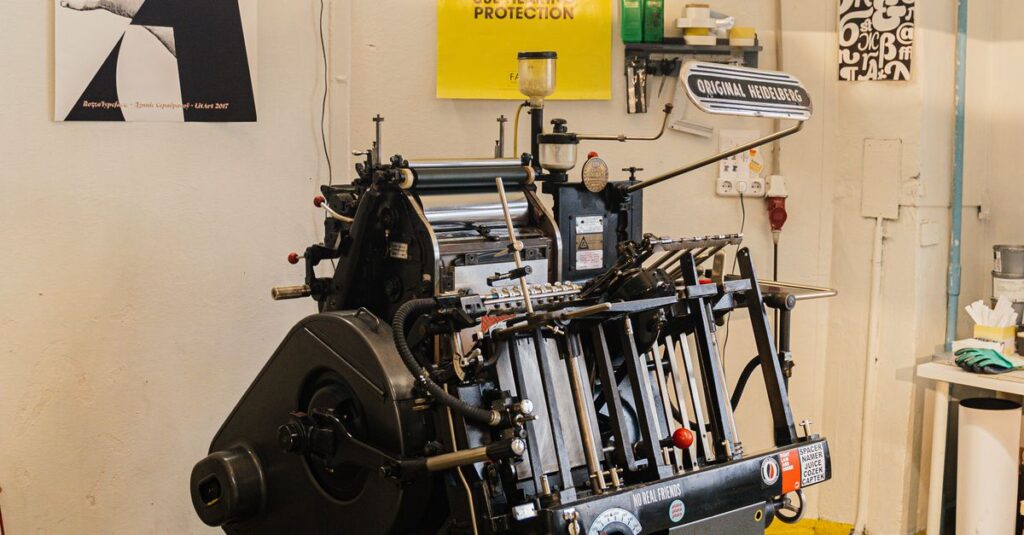
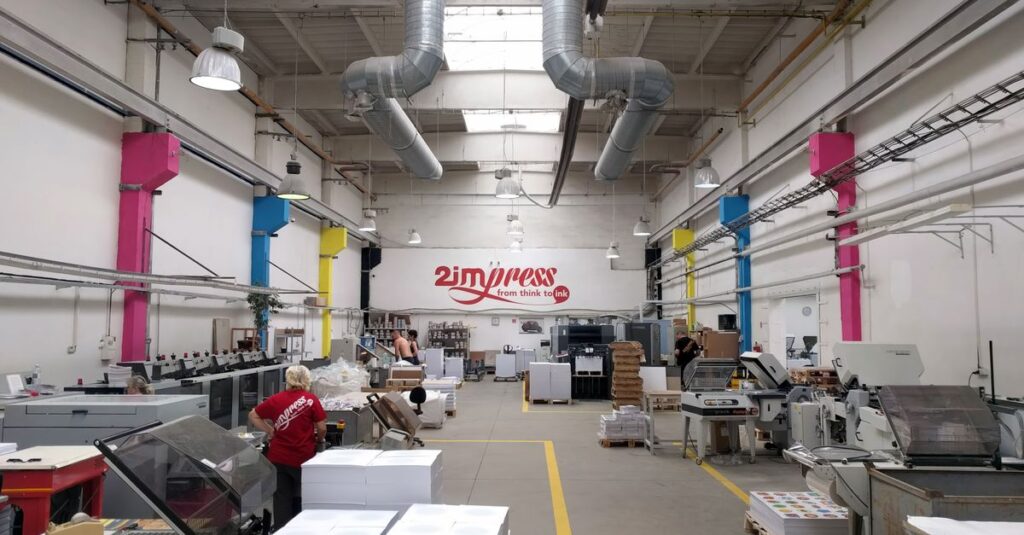
If you’re the person who has to order 10,000 notebooks for a school district or get 5,000 branded diaries printed for the sales team, you’re not just buying stationery. You’re buying reliability. You’re buying consistency. And nine times out of ten, that consistency comes down to one piece of equipment: the offset machine. We use them every single day, and here’s why it actually matters for your order.
So what is an offset machine anyway?
Right. Let’s break it down without the jargon.
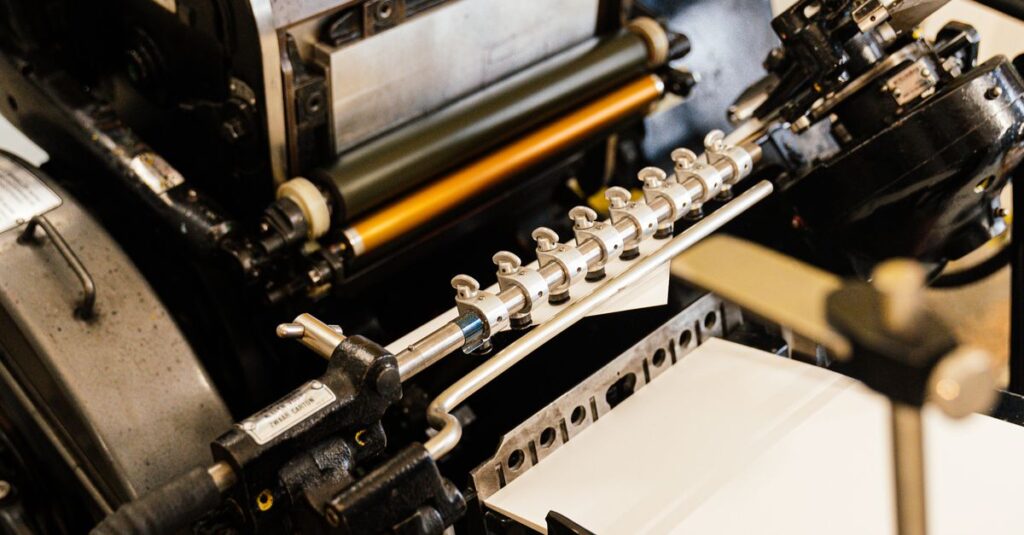
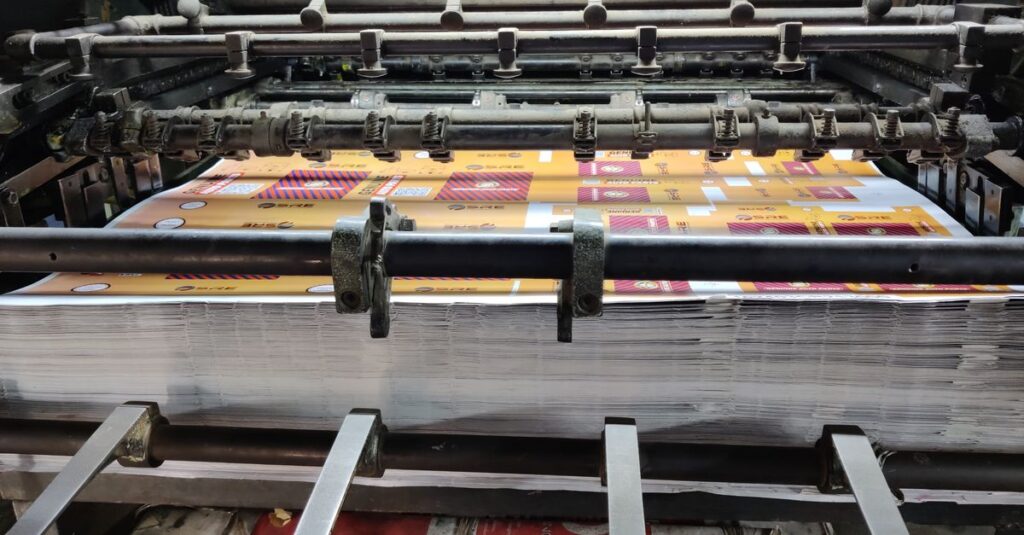
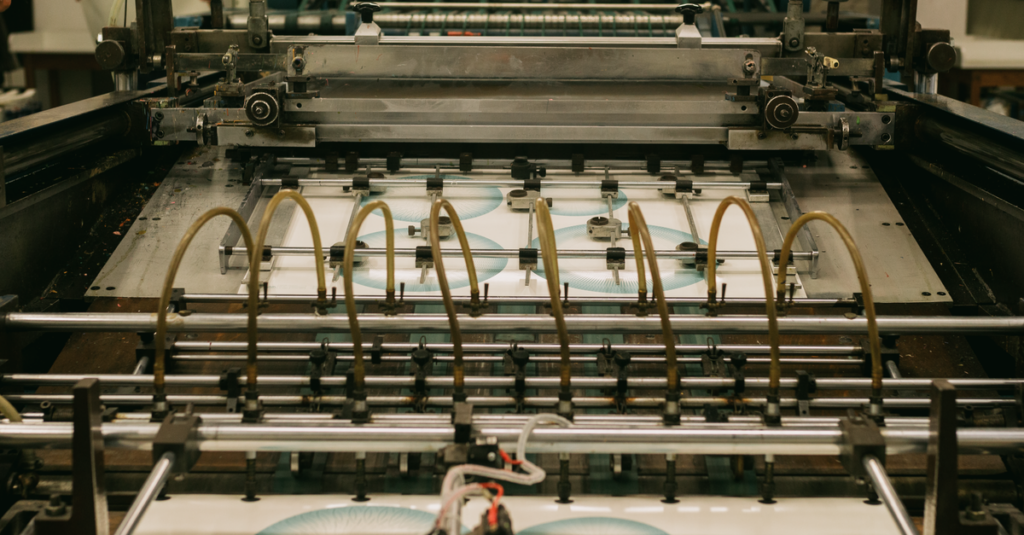
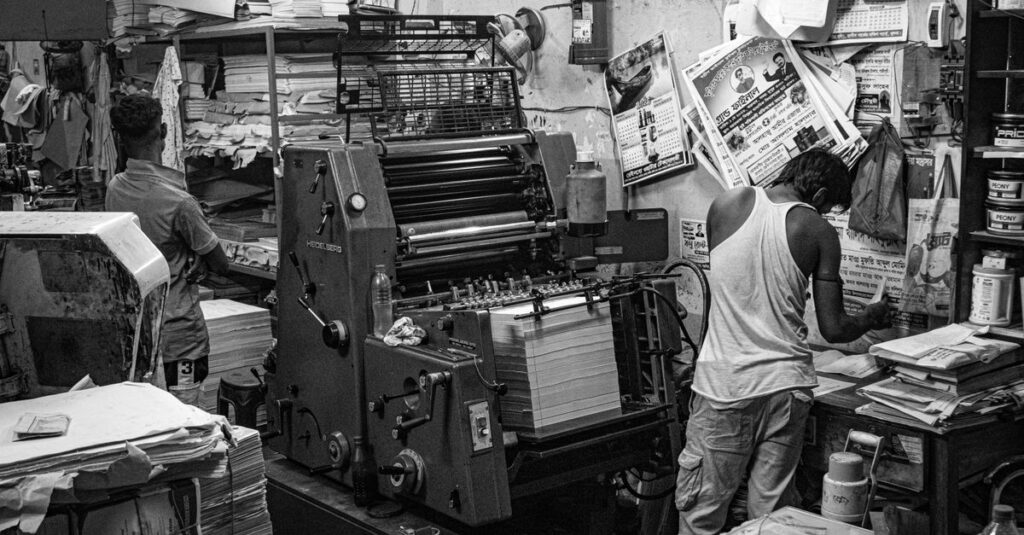
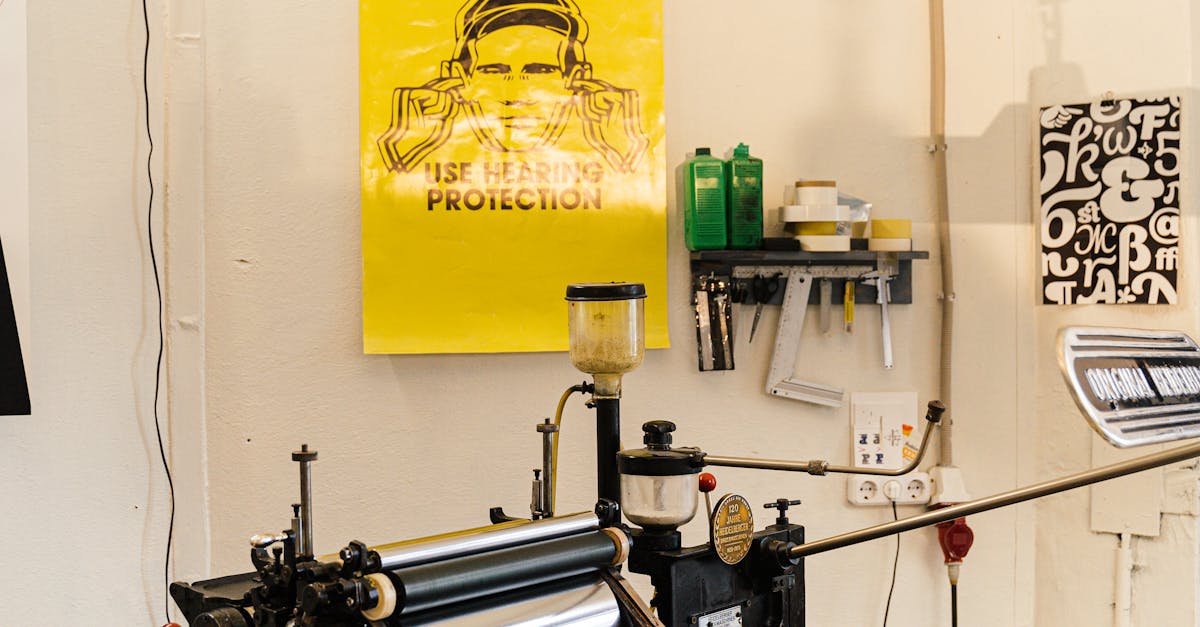
Think of it like a giant, incredibly precise stamping press. But instead of a stamp, it uses thin metal plates — one for each color in the design. The ink goes on the plate. The plate transfers the image to a rubber blanket. And then the blanket presses the image onto the paper. It’s called “offset” because the ink goes from plate to blanket to paper — not directly from plate to paper.
Why the extra step? The rubber blanket is flexible. It can press the ink onto paper that isn’t perfectly smooth. It means you can print on a wider variety of papers — including the 54 GSM writing paper most notebooks use — and still get a crisp, clean line. No smudges. No bleeding. Just sharp, consistent print, page after page after page.
That’s the first point. The printing needs to be reliable. Because when you’re running 30,000 notebooks a day, you can’t have every tenth page coming out with a blurry margin. The procurement manager on the other end has to answer for that.
It’s about more than just printing
I was talking to a distributor in Hyderabad last week. He was frustrated. His last shipment of graph books had inconsistent grid lines. Some pages were perfect, others were faint. The teachers were complaining. The students couldn’t plot their charts properly.
The problem? His previous supplier was cutting corners. Using digital printers for bulk runs because it was “faster.” Digital is great for small, custom jobs. But for bulk? For uniform ruling across 200 pages in 10,000 books? The ink coverage can vary. The heat from the printer can slightly warp cheaper paper.
An offset machine doesn’t have that problem. Once the plate is set, every impression is identical. The ink lays down in a consistent, thin film. The lines for your single-ruled (SR) or four-ruled (FR) notebooks are the same width, the same darkness, on page 1 and page 240. It’s mechanical. It’s predictable. And for a school buying in bulk, that predictability is everything.
You’re not buying paper. You’re buying a tool for learning. And a broken tool is worse than no tool at all.
Why your notebook specs demand this kind of printing
Let’s get into the weeds for a second. Your average school notebook order isn’t simple. It’s a list of specs that would make most people’s eyes glaze over.
- King Size (23.6 cm × 17.3 cm), 92 pages, Double Ruled (DR), 54 GSM paper.
- Long Notebook (27.2 cm × 17.1 cm), 200 pages, Unruled (UR), Centre Broad Ruled (CBR) cover.
Now imagine printing the cover. It’s full-color, with the school’s crest and a complex pattern. Inside, you need perfectly straight double lines across 92 pages. Then you need a specific margin printed on each sheet. Then you need page numbers. Then you need a header.
Doing that with a standard digital printer is a headache. The color on the cover might not match the school’s official logo green. The lines might waver. The job would take forever.
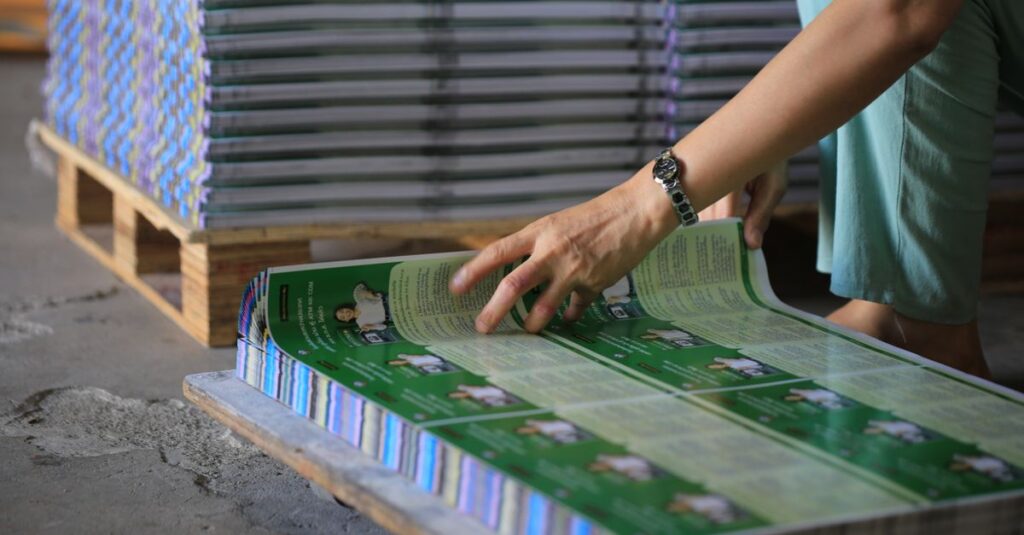
An offset machine handles this in passes. One plate for the cyan in the crest. One for magenta. One for yellow. One for black (the key line). Another plate for the ruling lines. Another for the margins. You lock them in. You run the paper through. And out comes a perfectly printed, multi-element sheet, ready for binding. The color is locked in. The registration — how all the elements line up — is dead-on.
This is why most corporate diary orders go to manufacturers who use offset. That embossed logo on the cover? The precise calendar grid inside? The specific Pantone color for the company branding? It’s all offset work.
The question isn’t whether you need high-quality printing. It’s whether you can afford not to have it when you’re putting your brand on 5,000 items.
The real cost: offset vs. digital for bulk orders
Okay, let’s talk money. Because everyone does.
The biggest misconception is that digital printing is “cheaper.” And for a run of 100 custom notebooks? Absolutely. The setup cost for an offset job is higher. You have to make those metal plates. You have to calibrate the machine. It takes time.
But here’s where the math flips. The cost per unit on an offset machine drops like a stone once you start printing in volume. Plate cost is fixed. Running 1,000 sheets costs a certain amount in ink and time. Running 10,000 sheets doesn’t cost 10 times more. The machine is already humming. The plates are already made. You’re just feeding it more paper.
Digital printing has a much more linear cost. Every sheet costs roughly the same in toner and wear-and-tear. For a bulk order of 20,000 notebooks, the digital quote can suddenly be 20-30% higher. And the quality? Probably worse.
| Aspect | Offset Printing Machine | Digital Printer |
|---|---|---|
| Best For | Bulk orders (1,000+ units), consistent ruling, brand colors | Short runs (under 500), urgent prototypes, variable data |
| Setup Cost & Time | Higher. Needs plate creation & calibration. | Lower. Almost no setup; send file and print. |
| Cost Per Unit (Large Order) | Drops significantly. Becomes very economical. | Remains relatively constant. Less economy of scale. |
| Color Consistency | Excellent. Uses Pantone matching, identical across run. | Can vary. Depends on toner, humidity, printer calibration. |
| Paper Flexibility | High. Works beautifully on standard 50-70 GSM notebook paper. | Limited. Heat and toner can affect thinner or textured papers. |
| Print Quality on Lines | Superior. Crisp, sharp, uniform lines for rulings. | Can be fuzzy or inconsistent, especially on long runs. |
Look at that last row. That’s the only thing that matters here for a notebook. Crisp, sharp, uniform lines. If the lines are bad, the notebook is useless. An offset machine guarantees that. A digital printer hopes for it.
Expert Insight
I was reading a trade magazine interview last month with a production manager from a paper mill. One line stuck with me. He said the shift to digital for bulk work was often a false economy — a decision made by someone who saw the lower upfront quote but didn’t understand the unit cost curve, or worse, the quality drop-off over thousands of impressions. “You save a rupee per book on printing,” he said, “and lose ten rupees in reputation when the product fails.” I don’t have a cleaner way to put it than that. The real cost isn’t on the invoice. It’s in the complaint that never gets sent to you, but gets sent to your competitor instead.
What this looks like for you (the buyer)
Let’s make this real. Meet Priya. She’s 38, a procurement manager for a chain of private schools in Bangalore. Her job is to source 15,000 sets of notebooks every summer—different sizes, different rulings for different grades. She’s been burnt before by a supplier who delivered notebooks where the glue from the binding seeped into the margins of the last 20 pages, making them unwritable.
When she evaluates a manufacturer now, she asks two questions beyond price: “What binding method do you use?” and “What printing process for the internal pages?” If they say “digital” for the bulk ruling, she gets nervous. She knows that with digital, the toner sits on top of the paper. It can crack if the notebook is folded. It can react with the binding glue. Offset ink, because it’s pressed into the paper fibers, becomes part of the sheet. It doesn’t crack. It doesn’t react.
Her notebook order isn’t a stationery order. It’s a supply chain for education. And a weak link — like bad printing — breaks the whole chain.
This is the part most manufacturers don’t explain. They talk about “high-quality printing” as a buzzword. But for you, the buyer, it translates to things you only notice when they’re absent: no smudging when a left-handed student writes, no faded lines in a graph book, no color bleed on a branded diary cover after it sits on a sunny desk. It’s about the absence of problems. And an offset machine is the best way to ensure those problems simply don’t exist.
Anyway. If you’re evaluating suppliers, their printing capability is a proxy for their whole operation. If they invest in and maintain proper offset machines, they’re likely serious about volume, consistency, and quality across the board — from paper sourcing to final packaging.
The bottom line: it’s about trust, not technology
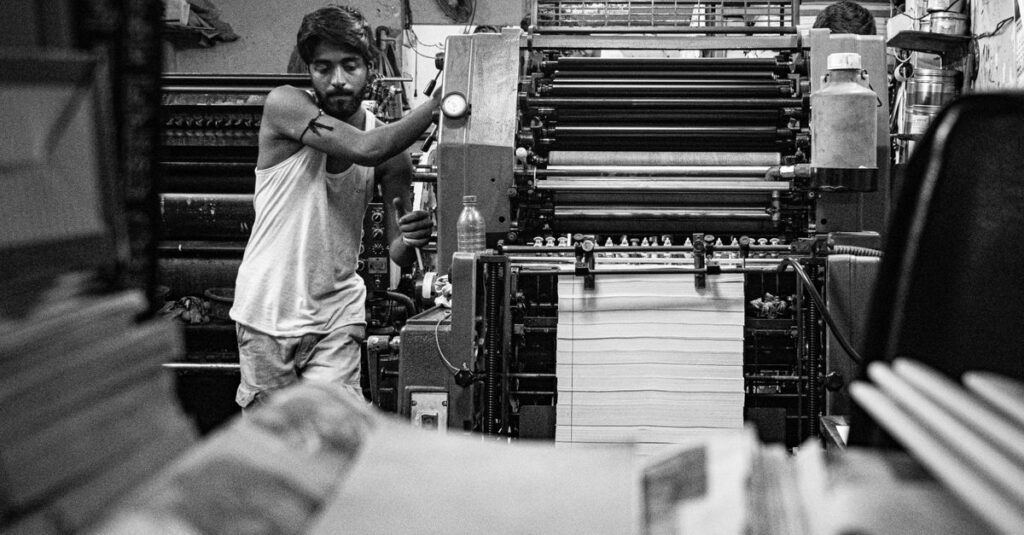
I think about this a lot. We’ve had our machines for years. We know their quirks, the sound they make when a plate needs adjusting. The technology isn’t the point, really.
The point is what the technology enables: a promise. When you order 52-page short notebooks with a specific ruling, you get exactly that. Not a close approximation. The machine doesn’t get tired. It doesn’t have an off day. It just does the job it was set up to do, thousands of times over.
For a wholesaler supplying stores across a state, that consistency means no returns. For a corporate office ordering premium diaries for clients, it means the brand looks professional, every single time. For a government tender for school supplies, it means meeting the specification to the letter, with no arguments.
That’s it. The offset machine is the engine of that reliability. It’s the reason you can pick up a notebook from a batch of 40,000 and know it will perform the same as the one next to it.
Earlier I said it was about crisp lines. That’s not quite fair — it’s more about erasing doubt. You shouldn’t have to worry about the printing on the notebooks you’re buying. You have enough to worry about. The right machine in the right factory takes that one worry off the table completely.
Frequently Asked Questions
Is offset printing better than digital for notebooks?
For bulk notebook orders — absolutely. Offset gives you sharper lines, better color consistency, and a lower cost per book when you’re printing thousands. Digital is fantastic for short runs or quick prototypes, but for the uniform quality needed in school or corporate notebooks, offset is the industry standard for a reason.
Why does offset printing improve notebook paper quality?
It’s less about improving the paper and more about working with it perfectly. Offset ink is pressed into the paper fibers, not sitting on top. This means the printed lines won’t crack when the notebook is bent, and the ink won’t react with binding adhesives, preventing those annoying seepage marks in the margins.
Can you print custom logos with an offset machine?
Yes, and that’s where it excels. Offset printing uses Pantone color matching, so your corporate logo green will be the exact same shade on every single diary cover. The process allows for precise, high-fidelity reproduction of complex logos and designs, which is why it’s preferred for branded and private label notebooks.
What’s the minimum order for offset printing to be cost-effective?
It depends, but as a general rule, offset becomes the smarter choice once you cross about 1,000 units of the same notebook design. The setup cost (making the plates) gets spread across more books, and the per-unit price drops well below digital. For orders in the tens of thousands, the savings and quality difference are significant.
Does offset printing work for all notebook binding types?
It works seamlessly with the common types. Whether the printed sheets are later stitched, spiral-bound, or perfect bound, the offset-printed image is durable and embedded in the paper. You don’t have to worry about the printing process limiting your choice of binding for the final notebook.
Wrapping up
So, what is an offset machine in notebook manufacturing? It’s the workhorse. It’s the quiet guarantee behind the product you’re actually buying. It turns a list of specs — size, page count, ruling, color — into a physical, dependable object.
For you, the buyer, it means one less thing to manage. Your job is to get the right tools into the right hands, on budget and on time. The printing should be invisible. It should just work. And that’s what this technology, when used by a manufacturer who knows what they’re doing, delivers.
I don’t think there’s one answer to what makes a “good” notebook supplier. Probably there isn’t. But if you’ve read this far, you already know that consistent, sharp printing is non-negotiable — you’re just figuring out which suppliers can actually promise it and deliver. The ones with the right machines, and the experience to run them, are the ones worth talking to.
If the details of paper, print, and binding matter for your next order, it might be worth starting a conversation with a manufacturer who builds their process around this kind of reliability. You can reach out here to discuss your specs.