

You think you know paper sizes. Then someone says A3.
It happens all the time. A procurement manager in Chennai calls me about a bulk school notebook order. We’re talking specs — A4, A5, maybe Long Size. Then they pause. “What about A3? Can you do those?” There’s a slight hesitation in their voice, like they’re not entirely sure what they’re asking for, but they’ve been told to check.
Here’s the thing: if you’re ordering notebooks in bulk — for a school, a corporate office, a whole district — you need to know what you’re getting. You can’t just nod and say “sure” to a paper size you’ve never actually seen. A3 isn’t some exotic format. It’s big. Visually big. It changes what a notebook can be used for. And the decision to order it, or not, comes down to one question: what problem are you actually trying to solve?
So let’s talk about it. Honestly. If you’re in charge of buying notebooks, understanding paper sizes is your job. And A3 is the one that people get wrong most often.
A3 in Centimeters: The Simple, Unforgettable Number
Let’s cut the marketing speak. The ISO 216 standard? Forget the jargon for a minute. What you need to hold in your head is this: 29.7 cm by 42.0 cm.
That’s it. That’s an A3 sheet.
Think of it as two A4 pages side-by-side. You know A4, right? That standard printer paper, about 21.0 x 29.7 cm. Take two of those, place them next to each other along the longer edge, and you’ve got the area of one A3 sheet. That visual is more useful than any technical definition. It means A3 has four times the area of an A5 notebook page. Which is why, when you’re staring at a quote, the price difference can make you blink.
The paper has weight. Literally. More area means more grams per square meter (GSM) adds up faster. A ream of A3 70gsm paper feels substantial in a way A4 doesn’t. This isn’t a minor detail — it’s the first thing our shipping guys notice. The boxes are bigger, heavier, and you fit fewer units per pallet. For a bulk order, that logistics cost sneaks into the final price. It’s not just about the paper cost; it’s about the space it takes up from our factory floor in Rajahmundry to your storage room.
Where A3 Notebooks Actually Make Sense (And Where They Don’t)
Most people get this backwards. They see “bigger” and think “better.” Not always.
I was talking to the head of an architecture college in Visakhapatnam last month. Over surprisingly bad office tea, he explained. For his students, A3 drawing books aren’t a luxury; they’re the minimum. You need that space for floor plans, sections, elevations. An A4 page cramps the detail, forces a smaller scale, and the student’s work suffers. Here, A3 is non-negotiable. The value is obvious.
Now, contrast that with a corporate HR manager in Hyderabad who wanted A3 notebooks for “brainstorming sessions.” She’d seen it in a magazine. The idea was slick — big, open pages for big ideas. But here’s what actually happens: those expensive, oversized notebooks sit in a conference room, get used once for a messy diagram nobody can read later, and then collect dust. They’re cumbersome to carry, awkward to store, and 90% of the page stays blank. That’s a procurement mistake, not a strategic choice.
Real use cases? They’re specific:
- Technical Drawing & Architecture: As mentioned. This is the classic, justifiable need.
- Art & Design Students: For storyboarding, fashion sketches, layout compositions.
- Certain STEM Fields: In advanced physics or engineering, where complex diagrams and long equations need to flow across a page without cramping.
- Large-Format Mind Mapping: For strategic planners who literally need to see an entire project landscape on one page. (This is rare, but it’s real.)
The question isn’t “Can we use A3?” It’s “Does our work require this much physical space to be effective?” If the answer isn’t a clear yes, you’re probably wasting budget.
The Price of Big: A3 vs. A4 in Bulk Orders
Let’s get practical. You’re comparing quotes. One column says A4, the next says A3. The difference isn’t linear. It’s exponential when you consider the whole chain.
First, the paper. You need larger sheets to start with, which often come from a different stock. Then, binding. A3 spine needs to be tougher. A simple staple won’t hold 100 sheets of that size. We usually move to heavy-duty spiral binding or stitched binding, which is a different machine setup. Then, the cover. A larger, flimsy cover will warp. So you upgrade the cover board GSM. Every single component scales up.
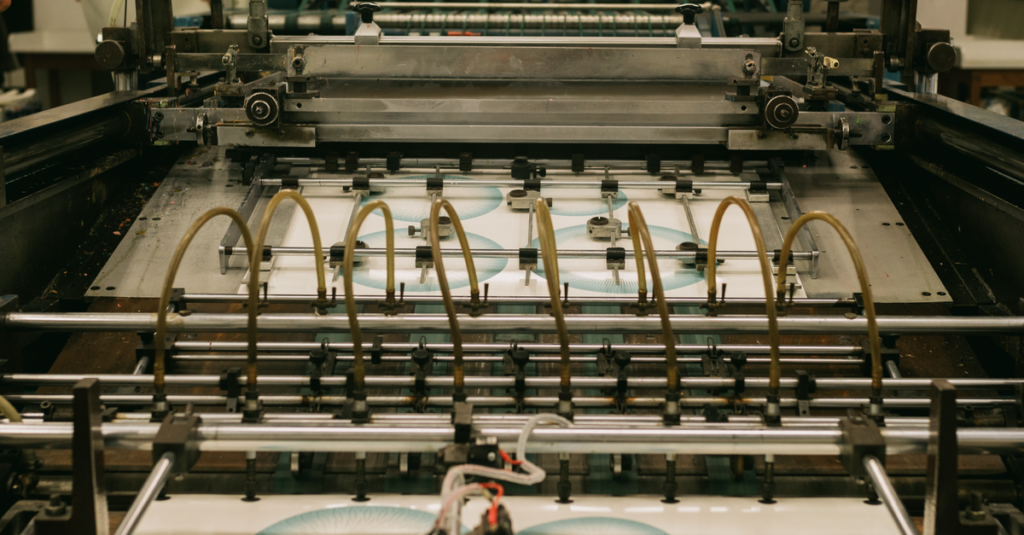
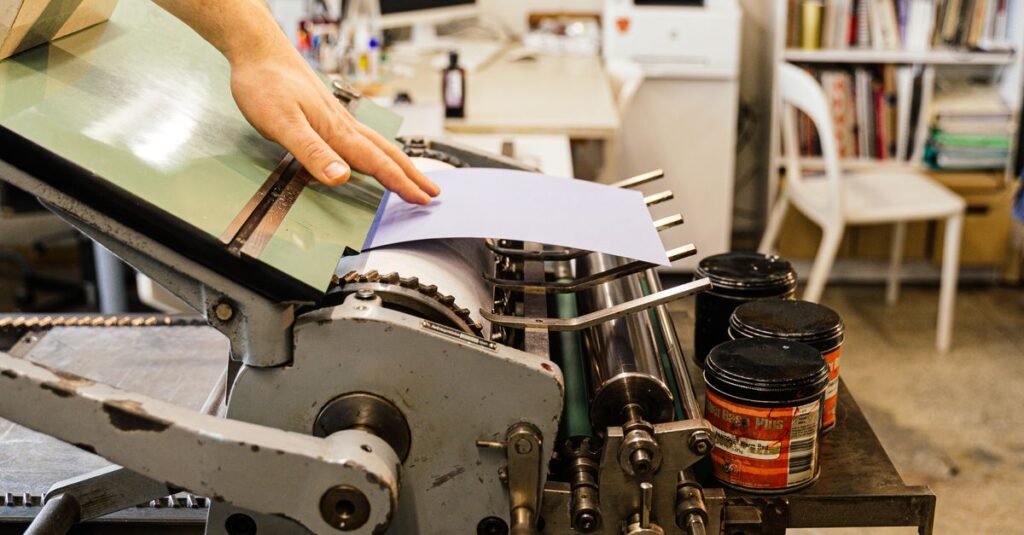
But the biggest cost people miss? Production efficiency. Our lines are optimized for A4 and A5. They fly through. Switching to A3 means slowing everything down. The cutting is different, the folding (if any) is different, the packing is different. We might produce 40,000 A4 notebooks in a day. For A3, that number could drop by 30-40%. Time is money. And that cost is baked into your per-unit price.
Expert Insight
I remember a supplier meeting years ago. This old paper mill manager from Gujarat leaned back and said something that stuck with me. “The paper doesn’t know its size,” he said. “But the machine does. And the machine’s time is all we’re ever selling.” I think about that every time we price an A3 job. You’re not just buying more fiber. You’re buying more of the machine’s attention. And that’s the only thing that matters here.
| Factor | A4 Notebook (Standard) | A3 Notebook (Oversized) |
|---|---|---|
| Typical Use Case | General note-taking, student notebooks, office memos, standard diaries. | Technical drawing, art projects, large diagrams, strategic planning boards. |
| Production Speed | High. Optimized for bulk, fast runs (e.g., 30k-40k units/day). | Significantly slower. Complex handling reduces daily output. |
| Binding Requirement | Versatile. Stapled, perfect bound, or spiral all work well. | Often requires reinforced spiral or stitched binding for durability. |
| Paper Cost Impact | Standard. Uses common paper stock efficiently with minimal waste. | High. Larger sheets, often specialty stock, higher waste per cut. |
| Logistics & Storage | Easy to palletize, standard box sizes, efficient warehouse storage. | Bulky. Fewer units per pallet, requires more storage space at every stage. |
| Best For Bulk Orders Of | 500+ units for schools, corporate giveaways, general distribution. | Specialized runs of 100-200 units for specific departments or courses. |
Making the Call: Should You Order A3 Notebooks?
So you’ve read this far. You know the size, you know the cost, you know the hassle. Now, the real work starts. It’s not a spreadsheet decision. It’s a conversation you need to have with the actual users.
Call the head of the engineering department. Ask the art teacher. Don’t ask if they want A3 — they’ll probably say yes to bigger. Ask them to show you the last project where A4 was too small. Ask them where students are currently taping two A4 pages together. That’s your signal. That’s the pain point you’re solving.
If that pain doesn’t exist, you’re just creating a storage problem. I’ve seen it too many times: a well-meaning procurement order arrives, the users find them impractical, and they end up in a forgotten cupboard, a monument to a misaligned specification. That’s a waste of everyone’s money. And it hurts more than just the budget — it erodes trust in the procurement process itself.
Right. The CTA.
If you’re evaluating a bulk order and the A3 question is on the table, get the specs right first. We’ve got templates, samples, and can run small pilot batches so you can test the usability before committing to 500 units. Our customization team deals with these questions weekly. It’s easier to talk it through.
Frequently Asked Questions
Is A3 twice the size of A4?
Yes, exactly. An A3 sheet (29.7 x 42.0 cm) has twice the area of an A4 sheet (21.0 x 29.7 cm). Think of it as two A4 pages side-by-side. This is why the price jump for A3 notebooks isn’t just 2x — it affects paper, binding, and production time significantly.
What is A3 size used for most often?
In our experience supplying schools and colleges, A3 is primarily for technical drawing, architecture plans, and large-format art. It’s a specialist size. For general note-taking or corporate meetings, A4 or A5 is almost always more practical and cost-effective.
Can you make custom printed A3 notebooks?
Absolutely. We do it all the time for design institutes and engineering colleges. The process is the same as for custom A4 notebooks — logo on cover, custom rulings inside — but requires different press setups. Lead times are usually a bit longer due to the specialized production run.
How does A3 compare to your ‘Long’ or ‘Account’ notebook sizes?
Totally different system. Our Long (27.2×17.1cm) and Account (33.9x21cm) sizes are traditional Indian notebook dimensions. A3 is an international ISO standard. An A3 sheet is larger than both. An Account notebook is closer to A4 in height but narrower. You choose based on the user’s habit and the content format.
What’s the minimum order quantity for custom A3 notebooks?
Because of the setup involved, our MOQ for custom A3 tends to be 100 units. For standard, non-custom A3 notebooks (like plain drawing books), we can sometimes do smaller batches, but the per-unit cost is high. For bulk school orders, we always recommend sampling first.
Look, it comes down to need.
A3 isn’t better. It’s just bigger. And bigger only helps if the work demands that specific canvas. For 95% of institutional notebook needs — school lessons, office meetings, training journals — A4 is the sweet spot. It’s portable, affordable, and our entire industry is built around producing it efficiently.
But for that other 5%, where ideas need room to breathe and diagrams can’t be cramped, A3 is the only tool that works. The trick is knowing which category your order falls into. Not guessing. Knowing.
I don’t think there’s one perfect answer here. Probably there isn’t. But if you’ve read this far, you’re not just ticking a box — you’re trying to get the right tool for your team or students. And that’s the whole job, isn’t it? Getting the specs to match the real work. If you want to pressure-test your A3 idea with someone who’s seen the good, the bad, and the dusty, the conversation is straightforward.