Let’s Be Honest About “Small Printing”
Right. You’re probably looking at a list of suppliers, or you’ve been told to get some branded notebooks for your team, and this phrase “small printing” keeps coming up. And it’s vague. What does it even mean? Small font? Tiny logos? A low-quantity print run? Nobody explains it.
I’ve been talking to procurement managers for years — over the phone, through messy email chains — and that confusion is the first hurdle. It wastes time. You end up comparing quotes that aren’t even for the same thing.
So let’s clear this up. Small printing, in the notebook and stationery world, isn’t about the physical size of the ink on the page. That’s the first mistake. It’s about the scale of the customization itself. Think of it as a single-color logo on a cover, a line of text on a header, a basic monogram. It’s the opposite of a full-cover, high-resolution, multi-color photographic print. It’s functional branding. And for most corporate and institutional orders, it’s exactly what you need. If this sounds like the headache you’re currently having, our printing services page might help you cut through the noise.
Why Your School or Business Actually Needs It (And Doesn’t)
Here’s the thing — small printing solves a very specific problem. Identity without the overhead.
A school needs 5000 notebooks for the new academic year with its crest and motto on the front. A company wants 3000 diaries for its staff with a clean logo on the bottom corner. A distributor is building a private label line with a simple brand name on the cover.
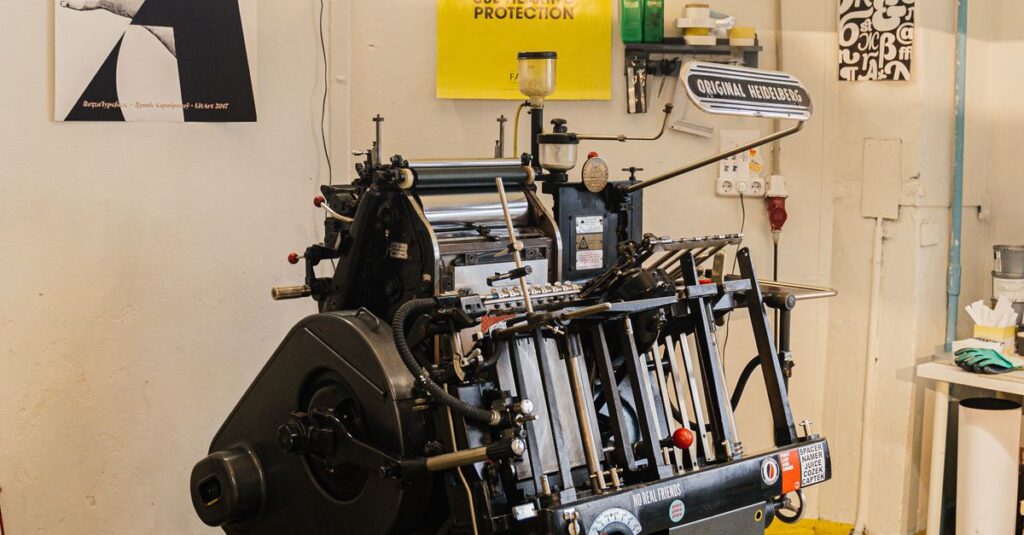
The goal isn’t to win a design award. The goal is recognition, unity, and a touch of professionalism. Small printing gets you there. It’s cost-effective for bulk runs, it has faster turnaround times because the setup is simpler, and it works on almost any paper quality. The machinery for this — often older offset printers or newer digital ones set for single-color runs — is the workhorse of our factory floor. It runs all day.
But. This is the part where you need to be careful. Small printing can look cheap if it’s done poorly. Blurry logos. Ink that smudges. Alignment that’s just… off. I’ve seen notebooks where the printed logo looks like an afterthought, and it defeats the whole purpose. Your brand isn’t a last-minute addition.
The question isn’t whether you need branding. It’s whether you’re ready to invest in it being done right, even if it’s “small.”
A Real-World Snapshot: Priya’s Procurement Problem
Priya, 38, handles procurement for a mid-sized IT firm in Hyderabad. Budgets are tight, but perception matters. Last quarter, she ordered 1,000 custom notebooks for a client conference. The supplier promised “crisp small printing.” What arrived? The company logo, a simple blue swoosh, was printed with a faint, fuzzy edge. It looked unprofessional. The client meeting was in three days.
She spent the entire afternoon on the phone, voice tense, trying to get a reprint or a discount. The supplier blamed the paper stock. She blamed the printer. The real culprit? Nobody defined what “crisp” meant upfront. Was it a vector file? Was the printing plate worn out? They never talked details.
She ended up using them, but she won’t again. That detail — that tiny, seemingly insignificant print flaw — killed the trust. And honestly? That supplier probably didn’t even know they’d lost a client for good.
Small vs. Large Format Printing: It’s Not Just About Size
Let’s break this down, because mixing these up is how budgets explode. People think it’s a spectrum from “tiny” to “big.” It’s not. They’re different tools for different jobs.
| Aspect | Small Printing (Custom Branding) | Large Format / Full-Colour Printing |
|---|---|---|
| What it is | Single or two-colour logos, text, monograms. | Full-cover photographic prints, complex designs, gradients. |
| Best For | Corporate diaries, school notebooks, private label basics, internal stationery. | Premium gift notebooks, artist sketchbooks, high-end marketing collateral. |
| Typical Order Size | Bulk. Think 1,000 to 100,000+ units. | Smaller runs. Often 100 to 5,000 units. |
| Cost Driver | Quantity of notebooks. More units = lower cost per unit. | Complexity of design & number of colours. Setup is expensive. |
| Lead Time | Generally faster. Simple plate setup. | Longer. Requires colour proofing and precise alignment. |
| The “Feel” | Professional, clean, utilitarian. | Luxury, artistic, bespoke. |
The biggest mistake I see? A buyer comes in wanting the luxurious feel of a full-colour cover but only has the budget for small printing. The result disappoints everyone. Pick the right tool. If brand clarity on a budget is the goal, small printing is your friend. You can see the difference in our product range here.
The Manufacturing Floor Truth: How It Really Works
Okay, let’s pull back the curtain. I want you to picture this, because understanding this saves you weeks of back-and-forth.
You send us your logo. A simple .AI or .EPS file is gold. Our prepress guy, Rajesh — who’s been doing this for twenty years — checks it. He’s looking for clean lines, no tiny text that’ll fill in with ink, proper colour codes (Pantone, if you have one). If it’s a messy JPEG, he’ll call you. This is the step where most delays happen.
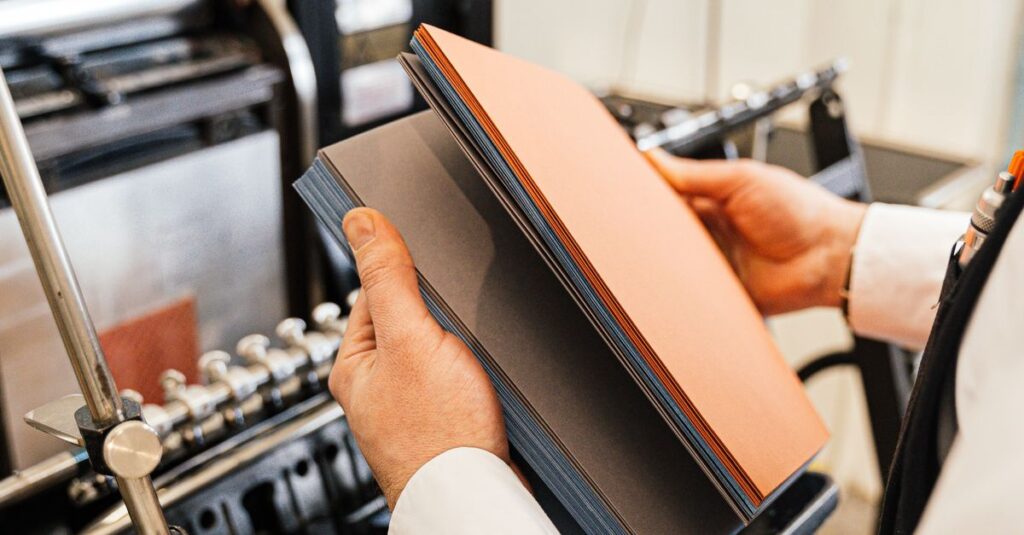
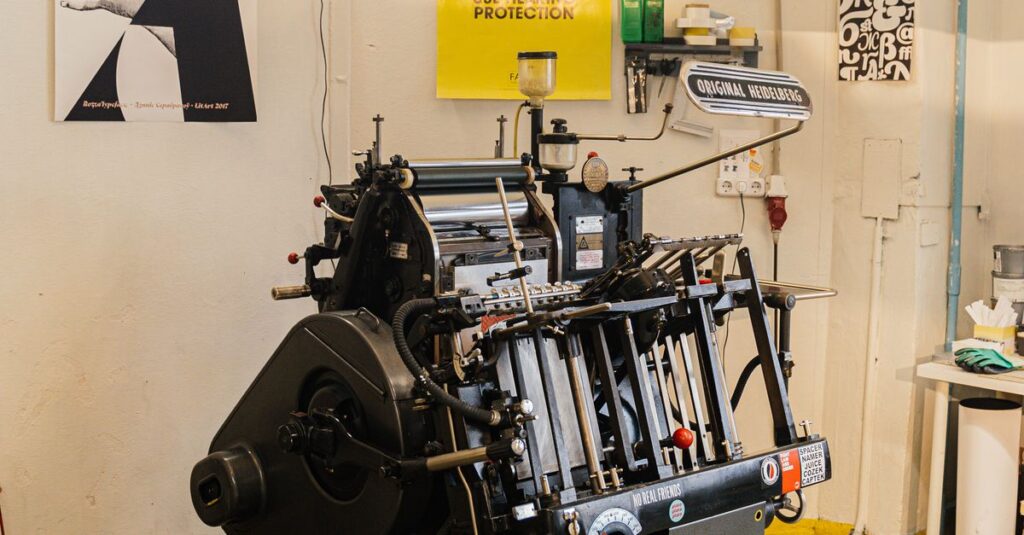
Then, a plate is made. For small printing, it’s usually one metal plate for one colour. This plate gets locked onto the offset press. The paper — already cut to notebook size — feeds through. The plate transfers the ink onto a rubber blanket, which then rolls it onto the paper. It’s fast. It’s percussive. The factory floor hums with that rhythmic thump-thump-thump.
Expert Insight
Expert Insight
I was reading a trade journal last month about ink adhesion. The article mentioned something that stuck with me: the biggest factor in print clarity on notebook paper isn’t the press, it’s the paper’s coating. Or lack of it. Standard 54 GSM writing paper — the kind in most school books — is porous. It soaks up ink. That can cause a slight spread, a softening of edges. The researcher said a premium, coated paper gives a sharper dot, but it changes the writing feel completely. She said, “You’re choosing between perfect print fidelity and the perfect writing experience. They’re rarely the same thing.” That’s the balancing act we do every single day. Sharp logo, or smooth writing page? Often, you can’t optimize for both.
After printing, the sheets cool, get bundled, and head to binding. The whole thing feels less like magic and more like very precise, very loud logistics.
What No Supplier Will Tell You (But I Will)
Look, I’ll be direct. The hidden cost in small printing isn’t usually the ink. It’s the setup and the minimum order quantity (MOQ). Every new design needs a new plate, which costs money and time. That’s why an MOQ exists — to spread that fixed cost over enough notebooks to make the price per unit make sense.
If a supplier gives you a suspiciously low quote for 100 custom notebooks, ask about the setup fee. It’s probably buried. Another secret? Color matching. “Blue” isn’t just blue. If your brand color is Pantone 3005 C, our ink needs to be mixed to match it exactly. That’s a precision job. Some suppliers use a “close enough” standard cyan. It’ll look blue, but it won’t be your blue. That’s a corner you don’t want cut.
And one more thing — paper weight. Thinner paper (like 52 GSM) is cheaper, but it can cause “show-through,” where the print on the cover is slightly visible on the first page inside. It feels flimsy. For corporate diaries, I always advise going a bit thicker. It’s a small price jump for a massively better perception.
How to Brief a Manufacturer (Without Losing Your Mind)
Based on all the conversations I’ve had that went well — and the ones that went badly — here’s what you actually need to send in your first email. Do this, and you’ll get a useful quote back in hours, not days.
- Your Artwork: High-resolution vector file (.EPS, .AI, .PDF). Not a JPEG from your website header.
- Quantity: Your realistic estimate. Don’t say “maybe 5000” if you know you’ll only order 1000.
- Notebook Specs: Size (A4, A5, Long, Short?), Page count (92, 200?), Ruling (SR, UR, GR?). This dictates the blank product. Our site has a full list of specs if you need a reference.
- Print Details: Where do you want it? (Front cover bottom right, header on every page?). Color (Pantone number if you have it, or “standard black”).
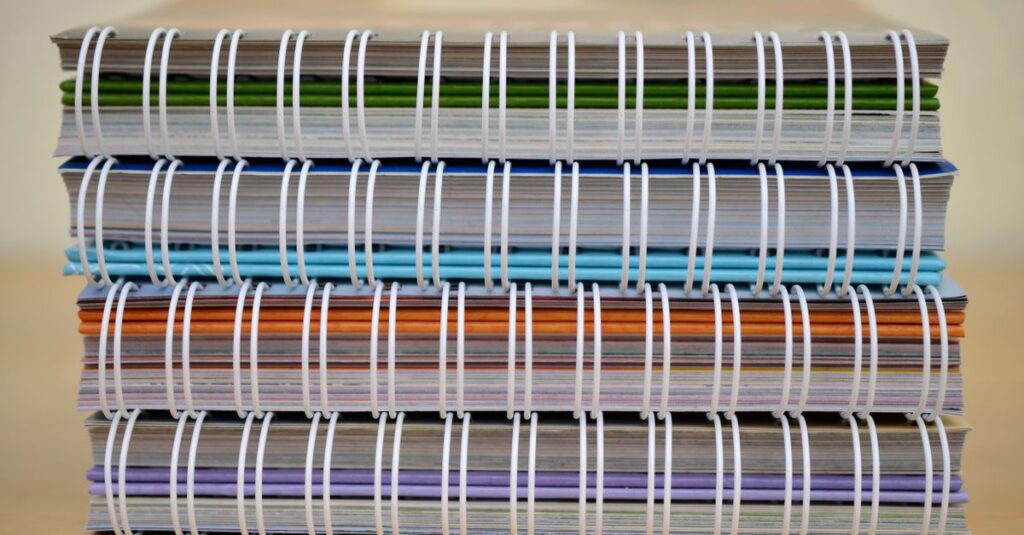
- Binding: Stitched? Spiral? This affects where we can print.
- Deadline: The real, drop-dead date. Not the ideal one.
That’s it. With those six pieces of information, any real manufacturer can give you a clear, firm price and timeline. Without them, you’re just getting a vague guess.
Frequently Asked Questions
What’s the minimum order quantity (MOQ) for small printed notebooks?
It varies, but for standard small printing like a logo, most serious manufacturers start at 500 to 1000 notebooks. The reason is the setup cost for the printing plate. Below that, the price per notebook gets very high. For schools or businesses doing annual orders, this is rarely an issue.
Can you print in metallic or fluorescent ink with small printing?
Usually, no. That’s venturing into speciality printing. Standard small printing uses process colours (CMYK) or specific Pantone spot colours. Metallic inks need different plates, drying times, and often a different press. If you need a metallic logo, you need to specify that upfront—it changes the quote and the process.
How long does it take to get a sample of a custom printed notebook?
Once the design is approved, a physical sample typically takes 7-10 working days. This includes making a proof plate, running a small batch, binding them, and shipping. Never proceed with a bulk order without seeing and holding a physical sample. The screen colour is always a lie.
Is small printing durable? Will the logo rub off?
If done correctly with proper ink and drying time, it’s very durable. We use oil-based inks that cure into the paper fibres, not just sit on top. You shouldn’t be able to scratch it off with a fingernail. Cheap water-based inks on glossy paper can smudge – always ask about ink type.
We need notebooks with different department logos. Is that possible?
Yes, but it’s tricky. That’s called “versioning.” Each unique logo needs its own plate and a separate print run. You can’t mix them on the same press pass. It increases cost and complexity. Often, it’s more efficient to do one generic company logo, or handle the departmental labels with a sticker or a second, digital print run later.
Wrapping This Up
Small printing isn’t glamorous. It won’t be the star of your marketing campaign. But it’s the workhorse that puts your name in the hands of your employees, your students, your clients, every single day. It’s quiet, consistent branding.
The key is to treat it with respect. Define it clearly. Provide clean artwork. Understand the trade-offs with paper and cost. Choose a manufacturer who talks to you about plates and paper grain, not just the bottom line.
I don’t think there’s one perfect way to do it. Probably there isn’t. But if you’ve read this far, you’re not just looking for a printer – you’re looking for a partner who won’t let a fuzzy logo ruin 5000 notebooks. You’re figuring out if we’re that partner.
If you want to skip the confusion and just get a straightforward quote on your next notebook order, reach out to our team here. We’ll ask you the six questions from section six, and we’ll give you a real number.