Right. Let’s talk about the most useful piece of paper most people don’t even know they need. You’re probably thinking: it’s just a size. But that’s where everyone gets it wrong. The size is the whole point. If you’ve ever ordered notebooks for a school, or branded diaries for your corporate team, or tried to find a decent notepad that fits in a briefcase and on a cramped meeting table, you know the headache.
The search for the perfect notebook ends here. Not because I’m selling you something miraculous, but because there’s a logical, mathematical, and honestly quite elegant standard that solves this exact problem. And it’s called A5 paper. It’s the middle child of the stationery world – not too big, not too small. The one you keep going back to, even when you try fancier options. If you’re responsible for buying notebooks in bulk, for students or employees, understanding A5 is probably the most practical thing you can do this week.
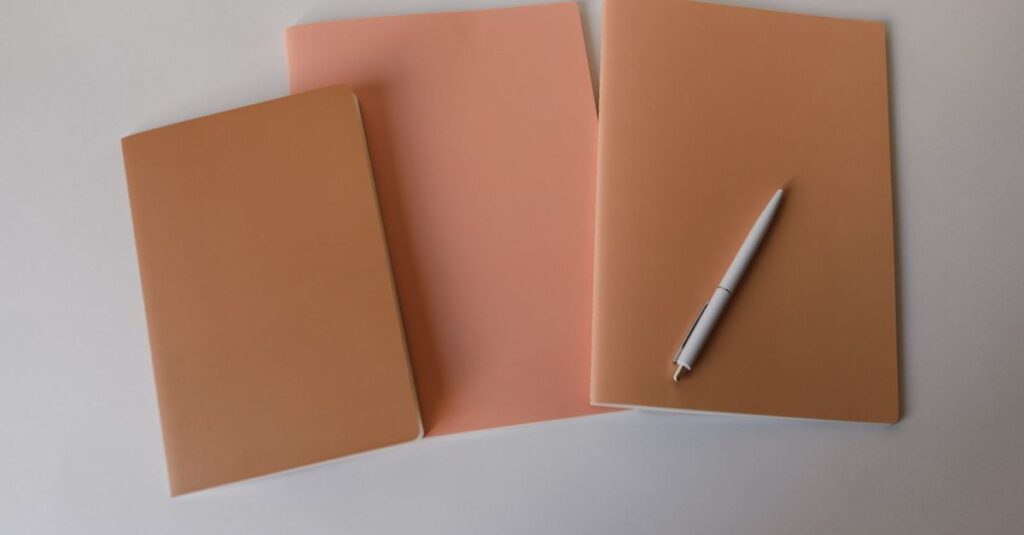
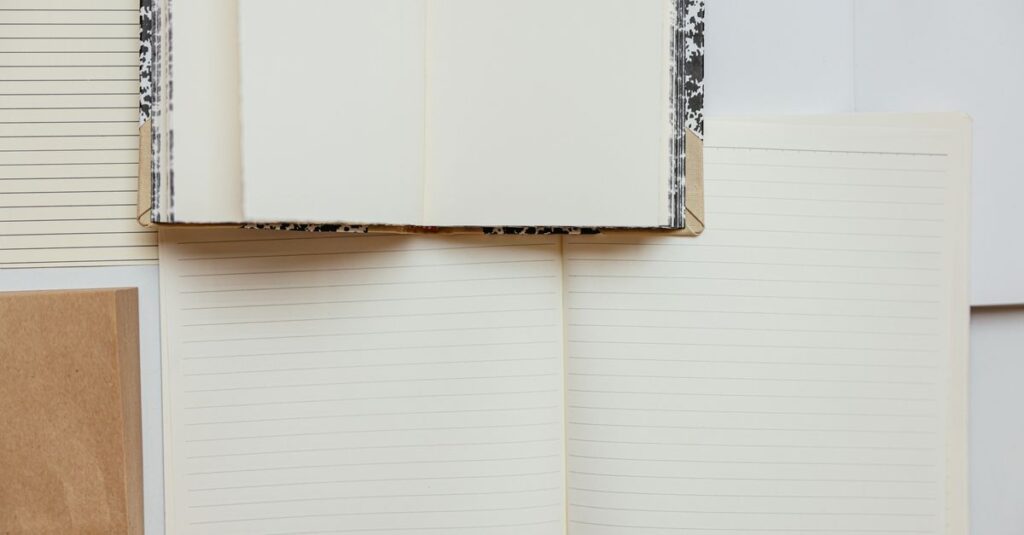
You can see the kind of A5 formats we’re talking about here – but first, let’s get the basics straight.
What Exactly Is A5 Paper? (It’s Not Just a Measurement)
Most articles will just throw the numbers at you: 148 x 210 millimeters. Or 5.8 x 8.3 inches. Fine. That’s the physical size. But the real thing you need to know? A5 paper is half of an A4 sheet. Fold a standard A4 page – the kind in every office printer – right down the middle, and boom, you’ve got two A5 sheets.
This isn’t a coincidence. It’s part of the ISO 216 standard. The entire A-series is built on this simple, scalable logic. A0 is the big daddy, one square meter in area. Halve it, you get A1. Halve that, A2. Keep going. A4 is the workhorse. And A5 is its more portable, versatile sibling. This scaling means there’s zero paper waste if you’re printing and binding books from larger sheets. For a manufacturer like us, that’s not just a neat fact – it’s the backbone of efficient, cost-effective production.
Here’s what that looks like in your hands: an A5 notebook is roughly the size of a mass-market paperback novel. It fits easily in a backpack, a laptop sleeve, or a handbag. It has enough room to write proper meeting notes or solve math problems, but it doesn’t dominate a desk. It’s just… right. Which is why, after over 40 years of making notebooks, I can tell you it’s one of our most requested sizes for custom orders. People figure it out through trial and error.
Expert Insight
I was talking to a procurement manager for a chain of schools last month. He said something obvious that stuck with me. He told me they used to order A4 notebooks for all the senior classes. Big, imposing things. Then they switched to A5. The savings on paper costs were one thing. But the real win? The kids actually carried them. They didn’t leave them in their lockers because they were too bulky. The more portable the tool, the more it gets used. I don’t have a cleaner way to put it than that. Sometimes efficiency isn’t about the machine; it’s about the human holding the product.
A5 Notebooks in the Real World: Who Actually Uses Them?
This is where it gets practical. You’re not just buying ‘paper’. You’re buying a tool for a specific job. And A5 is a multitool.
- Corporate Teams & Training: Branded A5 notebooks for conferences, onboarding kits, or as executive gifts. They’re professional but not ostentatious. They signal ‘we thought about the details’. We print thousands of these every quarter for companies that want their logo on something useful, not just another pen.
- Schools & Colleges: Especially for middle and high school. A4 can be overkill for daily note-taking. A5 is the sweet spot for subject-specific notebooks. Lighter bags, happier students. Bulk orders here are massive.
- Creative Professionals & Planners: Journalers, sketchers, bullet journalists. The A5 planner is a whole subculture. It’s the canvas size that feels active, not overwhelming.
- Field Staff & Technicians: Service engineers, auditors, healthcare workers. They need to take notes on the go, often while standing. A5 fits in a clipboard or can be held easily in one hand.
Let me tell you about Rohan. He’s 28, a project coordinator for a construction firm in Hyderabad. His job is part office, part site. He tried A4 pads – too floppy, got torn in his bag. He tried pocket-sized notepads – couldn’t fit his diagrams and meeting notes together. Then his company ordered custom A5 hardcover notebooks for the team. Spiral bound, so they lay flat. 200 pages of 70 GSM paper that didn’t bleed through. He told me it was the first time his site notes and his office meeting minutes lived in the same place, without him having to carry a binder. A small thing. The kind of thing nobody writes in a procurement report. But it’s the real reason a size becomes standard.
A5 vs. The Competition: A Quick, Honest Comparison
Look, I make all these sizes. I’m not here to trash-talk other formats. But you need to know what you’re choosing. Here’s the raw, unvarnished breakdown.
| Feature | A5 Notebook | A4 Notebook | Pocket/Personal Size (A6) |
|---|---|---|---|
| Dimensions | 148 x 210 mm | 210 x 297 mm | 105 x 148 mm |
| Best For | Daily carry, meetings, student notes, project logs | Detailed notetaking, technical drawings, formal minutes | Quick lists, on-the-fly notes, ultimate portability |
| Portability | Excellent. Fits in most bags and folios. | Low. Often requires a separate bag or case. | Superb. Fits in a jacket pocket. |
| Writing Real Estate | High. Ample space for structured notes without feeling empty. | Maximum. Can feel sparse if you don’t fill it. | Limited. Best for keywords and reminders. |
| Perception | Professional, thoughtful, efficient. | Formal, academic, comprehensive. | Casual, informal, tactical. |
| Bulk Order Cost (per unit) | Typically 20-30% lower than A4 due to less paper. | Highest. More raw material per book. | Lowest. But you may need more units. |
The table makes it obvious, I think. A4 is for when space is the absolute priority. A6 is for ultra-mobility. A5? It’s the compromise that doesn’t feel like one. It’s the Goldilocks zone. Nine times out of ten, for general corporate or educational use, it’s the one I’d recommend.
Inside the Factory: How A5 Notebooks Are Made (And What to Look For)
Okay. So you want to order 5000 A5 notebooks for your sales team. Or 20,000 for a school district. What are you actually buying? Because ‘A5 notebook’ can mean a flimsy 40-page pamphlet or a 300-page tank of a book.
The size is just the container. The magic – and the cost – is in the guts. The paper. A5 is often made from the same large rolls of paper as A4, just cut differently. The quality of that paper is everything. We use 54-70 GSM paper for most of our writing notebooks. That number – grams per square meter – tells you the thickness. Higher GSM means less see-through, a more substantial feel. For a diary or a premium corporate notebook, you go 80 GSM or higher. For a school notebook that needs to be affordable in bulk, 54-60 GSM is the sweet spot: durable enough, but cost-effective.
Then there’s binding. A5 works with almost any type:
- Spiral Binding (Wire-O): My go-to for lay-flat functionality. Perfect for textbooks, workbooks, anything that needs to stay open on a desk. The coil can be plastic or metal. Metal is more pro.
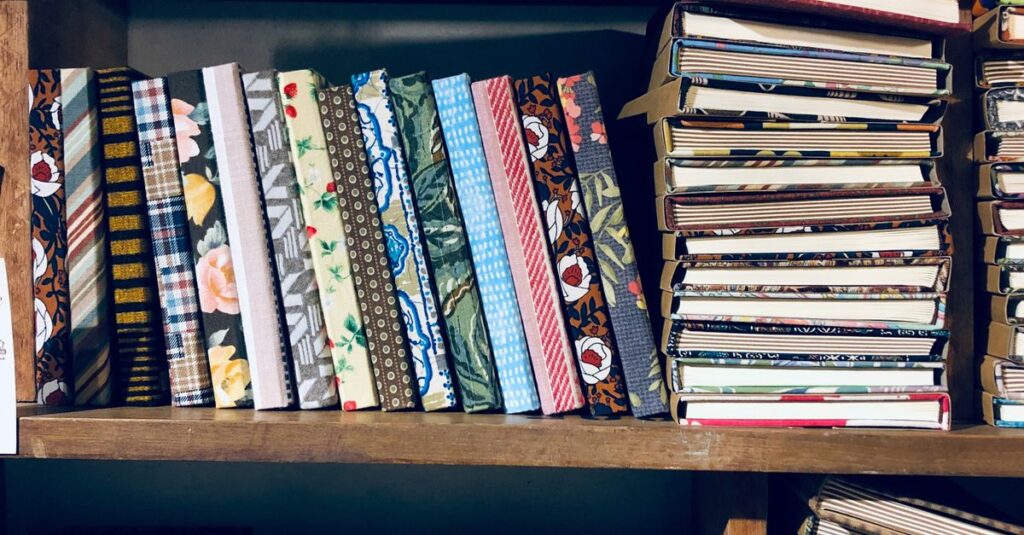
- Perfect Binding (Glued): That smooth, square spine you see on paperback novels. Looks very clean and professional for corporate notebooks. Great for page counts above 120.
- Saddle Stitched (Stapled): For lower page counts (under 92 pages). The most economical. Think of a standard compliment slip booklet.
The choice here changes the use case completely. A spiral-bound A5 is a workhorse. A perfectly-bound A5 with a embossed leather-look cover is a gift. Same size. Totally different products. This is where customization isn’t a luxury, it’s just specifying the right tool for the job.
Thinking About Bulk Orders? Here’s What Nobody Tells You.
If you’re a procurement manager or a wholesaler, your brain is already on cost-per-unit, MOQs, and lead times. Let me give you the straight talk, from the factory floor.
Ordering A5 notebooks in bulk is smart because the manufacturing is efficient. The paper cuts cleanly from standard sizes with minimal waste. That saving gets passed on. But. The biggest lever on price isn’t the size – it’s the specifications. Choosing 92 pages instead of 200. Choosing a single-color cover print instead of full-color. Choosing standard ruling instead of a custom header. These choices cut costs more than any size difference.
And here’s the real secret: lead time. A standard A5 notebook, with common rulings and page counts, is often a stock item or can be turned around in 2-3 weeks. A fully custom design with special paper? That’s 6-8 weeks, minimum. If you have a firm deadline – a new academic year, a product launch – this timeline is more important than a 2% price difference. I’ve seen too many orders get rushed with air freight, wiping out any savings, because someone didn’t plan for the production clock.
I think — and I could be wrong — that most bulk buyers focus 90% on the price quote and 10% on the spec sheet. It should be the other way around. The spec sheet is the price.
Frequently Asked Questions
Frequently Asked Questions
Is A5 the same as half letter size?
No, it’s close but not identical. The US “Half Letter” size is 5.5″ x 8.5″. A5 is 5.8″ x 8.3″. So A5 is slightly shorter and wider. This matters for printing and binding machinery. If you’re sourcing internationally, specify A5 to get the ISO standard.
What is A5 paper used for most often?
In our experience, it’s split between two major uses: custom-branded corporate notebooks/diaries for businesses, and bulk school notebooks for middle and high school students. It’s the go-to size for anything that needs to be functional, portable, and look professional.
Can I get A5 notebooks with custom page layouts?
Absolutely. This is one of the most common requests. You can have any ruling (single, double, grid, dotted), custom headers and footers, even pre-printed forms or log sheets. For bulk orders, creating custom plates for the page printing is standard practice.
How many pages is typical for an A5 notebook?
It ranges widely. For student notebooks, 92 to 200 pages is typical. For corporate diaries, 128 to 240 pages is common. We can bind up to 700 pages in an A5 perfect-bound book, but it becomes very thick. The sweet spot for usability is between 120 and 240 pages.
Is A5 a good size for a corporate diary?
Honestly, it’s probably the best. It provides enough daily space for appointments and notes without being a desk anchor. It fits in most laptop bags and looks appropriate in any meeting room. Most of our corporate clients for custom diaries end up choosing A5 after comparing samples.
The Bottom Line on A5 Paper
So, here’s what I want you to remember. A5 isn’t a random size. It’s the logical, portable, cost-effective middle ground. It’s the notebook people actually use because it doesn’t get in the way of the work. For schools, it means lighter bags and sensible costs. For businesses, it means a branded gift that won’t get chucked in a drawer. For you, the buyer, it means ordering a product with a mature, efficient supply chain behind it.
I don’t think there’s one perfect notebook for everyone. But if you’re trying to equip a team or a classroom with something functional, professional, and reliable, starting with A5 is the smartest first decision you can make. The rest is just details – paper weight, binding, cover design. And those details are where the real customization happens.
If you’re evaluating options for a bulk order, getting a physical sample in your hands is the only way to know. Seeing and feeling the paper quality and binding makes all the abstract specs real.